Gutter Cleaning in PA, NJ, MD, DE & VA
Our expert gutter cleaning ensures clog-free gutters, protecting your property from water damage.
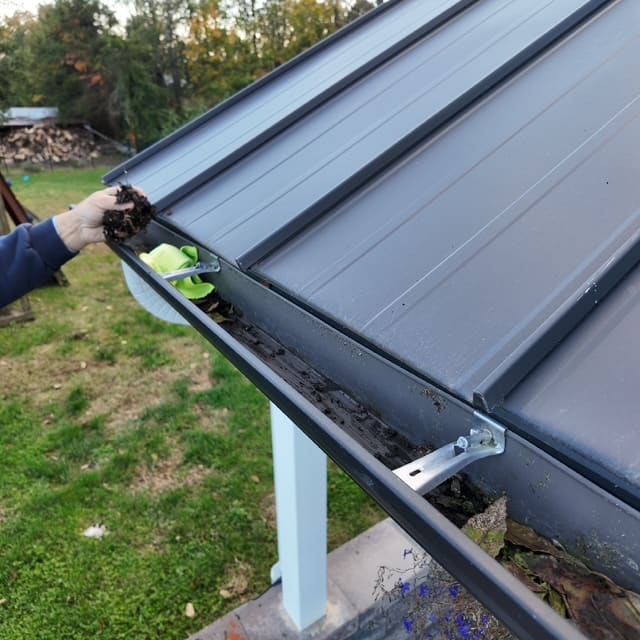
Gutter cleaning is the removal of leaves, shingle grit, seed pods, and decomposed organic sludge from your gutters and downspouts so rainwater drains freely away from the roof and foundation. Clogged channels overflow, sending water behind the fascia, into the soffit, and down exterior walls. A proper cleaning clears every run, flushes each downspout to confirm flow, and inspects the system for sagging hangers, low gutter pitch, and rust. The outcome is a system that captures roof runoff and discharges it well past the foundation, protecting siding, basements, and landscaping. All Pro Gutter Guards has performed this work across PA, NJ, MD, DE, and VA since 2001, and we treat cleaning as both maintenance and a diagnostic checkup.
What's Included: Our Step-by-Step Process
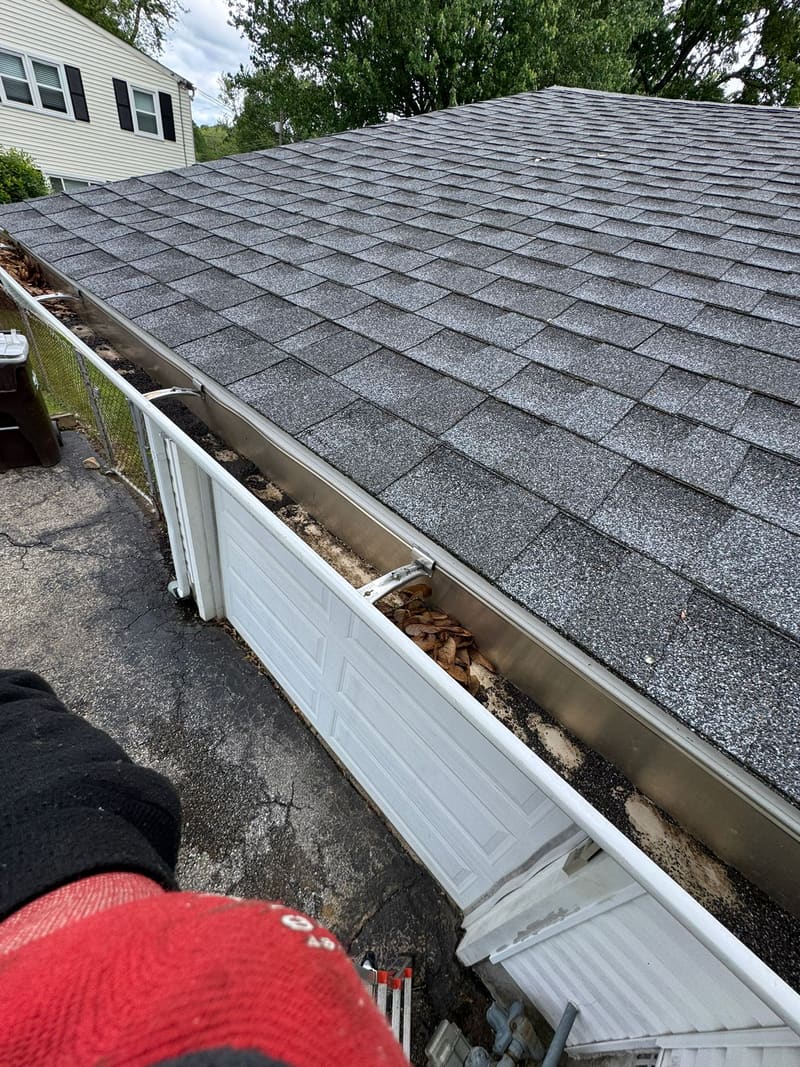
A complete gutter cleaning starts with a walk-around to identify problem areas, then proceeds run by run. We hand-remove bulk debris into buckets or tarps rather than flinging it onto your roof or beds, because wet sludge stains surfaces and clogs the downspout below. After clearing each k-style or half-round gutter, we flush the troughs with water to move fine grit toward the outlets. Every downspout is then tested for full flow; if water backs up, we clear the elbow or the underground drain. We check that the gutter pitch still slopes toward the outlets, confirm hangers are tight to the fascia, and inspect the drip-edge and seams on any seamless gutter. Finally, we bag debris, rinse splash zones, and report any repairs the system needs, such as resealing a leaking joint or rehanging a sagging section.
Cleaning Methods and When Each Fits
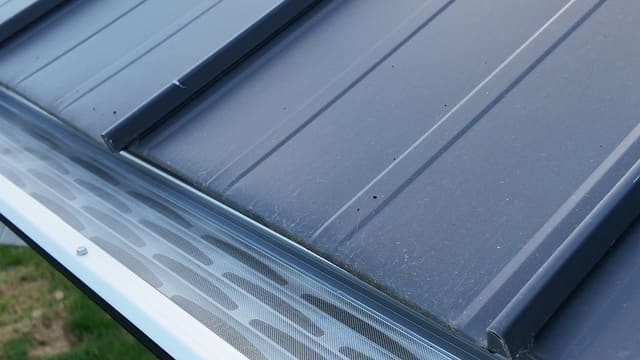
Hand-cleaning from a stabilized ladder remains the gold standard for accuracy because the technician sees and feels every clog, inspects hangers, and catches early fascia rot. For two- and three-story homes, taller commercial ladders, scaffolding, or roof access let us reach safely without overreaching. Gutter-vacuum systems with carbon-fiber poles are useful where ladder placement is restricted by landscaping or where rooflines are very steep, and they suit lighter, dry debris well. Pressure rinsing is reserved for flushing fine grit toward outlets after bulk removal, never as a substitute for hand-clearing packed sludge. Homes with micro-mesh or reverse-curve gutter guard systems need a different approach: we clean the mesh surface and the troughs beneath rather than digging out a full channel. Choosing the right method depends on height, roof slope, debris type, and whether any leaf-guard is already installed.
Signs You Need a Cleaning and the Problems It Solves
The clearest sign is water sheeting over the gutter lip during rain, which means the trough or downspout is blocked. Other red flags include stripes of dirt on the siding, plants or saplings sprouting from the gutter, granules collecting at downspout outlets, and pooling water near the foundation. Inside, damp basement walls and peeling paint near the soffit often trace back to overflowing gutters. Left unaddressed, trapped water rots the fascia and soffit, rusts steel gutters, and saturates the soil that supports your foundation. In winter, clogged gutters trap meltwater that refreezes into an ice dam, prying up shingles and forcing water under the roof deck. Regular cleaning, typically twice a year and more often under heavy tree cover, prevents these cascading failures and extends the life of both the gutters and the roof edge they protect.
Done Right Versus Done Poorly
Done poorly, gutter cleaning is a rushed pass that scoops the obvious leaves, ignores the downspouts, and leaves packed grit in the trough bottom. Crews who blow debris onto the roof drive it right back into the gutters at the next rain, and those who never water-test the outlets miss the clogs that actually cause overflow. Aggressive pressure washing can blow out sealant at the seams and bend lightweight aluminum. Done right, every run is cleared by hand, each downspout is flushed until it runs clear, and the technician documents the gutter pitch, hanger spacing, and seam condition. A correct job also includes checking the drip-edge so water enters the gutter instead of wicking behind it. The difference shows up months later: a properly serviced system drains silently, while a sloppy one overflows by the next storm.
What Affects the Cost
Gutter cleaning cost is driven by linear footage, home height, roof pitch, and how much debris has accumulated. A single-story ranch with short, accessible runs sits at the low end, while a three-story home with steep roofs, multiple wings, and dense tree cover requires more time, taller equipment, and sometimes a second technician for safety. Heavily clogged systems that have not been serviced in years take longer than a home on a regular schedule. Downspout clearing, especially underground drain lines, adds labor when outlets are blocked. Add-ons such as resealing leaking seams, rehanging a sagging section, or installing a leaf-guard are quoted separately. We never quote a flat price sight unseen because every roofline differs; instead we assess footage, access, and condition, then give a clear figure before any work begins.
Why Use a Licensed, Insured Local Pro
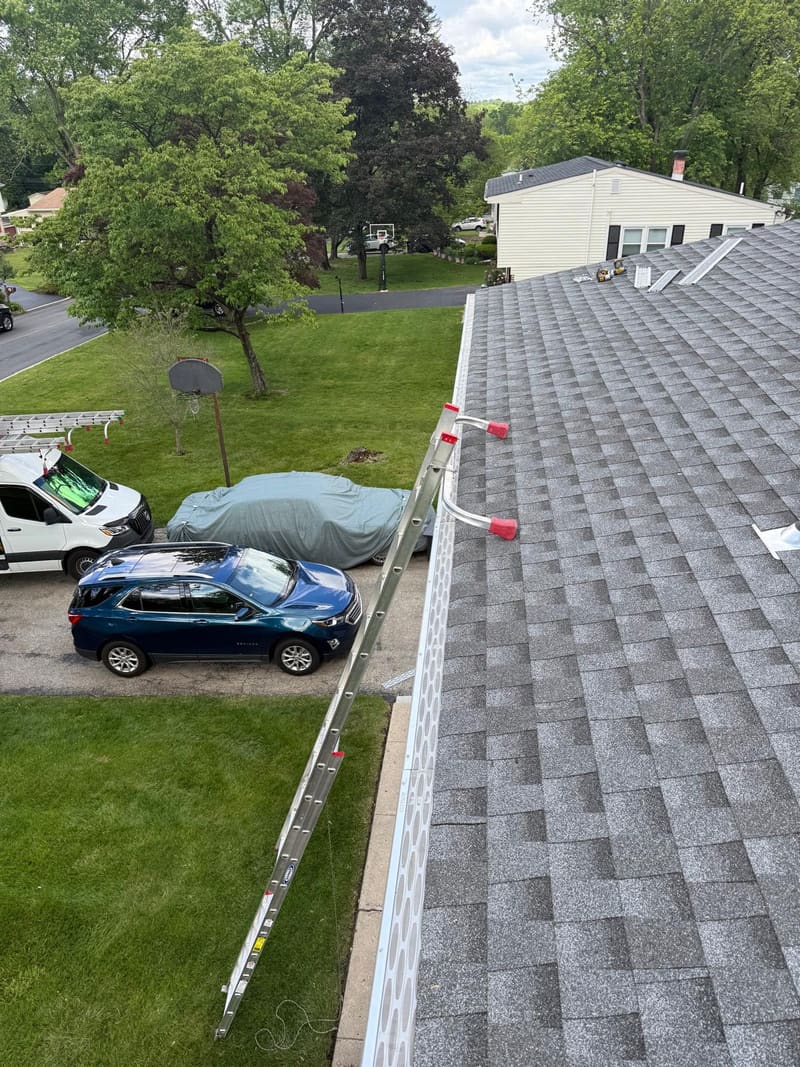
Gutter work happens at height, on ladders, and around fragile roof edges, which is precisely why a licensed, insured contractor matters. If a homeowner falls cleaning their own gutters, or an uninsured handyman damages your roof, the liability lands on you. All Pro Gutter Guards carries proper insurance and has served PA, NJ, MD, DE, and VA since 2001, so our crews know how regional weather, from spring pollen to oak leaves to winter ice dams, loads local systems. A trained technician does more than clear debris; they spot a failing hanger, a low gutter pitch, or early fascia rot before it becomes a costly repair. Local familiarity also means we recommend the right long-term fix, whether that's a micro-mesh gutter guard or upgrading to seamless gutter, rather than selling a one-size product.
Regular gutter cleaning is the simplest, most cost-effective way to protect your roof edge, fascia, soffit, siding, and foundation from water damage. Clear troughs and flowing downspouts keep rainwater moving where it belongs. All Pro Gutter Guards has cleaned, repaired, and guarded gutters across PA, NJ, MD, DE, and VA since 2001. Call (833) 487-0469 anytime, day or night, to schedule service.
What to Expect
Free On-Site Estimate
We inspect your roofline, measure your gutters, and give you a clear, no-obligation quote.
Custom Recommendation
We match the right gutter or guard system to your home, trees, and local weather.
Professional Installation
Our licensed, insured crews install clean, lasting work — usually in a single day.
Final Walkthrough
We test water flow, clean up the site, and back the work with our warranty.
Why Choose All Pro Gutter Guards?
20+ Years Experience
Trusted by thousands of homeowners since 2001.
Licensed & Insured
Fully licensed in PA, NJ, MD, DE & VA. Bonded & insured.
Free Estimates
No-obligation quotes — transparent pricing, no surprises.
Gutter Cleaning — FAQs
How often should gutters be cleaned?
Gutters should be cleaned at least twice a year, in late spring and late fall. Homes surrounded by oaks, pines, or maples need more frequent service because seed pods, needles, and leaves pack the troughs faster. Properties with few trees can sometimes stretch to once a year. Skipping cleanings allows debris to compost into sludge that blocks downspouts and overflows behind the fascia.
What happens if I never clean my gutters?
Neglected gutters overflow, sending water behind the fascia and into the soffit, where it rots wood and stains siding. Standing debris holds moisture that rusts steel gutters and breeds mosquitoes. Overflow saturates the soil at your foundation, causing damp basements and cracking. In winter, trapped water forms ice dams that lift shingles. What starts as a clogged gutter becomes a multi-thousand-dollar roof and foundation repair.
Do gutter guards mean I never have to clean again?
Gutter guards drastically reduce cleaning but do not eliminate maintenance entirely. Quality micro-mesh systems keep out leaves and most debris, yet fine grit and pollen can still accumulate on the mesh surface and need periodic rinsing. Reverse-curve and screen guards require occasional brushing of the top. Guards convert heavy semiannual cleanings into light, infrequent upkeep, which is why we install and service them.
Can I clean my own gutters safely?
You can clean ground-floor gutters with care, but height and ladder work make it risky for most homeowners. Falls from ladders cause serious injuries every year, and overreaching to avoid moving the ladder is the most common cause. Two-story and steep-roof homes are best left to insured professionals with proper equipment. To schedule a safe, thorough cleaning, call All Pro Gutter Guards at (833) 487-0469.
How do I know my downspouts are actually clear?
A downspout is clear only when water poured into the gutter exits the bottom outlet at full flow. We test every downspout during a cleaning rather than assuming it drains. A blocked elbow or underground drain can leave the trough full even after the top is clean. Listen for gurgling and watch for slow drainage during rain; both signal a partial clog needing attention.
Will cleaning fix my overflowing gutters?
Cleaning fixes overflow caused by debris, which is the most common reason. If gutters still overflow after a thorough cleaning, the issue is usually incorrect gutter pitch, undersized troughs, sagging hangers, or too few downspouts for the roof area. We diagnose the real cause during service and recommend repairs such as rehanging the run, adjusting the slope, or adding a downspout to handle the volume.
Does gutter cleaning include repairs?
Basic cleaning includes clearing debris, flushing downspouts, and inspecting the system. Repairs such as resealing leaking seams, rehanging sagging sections, replacing damaged hangers, or fixing the drip-edge are quoted separately because they require additional materials and labor. During every cleaning we document any problems we find and give you a clear estimate, so you decide whether to address them now or later.
What time of year is best for gutter cleaning?
Late fall, after the leaves have dropped, is the most important cleaning because it clears the troughs before winter ice forms and prevents ice dams. A spring cleaning removes seed pods, blossoms, and pollen that accumulate over the season. Cleaning before heavy rain seasons ensures the system can handle volume. We work year-round, 24/7, across PA, NJ, MD, DE, and VA, so timing fits your schedule.
Our Locations Near You
Ready to Get Started?
Contact us for a free, no-obligation estimate today.