Rainwater should leave the base of your house within minutes, but the soil around your foundation can stay wet for days if downspouts are not installed correctly. This guide walks through what really happens after a storm and when it makes sense to invest in better downspout installation.
What really happens to rainwater around your foundation after a storm?
When it rains, roof runoff does not just disappear after it leaves the gutter. Even a modest storm can send hundreds of gallons of water down your downspouts in a short time, and where that water lands decides how long it keeps working on your foundation. Building science guidance from federal programs stresses that if water is not directed away from the house, the soil next to the foundation quickly becomes saturated and can start feeding leaks into the structure.
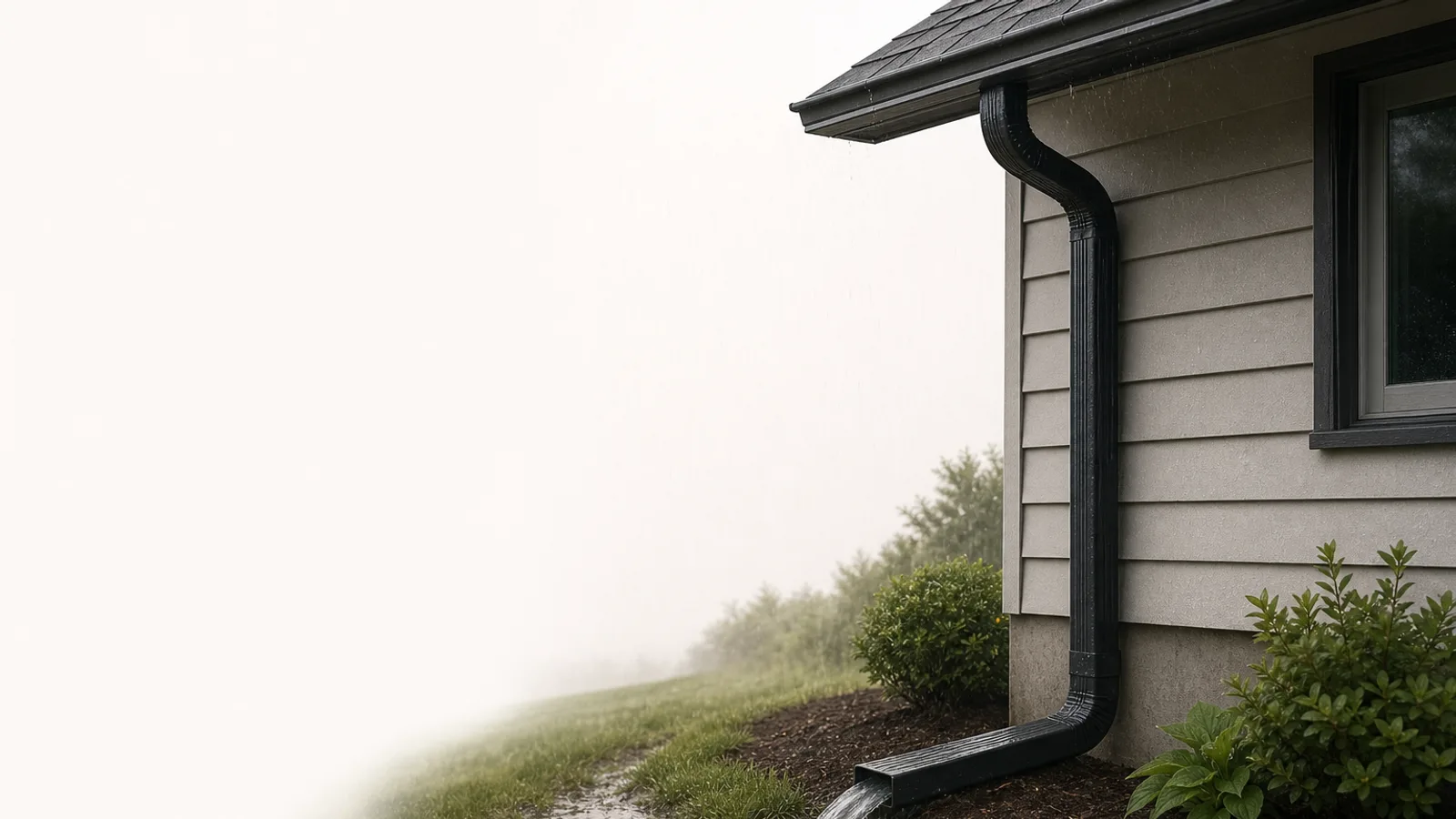
Water typically reaches the soil at the end of a downspout within minutes of the rain starting. If that outlet is only a foot or two from the wall, the same narrow band of soil gets hammered every time. Moisture can then move through cracks or joints within a few hours after a storm, and pressure in the wet soil can continue pushing moisture through basement walls for a day or more. In clay-heavy soils, that wet zone can linger for several days because clay drains slowly compared with sandier soils.
- Minute 0 to 5: water starts running off your roof into gutters
- Minutes to hours: downspouts dump water into soil near the house
- Hours after rain: direct leaks show up at cracks and weak spots
- 1 to several days: saturated soil keeps pushing moisture at walls
How far should downspouts carry water before it is "safe"?
If you are trying to decide what type of downspout installation is worth paying for, the discharge distance is one of the most important details. Guidance from building science programs under the Department of Energy and similar sources consistently recommends that surface downspouts should end at least 5 feet away from the foundation on soil that slopes away from the house. That simple change moves the most concentrated water away from the zone that causes many basement and crawlspace moisture problems.
When the water is routed into underground piping or a catchment system such as dry wells or other collection points, those outlets are recommended to be at least 10 feet from the foundation. Some state and local documents suggest using even longer extensions on surface downspouts, on the order of 6 feet or more, particularly on homes that have a history of basement seepage or sit on relatively flat lots. The further that water is carried to sloping ground or a safe outfall, the less time it spends saturating soil directly against your walls.
- Aim for at least 5 feet of horizontal distance on surface outlets
- Use underground piping to reach 10 feet or more when feasible
- Choose longer extensions around known leak-prone basements
- Avoid stopping water at sidewalks, driveways, and flat low spots
From first drip to foundation risk: what is the moisture timeline in the soil?
You might notice water pouring from your downspouts right away during a storm, but the real risk unfolds over the next several hours and days. Water that lands too close to the house begins soaking the backfilled soil next to your foundation wall. If the surface grade is flat or slopes toward the house, that water can pool and keep the soil fully saturated. Moisture can then move inward through cracks, gaps at the base of the wall, or porous masonry.
Moisture specialists report that direct water entry through obvious openings may appear within hours after heavy rain. The next stage is driven by how your soil holds water. As the soil saturates beside the foundation, hydrostatic pressure builds. That pressure can push moisture through walls or joints for 24 to 48 hours after the rain stops. In clay-rich soils, the process can stretch to roughly 3 to 5 days or even longer because clay can hold water much longer than sand. If your downspouts dump close to the wall every storm, the timeline essentially resets each time before the ground fully dries.
What is the realistic project timeline for professional downspout installation?
If you are picturing a long, drawn-out project, most downspout installations are simpler than that. The first segment is the evaluation. A contractor walks your property, looks at how your gutters are performing, where water is currently discharging, how the yard slopes, and where you see ponding or damp walls. That visit is when you should talk about your soil type, any history of basement leaks, and where you prefer water to be carried, such as toward a side yard or an existing drainage path.
The installation window itself is typically short. In many cases, replacing undersized or poorly positioned downspouts with correctly sized components and adding extensions, splash blocks, or underground discharge piping is a single-day job, depending on house size and the number of runs. After that work is complete, the real timeline you are interested in is behavior during the next few storms. Over a handful of rainy days, you should see less splash-back on the siding near old outlets, reduced puddling at the foundation, and drier basement or crawlspace surfaces in the periods 24 to 48 hours after rain.
- Initial inspection and quote typically happen in one visit
- Most straightforward downspout installs fit into a single workday
- Results are best judged across several rain events, not just one
- Adjustments can be made by tweaking extension length or outlet spots
How long until you know if new downspouts actually solved the problem?
It is natural to hope that new downspouts will deliver instant peace of mind the moment the installer drives away. In reality, you will want to watch how your home behaves through a few different storms. The first good test is during the next moderate or heavy rain. Step outside briefly and look at the outlets. Water should be flowing freely, landing at least 5 feet from the house on surface extensions or discharging at a distant outlet if you opted for buried piping.
The second test happens after the rain has passed. Over the next 24 to 48 hours, walk your basement or crawlspace and note any damp spots, especially around old trouble areas. In clay soils, it may take 3 to 5 days for the soil to relax back toward normal moisture after a major storm, so keep checking once a day during that period. If you still see persistent dampness but the outlets are now farther from the wall, the remaining issue may be internal drainage, existing cracks, or grading rather than the downspouts themselves.
What decisions affect your downspout costs and schedule the most?
Since there is no single price that fits every home, it helps to understand what actually drives your downspout installation budget and the timing. One factor is how many downspout runs need to be reworked or added to handle the roof area recommended by building science guidance. Another is whether you choose simple surface extensions and splash blocks, or you invest in piping that carries water underground to a more distant discharge point at least 10 feet from the home.
Your yard layout and local requirements also matter. Some municipalities discourage sending concentrated flows onto sidewalks, driveways, or neighboring properties, so the contractor may need to route outlets to approved areas or collection systems. Soil conditions and obstacles like walkways and landscaping can affect whether trenches are needed for buried lines and how long that part of the job takes. The more clearly you can show your installer existing wet spots and share your priorities, the easier it is to design a system that meets both your budget and the realistic moisture timeline around your foundation.
When does it make sense to combine new downspouts with other drainage upgrades?
Downspout installation is one piece of a broader moisture control plan around your home. In many cases, simply moving outlets to 5 feet or more away on sloping soil is a big improvement, especially if your current setup drops water directly into flower beds or onto flat areas near the wall. However, if your property has poor grading, heavy clay, or a history of significant seepage, you may want to pair downspout work with other improvements.
That might include improving the slope of the soil so that the ground surface drops away from the house, installing or upgrading footing drains if you are already planning foundation work, or routing downspouts into underground piping that discharges at least 10 feet from the foundation in a safe location. For some homes, adding high-capacity gutters or more downspout runs is part of the same project. If you are ready to talk about a combined approach, it can be helpful to look at a dedicated downspout installation service page before you invite someone out so you know what questions to ask.
- undefined
- undefined
- undefined
- undefined
- undefined
- undefined
- undefined
- undefined
- undefined
Frequently asked questions
- How far should my downspouts drain water away from my house?
- Authoritative building science sources recommend that surface downspouts terminate at least 5 feet from the foundation on ground that slopes away. When you use underground piping or a catchment system, the preferred outlet distance is at least 10 feet from the house. Some local guides suggest even longer surface extensions, especially for leak-prone basements.
- How quickly does water start to damage my foundation after rain?
- Visible leaks through cracks or joints can appear within a few hours of a heavy storm if water is dropping right beside the wall. The larger issue is that saturated soil can keep pressing moisture against the foundation for 24 to 48 hours after the rain stops. On clay soils, that damp period can extend to roughly 3 to 5 days, which is why moving the outlet zone matters so much.
- Is it enough to add a splash block under each downspout?
- A splash block is better than letting water erode a hole right at the outlet, and several state guidelines recommend them. However, if the splash block is only a couple of feet from the foundation, the soil next to your wall still gets too much water. For long term protection, most building science guidance calls for extensions that carry water at least 5 feet from the house on sloping ground.
- Do I really need underground pipes for my downspouts?
- Not every home needs underground piping. If you have room to run surface extensions 5 or more feet onto sloping soil without creating trip hazards or dumping on pavement, that may be enough. Underground runs become more attractive when you want to reach 10 feet or more away, navigate past sidewalks or landscaping, or connect to a dry well or other approved discharge point.
- How long does professional downspout installation usually take?
- Most straightforward downspout projects fit into a single workday, especially if the work focuses on replacing fittings and adding extensions. Jobs that include multiple buried lines, careful routing around hardscape, or coordination with other drainage work can take longer. The inspection and quote are usually a separate, shorter visit before the work is scheduled.
- How do I know if new downspouts fixed my basement dampness?
- Use a couple of storms as your test period. First, watch the outlets during rain to confirm water is leaving at least 5 feet from the house on surface extensions or at a distant underground outlet. Then, over the next 24 to 48 hours, and up to 3 to 5 days in clay soils, check for damp spots inside. If moisture problems shrink or disappear and you see no more pooling at the foundation, your new layout is likely doing its job.
Talk to All Pro Gutter Guards about downspout installation →