Mid-Atlantic gutter cleaning prices have jumped in 2026, and more homeowners are running the math on long term options. Here is how that shift, plus fresh code changes, is shaping gutter guard installations and what it means for your house.
Why a spike in gutter cleaning prices is driving this month’s guard installations
Across the Mid-Atlantic this year, the story behind more gutter guard conversations is not a flashy new product name. It is the bill homeowners are getting every time someone comes out to scoop leaves from the troughs. Construction materials have gone up in price, and the people doing roof and ladder work are charging more for their time. That is showing up directly in the quotes you receive for routine gutter service, especially as fall debris piles up.
Recent reporting across Pennsylvania, New Jersey, Maryland, Delaware, and Virginia shows that single story homes in some parts of the region are now seeing quotes in the low to high three hundreds for a single cleaning, with taller homes running higher still. In Pennsylvania, for example, a one story home may be priced around the mid two hundreds to upper three hundreds for each visit, and two story homes are now often in the mid four hundreds to more than six hundred dollars per job. Even in New Jersey, where typical cleanings might start around the mid one hundreds and average a bit over two hundred dollars, complex roofs or heavy debris can push a single trip close to four hundred dollars. Viewed over 5 to 10 years, those numbers are what is pushing many owners to ask whether it is time to pay for a more permanent fix rather than continuing to pay rising per visit fees.
When you multiply those cleaning numbers by the number of visits your gutters truly need, the totals become hard to ignore. In a wooded Pennsylvania lot with gutters that realistically need service two times per year, a two story home could easily end up paying high three figures to well over a thousand dollars every year just to keep water flowing. Over a decade, that becomes the cost driver behind every conversation about gutter guard installation. The trend this month is not that cleaning is new or that guards suddenly appeared, but that the math has tipped in favor of at least running a long term comparison before you book another ladder visit.
At the same time, aluminum and other input materials tied to gutter work have stayed elevated in price, with aluminum mill products in particular remaining significantly more expensive than a few years ago. That higher material cost affects new gutters, downspouts, and some guard styles, which is why it is important to look at your own roofline instead of assuming that any add on will pay for itself automatically. The homeowners who benefit most from the current trend are the ones taking the time this fall to tally their likely cleanings, look at their debris exposure, and match that reality with an installation plan rather than reacting only to the latest invoice.
- Write down what you actually paid for gutter cleaning over the last 3 to 5 years.
- Note how many stories your home has, since height drives cleaning pricing.
- Record how many cleanings per year your gutters really needed to stay trouble free.
- Multiply those numbers out over 5 and 10 years to see your likely total spend.
How new Mid-Atlantic rules are quietly shaping gutter guard choices
While prices are the loudest part of the story, the building codes in the Mid-Atlantic are quietly changing how professionals think about gutter guards. In Virginia, updated rules for rainwater harvesting systems now make some form of screening or debris exclusion mandatory for gutters and downspouts that feed storage tanks. The reason is simple. Leaves, needles, and roof grit break down in tanks, so the state wants that debris stopped at the roof edge instead of inside the water system. That requirement does not mean every home must have guards, but it does mean that any home tied into a cistern or similar system needs a thought out approach to keeping larger debris out.
Pennsylvania and New Jersey have taken a broader route by updating the construction and stormwater rules that sit in the background of every gutter job. Pennsylvania’s adoption of more recent model codes and New Jersey’s stormwater regulations both put more attention on how water leaves the roof, how fast it moves, and where it ends up on the site. For gutter guard installations, that translates into more careful sizing of gutters and downspouts, serious thought about roof edge ventilation details, and a closer look at the way covers or screens might change water behavior along the eaves. Guards that inadvertently dump water over the edge in a storm or that block important ventilation gaps are more likely to be flagged or at least frowned on by inspectors or roof manufacturers.
Maryland and Delaware have not rolled out state rules that mention gutter guards by name the way Virginia did with its harvesting language. But they still enforce general building and drainage standards that apply once you alter the gutter system. When a crew adds a guard, they are altering the flow path of water and sometimes the load on the gutter hangers and fascia. In practice, that means smart installers in every Mid-Atlantic state are starting with a code aware assessment of your roof edge and downspout layout instead of treating guards as decoration you can just snap on.
For you as a homeowner, these regulatory shifts matter in two ways. First, they signal that the days of random one size fits all guard installs are fading, because more jurisdictions are looking at how the whole system behaves. Second, they make it even more important that whoever puts guards on your home understands how screen density, guard slope, and downspout placement interact with local rainfall patterns and the specific roof material you have. The trend is toward guards as part of a drainage system, not as a standalone accessory.
- If you have or plan a rainwater tank, confirm that your gutters and downspouts are properly screened.
- Ask your installer how local building or stormwater rules affect your guard options.
- Have the roof edge and attic ventilation checked before adding any cover over the gutter.
- Make sure any design still routes water safely away from your foundation and neighboring properties.
What new guard technologies actually change for your gutters
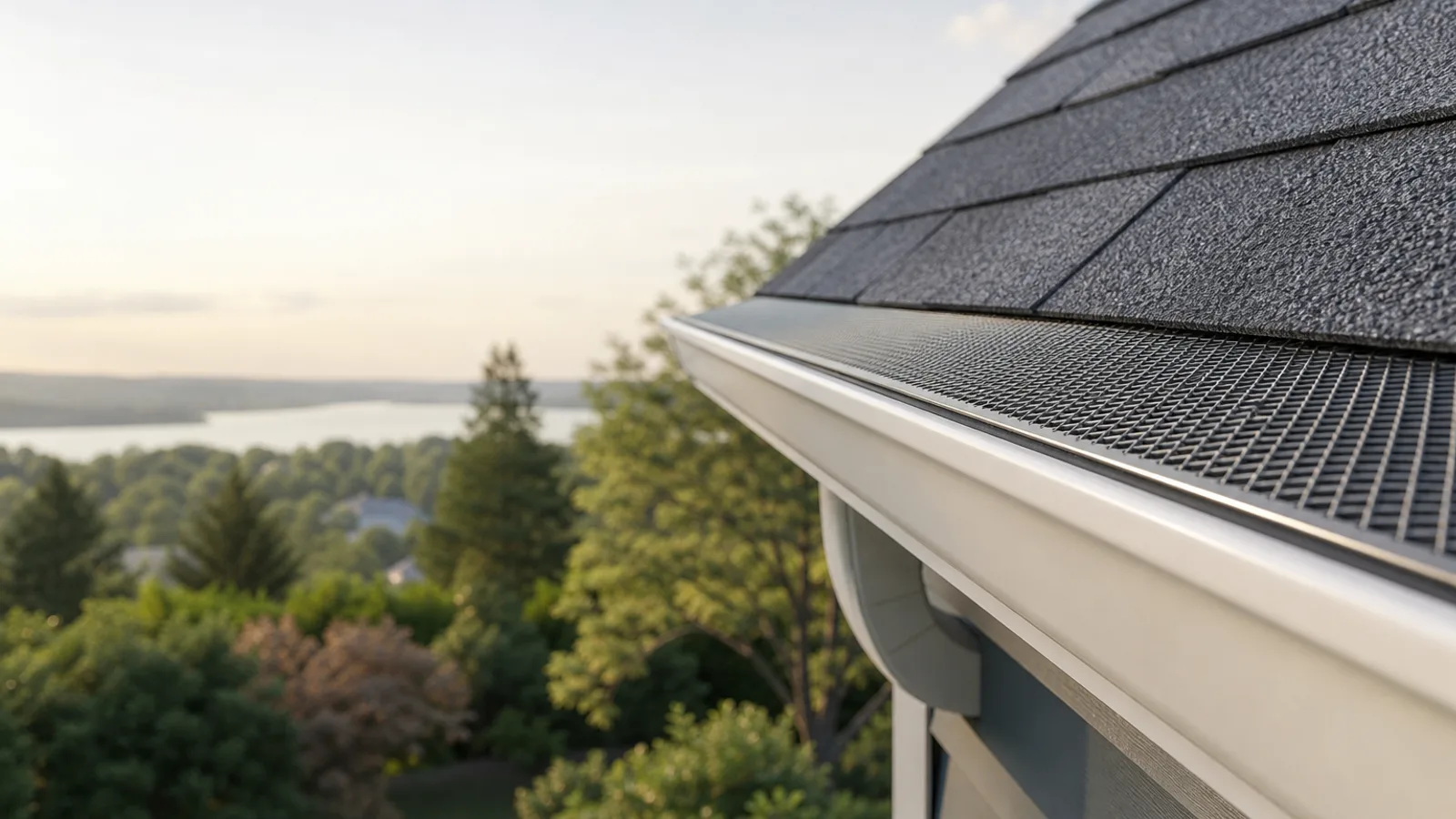
On top of higher cleaning costs and evolving rules, technology in the guard world is trying to tackle the failure points that made many early covers frustrating. Newer micro mesh based systems and similar designs emphasize five main themes: keeping the top surface aligned with the roof pitch, protecting shingle edges, resisting organic growth on the guard itself, improving how water enters the gutter, and helping the mesh shed debris rather than turning into a horizontal shelf. Some products package those ideas into branded features, but the underlying engineering goals are fairly common across newer designs.
First, pitch alignment matters because a guard that follows the slope of the roof is more likely to let leaves slide off rather than stay put. Second, thoughtful roof edge protection matters because an improperly installed guard can pry up shingles or trap moisture against the fascia, leading to rot. Third, some systems now integrate materials designed to discourage algae or moss from colonizing the guard surface, which can otherwise clog fine screens and stain the edge of the roof. Fourth, better water handling features along the front edge and in the mesh pattern aim to pull in fast moving runoff during a Mid-Atlantic thunderstorm instead of letting it overshoot the trough.
Finally, self cleaning claims in modern meshes are really about surface geometry and placement. A guard that is slightly pitched and smooth, with a fine but open enough mesh, gives wind and gravity a chance to move small debris off the surface between storms. None of these ideas guarantee a maintenance free life, and you should be wary of any promise that your gutters will never need attention again. What they do provide is a way to reduce how often you or a professional has to climb a ladder, and to minimize the risk that overlooked clogs will send water behind the gutter or into the soffit.
The real question this month is whether those feature sets matter more than the basic sizing and condition of your existing gutters. On many homes we see, sagging hangers, shallow pitch, or undersized downspouts are still bigger threats than the exact type of screen. New technology does its best work when it is installed on a sound, correctly pitched gutter that is large enough for the roof area and that discharges into piping and grading that can handle the flow.
Why fall 2026 timing and weather forecasts matter for guard installation
Timing is another factor in the current installation trend. Forecasts point to a warmer, wetter El Niño style winter across Pennsylvania, New Jersey, Maryland, Delaware, and Virginia. That combination usually means more frequent rain events, some of them heavy, mixed with freeze and thaw cycles rather than one long deep freeze. If your gutters are already close to overwhelmed during fall storms, or if you have marginal slopes or a history of ice at the eaves, that outlook raises the stakes for getting your water management under control before winter settles in.
Industry guidance right now is to handle gutter repairs, replacements, and guard work in the window from late October into mid November where possible. The weather is still mild enough that sealants can cure properly, ladders can be set safely, and installers can access roof edges without ice or snow getting in the way. After that window closes, every trip up a ladder becomes more complicated, and any existing problem spots in your gutters are exposed to repeated wetting followed by overnight freezes. Those conditions can worsen small leaks, widen seams, and add weight from ice dams right where fascia boards are already marginal.
A guard installation at this point in the season has two separate timing benefits. First, it can cut down on ongoing leaf and needle buildup from the tail end of fall, which in turn gives meltwater and winter rain a clearer path into your downspouts. Second, it allows any reinforcement work to hardware, fascia, or sealant joints to happen before they are tested by a full winter of storms. Waiting until spring to address chronic clogs or sagging may seem easier, but many homes that put off the work end up with stained siding, washed out landscaping, or even interior leaks once ice starts working its way under shingles.
Of course, not every house is a candidate for late fall installation. Very steep roofs, complex multi level setups, or properties with significant tree hazards may be safer to tackle in a broader fair weather window. The key is to view this month’s trend as an opportunity to combine decisions: if you know you will be paying more for cleaning anyway this season, and your gutters are showing their age, it is worth at least getting a professional opinion on whether guard installation plus targeted repair should happen before the Wetter than average winter fully arrives.
- Use the late October to mid November window for any needed gutter repairs.
- Have a professional check for sagging runs, loose hangers, and leaky seams before adding guards.
- Confirm that any sealants used on your system have time to cure in current temperatures.
- Plan more complex roof work for weather conditions where ladder and roof safety are not compromised.
Does this month’s trend mean you should install gutter guards now
All of this raises the practical question: in light of rising cleaning costs, evolving codes, and new products, does the current installation trend actually matter for you personally. The honest answer is that it depends on your debris exposure, your roof design, and your budget over the next decade. If you have a single story townhome with minimal overhanging trees and you only need a basic cleaning every year or two at relatively modest prices, even today’s higher rates may not justify a major up front investment. A simple schedule and a safe, easy ladder path can still be the lowest stress option.
On the other hand, if you live in a tall, tree surrounded home in Pennsylvania, New Jersey, Maryland, Delaware, or Virginia and you are already paying toward the upper ranges of the cleaning estimates in the recent data, it is worth getting specific about your options. A professional evaluation can break down what type of debris you are dealing with, how water currently leaves your roof, whether your fascia and soffits are sound, and what sort of guard profile fits both your gutters and your code environment. In many higher debris settings, a well specified guard system, installed correctly, can reduce cleaning to a quick periodic inspection from the ground and a more limited ladder visit around once a year rather than multiple full cleanouts.
The other piece of the decision is risk. Every time you or someone else climbs a ladder to service the gutters, there is safety risk, especially on two story homes or on steeply sloped sites. Repeated over many years, that cumulative risk matters. An installation that reduces how often anyone has to be on the rungs can be worth it even if the raw dollars come out close over a decade. That is particularly true in winters with more wet, icy conditions rather than dry cold, where roofs and ladder feet can be slippery more often.
If you decide you want a more permanent solution, the next step is not to pick a brand from an advertisement but to line up a thorough assessment. You want someone who looks at your roof, asks about your leaf and needle pattern through the year, checks your downspouts and site grading, and then recommends a configuration. If you want to read more about how that process works and what to expect from professional help, you can explore our gutter guard installation service and use it as a framework for conversations with any installer you consider. The trend this month is simply that more homeowners in the Mid-Atlantic are taking that step instead of automatically booking the next routine cleaning.
- undefined
- undefined
- undefined
- undefined
- undefined
- undefined
- undefined
- undefined
Frequently asked questions
- Are gutter guards really worth it with 2026 cleaning prices in the Mid-Atlantic
- They can be, but it depends on your house. In parts of Pennsylvania and New Jersey, a single cleaning can now run from the mid two hundreds to several hundred dollars, especially on two story homes. If you need two or more cleanings per year, your 5 to 10 year total can rival the cost of a quality guard system. The key is to compare long term cleaning bills against a realistic installed price for guards suited to your roof.
- How many gutter cleanings per year do guards usually replace
- For homes with a well chosen and properly installed guard, cleanings often drop to a quick annual check instead of multiple full cleanouts, especially in areas with heavy fall leaf drop. Some debris will still accumulate, particularly on the guard surface or at roof valleys, but the amount that reaches the inside of the gutter is typically far lower. Plan on at least an inspection once a year even with guards so minor buildup never becomes a blockage.
- Do new Virginia rainwater rules mean every home needs gutter guards
- No, the updated Virginia rules focus on rainwater harvesting systems, not every house. They require that gutters, downspouts, and piping feeding storage tanks have some kind of screen or debris excluder to keep leaves and similar material out of the water. That could be a dedicated guard system or a simpler screen solution targeted to the runs that feed the tank. Homes without harvesting setups are still covered by general building and drainage codes rather than guard specific mandates.
- How are Pennsylvania and New Jersey codes changing gutter guard installations
- Recent code updates in Pennsylvania and New Jersey tighten how roof drainage and stormwater are handled, which indirectly affects guard installs. They put more emphasis on proper roof edge detailing, ventilation, and runoff routing, which means guards cannot block important airflow or create uncontrolled overflow. In practice, installers need to evaluate gutter size, downspout placement, and how a proposed guard design behaves in heavy rain before they recommend it. The days of one size fits all add ons are fading in these states.
- Do new high tech micro mesh gutter guards really eliminate maintenance
- They reduce it, but they do not eliminate it completely. Newer designs try to align with roof pitch, protect shingle edges, resist organic growth, and improve water intake, which helps keep more debris out while handling heavy rain. However, fine particles, roof grit, and stubborn seeds can still accumulate on the surface over time. Plan for a periodic visual check and occasional rinsing or brushing of problem spots, rather than assuming you will never touch your gutters again.
- When is the best time of year in the Mid-Atlantic to install gutter guards
- Late October through mid November is usually ideal in the Mid-Atlantic because temperatures are mild, sealants can cure, and there is less risk from ice and snow during installation. This timing also lets you capture most of the fall leaf drop before winter storms hit. Outside that window, guards can still be installed, but weather and safety considerations may limit scheduling or make roof access more complicated.
- Should I fix sagging or leaking gutters before installing guards
- Yes, you should address any structural or leakage issues before adding guards. A cover does not correct sagging, improper pitch, loose hangers, or undersized downspouts, and can hide problems that then worsen behind the screen. Have a professional check that gutters are correctly sloped, securely attached, and free of major leaks so the guard works as part of a sound system instead of masking bigger issues.
- How do I know if my debris pattern is right for gutter guards
- Look at what falls on your roof through a full year. Broad leaves and small twigs generally work well with many guard styles that shed debris over the edge, while dense needles, seed pods, and roof grit can be more challenging and may demand finer micro mesh designs or more frequent surface cleaning. Photograph your gutters at peak leaf drop and share that with an installer so they can match a guard type to your actual debris pattern instead of guessing.
Talk to All Pro Gutter Guards about gutter guard installation →