Micro-Mesh vs. Reverse-Curve Gutter Guards: How Each One Actually Works
Updated August 7, 2026
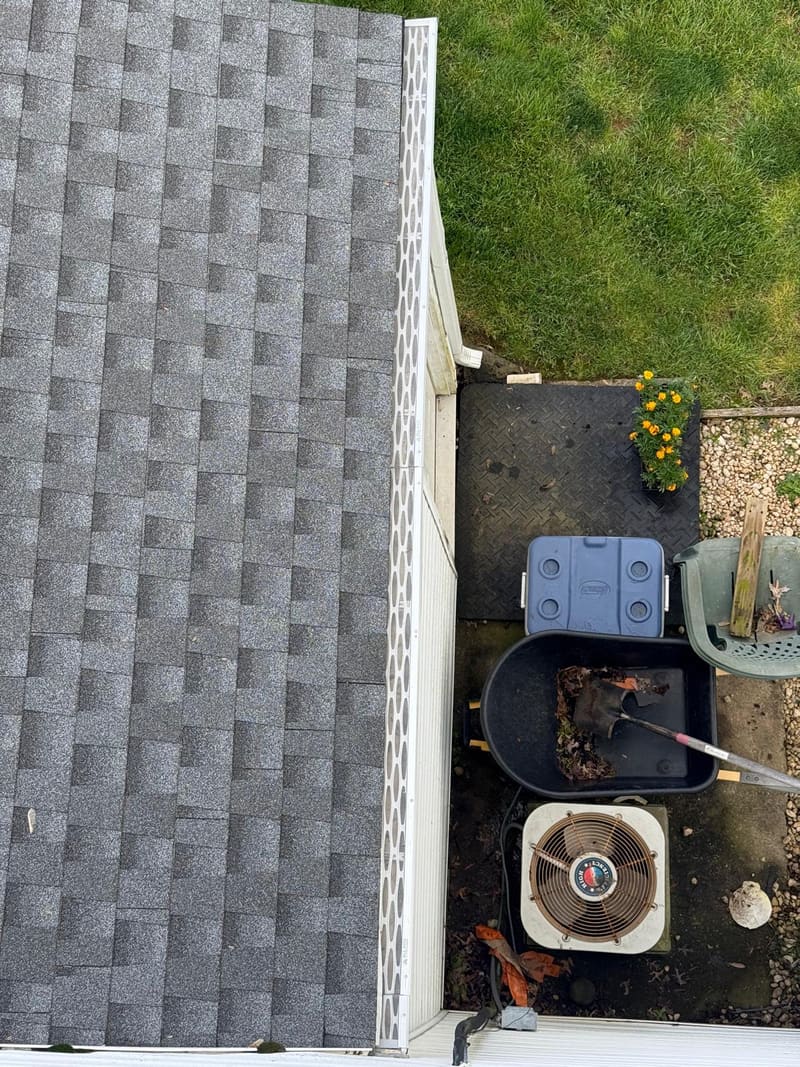
Nearly every premium gutter guard is one of two designs, and they fail in completely different ways. Understanding the physics tells you which one fits your trees.
Strip away the brand names and almost every premium gutter guard sold today is one of two designs. Knowing which one you are being quoted — and how each one fails — is more useful than any brand comparison.
The Two Designs
Micro-mesh filters. A fine stainless steel screen sits over the gutter opening. Water passes through the weave; anything larger than the openings stays on top, where wind and rain are meant to clear it. LeafFilter, Raptor, Gutterglove, MasterShield and our own guards are all micro-mesh.
Reverse-curve deflects. A solid hood curves over the gutter with a narrow slot at the front. Rain clings to the curved surface by surface tension and wraps around into the trough, while leaves carry past the nose and drop off the edge. Gutter Helmet, LeafGuard and K-Guard are all reverse-curve.
Filtration versus deflection. Every practical difference follows from that.
| Micro-Mesh | Reverse-Curve | |
|---|---|---|
| Principle | Filters water through a screen | Deflects debris, water wraps the nose |
| Large leaves | Stay on top, clear with wind and rain | Slide off well |
| Pine needles | Blocked at the mesh | Can wedge in the entry slot |
| Shingle grit | Blocked | Washes into the trough |
| Heavy downpours | Passes through | Can overshoot the curve |
| Typical mounting | To the gutter | Often under the shingle course |
| Visible from ground | Low profile | More visible hood line |
| When clogged | Clear the surface | Must get inside the hood |
How Each One Fails
This is the part that matters, because both designs work fine in easy conditions.
Micro-mesh fails on the surface. Over several years, fine silt, pollen, roof algae, and decaying organic film can build into a mat on top of the screen. Water then sheets over the mesh instead of through it. The fix is straightforward — the debris is on the outside, reachable with a brush or a hose from a ladder or a pole — but it is a real maintenance requirement.
Reverse-curve fails from the inside. Anything small enough to follow the water through the slot ends up in the trough: needles, seeds, grit. It decays into sludge, and clearing it means getting inside or under a solid hood. The other failure mode is overshoot — surface tension only holds water to the curve up to a certain flow rate, and past that, rain continues straight off the nose and lands beside your foundation.
The useful way to hold this: micro-mesh problems are on the outside where you can see and reach them. Reverse-curve problems are on the inside where you cannot.
No Guard Is Maintenance-Free
Any company telling you otherwise is selling, not explaining. Both designs reduce gutter maintenance dramatically. Neither eliminates it. A good system turns a twice-yearly clean-out into an occasional rinse or brush — that is the honest promise, and it is worth a lot.
Which One Fits Your Trees
Pines, spruce, hemlock, or heavy shingle grit? Micro-mesh, without much hesitation. Needles are the specific case reverse-curve struggles with — they align with the entry slot and wedge in. See best gutter guards for pine needles.
Large-leaf trees only — oak, maple, sycamore? Either design works. Reverse-curve sheds big leaves cleanly, and wind clears them off a mesh.
Very heavy rainfall or steep roof pitch? Micro-mesh. High flow rates are where surface tension gives up.
Newer roof, or concerned about your shingle warranty? Micro-mesh mounted to the gutter, not under the shingles. Roofing professionals raise this consistently about under-shingle systems, and it is a fair question to ask any installer in writing.
Cold-climate ice damming? Consider both carefully. Solid metal hoods conduct cold and can encourage ice dams and icicles. Some systems offer integrated heat as a purpose-built answer.
Two Questions Worth More Than the Brand Name
Whichever design you land on, two details separate systems that last from systems that do not.
What is the frame made of? Micro-mesh is only as durable as what carries it. Aluminum frames hold their shape. Frames made from uPVC plastic expand, contract, and can warp through Mid-Atlantic freeze-thaw cycles. Ask directly.
Does the installer fix the gutter first? A guard over a sagging or badly pitched gutter is a guard over a problem. Any quote worth taking includes cleaning, re-securing, re-pitching, and flow-testing before the guard goes on.
All Pro manufactures aluminum-framed micro-mesh guards and repairs the gutter system before installing them — see gutter guard installation, or read the full types comparison.
Not sure which design suits your property? Get a free in-home estimate and we will assess your actual trees, roofline, and gutters.
Related on All Pro
Ready to stop cleaning gutters forever?
Free in-home estimate from the team that makes its own guards.
Get My Free Quote