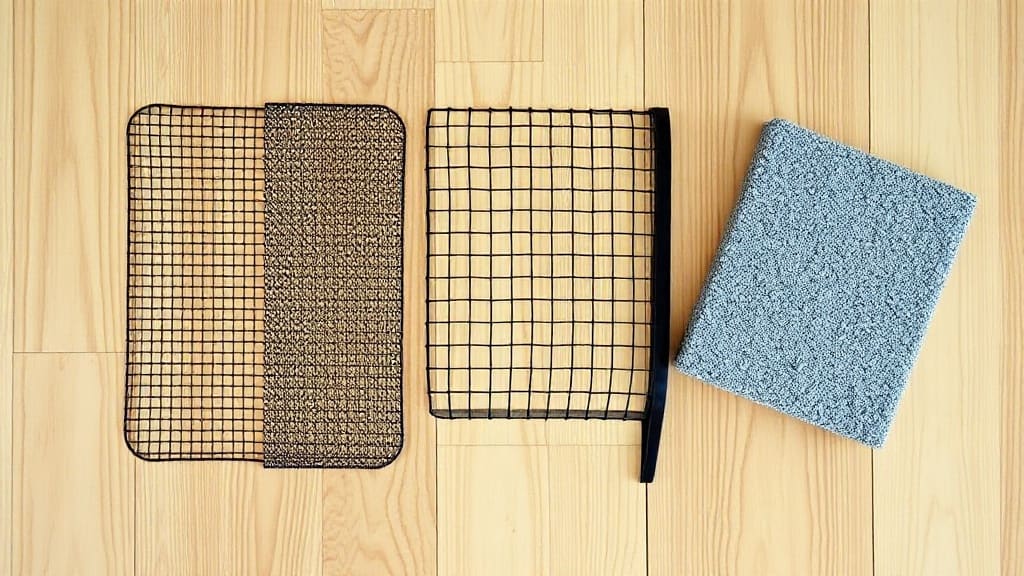
Gutter guards are covers, screens, or inserts that keep leaves and debris out of your gutters while letting rainwater through, reducing how often you clean and how often clogs cause overflow. Five major types dominate the market: micro-mesh, perforated aluminum screen, reverse-curve (surface-tension), brush, and foam. Each handles leaves, pine needles, and heavy rain differently, and each carries its own trade-offs in durability, visibility from the ground, and cost. This guide compares them honestly so you can match the right leaf guard to your roof, your trees, and your budget.
In this guide
- How Gutter Guards Actually Work (and Why Type Matters)
- Micro-Mesh Guards: The Premium Filter
- Perforated and Aluminum Screen Guards: The Value Workhorse
- Reverse-Curve (Surface-Tension) Guards: Hooded and Hidden
- Brush and Foam Guards: Simple, Cheap, and Limited
- Leaves vs. Pine Needles vs. Heavy Rain: Matching Guard to Conditions
- Durability, Visibility, and Cost: The Real Trade-Offs
- Which Guard Wins for Which Home
How Gutter Guards Actually Work (and Why Type Matters)
Every gutter guard solves the same problem two ways: it blocks debris from entering the gutter trough, and it controls how water reaches the channel below. The difference between systems is where they fall on that spectrum. A fine micro-mesh filters almost everything but can shed water in a downpour if it isn't pitched correctly. A reverse-curve cover relies on surface tension to wrap water around a nose and into the gutter while debris tumbles off the edge. Screens, brushes, and foam are more porous, trading filtration for water volume and price. The right choice depends on your specific debris load, roof slope, and rainfall. A home under towering pines has very different needs than one shaded by broadleaf maples. That's also why guard performance is tied to the gutter beneath it: clean, properly pitched, free-flowing gutters and clear downspouts let any guard do its job, while sagging or undersized gutters will overflow no matter what cover sits on top. Think of the guard and the gutter system as one assembly, not a bolt-on accessory.
Micro-Mesh Guards: The Premium Filter
Micro-mesh guards use a finely woven stainless steel screen, often mounted on an aluminum or PVC frame, with openings small enough to block not just leaves but shingle grit, seed pods, and even pine needles. This is the gold standard for filtration and the type most often professionally installed. Stainless mesh resists rust and holds its shape over decades, and a properly engineered frame channels water efficiently in heavy rain rather than letting it sheet over the edge. The trade-offs are cost and installation precision: micro-mesh sits at the high end of the price range, and it performs best when pitched and secured correctly, ideally as part of a professional gutter-guard installation rather than a loose drop-in. Cheap stamped-aluminum imitations can deform or clog with fine pollen, so material quality matters. For homes surrounded by pines or fine debris where lesser screens fail, micro-mesh is usually the system that finally stops the clogging cycle. It pairs especially well with seamless gutters, where the smooth, jointless trough complements the mesh's clean profile and minimizes spots where debris can catch.
Perforated and Aluminum Screen Guards: The Value Workhorse
Perforated aluminum screens are flat or slightly curved panels stamped with holes or slots, sitting over the gutter opening. They are the practical middle ground: far more durable and effective than foam or brush, far less expensive than micro-mesh or reverse-curve. Solid aluminum won't rust, handles heavy rain well because the openings are generous, and snaps onto the gutter lip or slides under the first row of shingles. The limitation is filtration. The holes that let water flow freely also let pine needles, maple seeds, and small debris slip through, so under needle-dropping conferous trees a screen alone may still need periodic clearing. Under broadleaf trees that drop larger leaves, a quality perforated screen performs admirably for years. Avoid flimsy vinyl or thin mesh screens sold in big-box stores; they sag, pop loose in wind, and clog quickly. A well-made aluminum screen, professionally fitted to a properly pitched gutter, is a sensible, budget-conscious choice for many homes in the Mid-Atlantic with moderate leaf load.
Reverse-Curve (Surface-Tension) Guards: Hooded and Hidden
Reverse-curve guards, also called surface-tension or hooded covers, use a solid curved lid that extends over the gutter and curls back at the front. Water clings to the curve and wraps around the nose into a narrow slot, while leaves and debris ride past and drop to the ground. Because the gutter is fully covered, these systems hide the trough and can match the roofline cleanly. They excel at shedding large leaves and handle heavy rain well when the curve is engineered correctly. The drawbacks are real, though. In extreme downpours, water can overshoot the slot. Fine debris and pine needles, and shingle grit, can lodge in the intake slot over time, and clearing it means removing the hood. Reverse-curve covers are typically among the more expensive options and are often most visible from the ground because they sit proud of the gutter line. They also work best on specific roof pitches; very steep roofs can drive water past the curve. For broadleaf-heavy lots with moderate rainfall, they remain a strong, low-maintenance reverse-curve gutter guard option.
Brush and Foam Guards: Simple, Cheap, and Limited
Brush guards are essentially large bristled cylinders, like oversized pipe cleaners, that sit inside the gutter trough. Foam guards are wedge-shaped inserts of porous foam that fill the channel so water passes through while debris rests on top. Both share the same appeal: low cost, no fasteners, and easy do-it-yourself installation. And both share the same weakness: debris collects on or within the material rather than washing away. Pine needles and seeds embed in brush bristles, and foam traps grit and organic matter that eventually breaks down into compost, sprouting weeds in your gutters. Foam can also degrade under UV exposure and hold moisture against the gutter, and neither type filters fine debris well. They reduce large-leaf clogs in the short term but generally demand more frequent cleaning than their marketing suggests. For a rental, a small section, or a quick stopgap, brush or foam can help. For a long-term solution on a home you intend to keep, they rarely justify the eventual maintenance and replacement.
Leaves vs. Pine Needles vs. Heavy Rain: Matching Guard to Conditions
The single biggest factor in choosing a guard is what falls on your roof. Large broadleaf debris, like maple, oak, and sycamore leaves, is the easiest to manage; almost any quality guard, including aluminum screen and reverse-curve, will shed it. Pine needles, seed pods, and fine grit are the real test. They slip through screen holes, embed in brushes, and lodge in reverse-curve slots, which is why micro-mesh, with its tight stainless weave, is the reliable answer for evergreen-heavy lots. Heavy rain is the opposite challenge: the finer the filter, the more important correct pitch and ample intake area become so water doesn't sheet over the front. This is where professional installation and proper gutter pitch pay off, ensuring the guard and the gutter together carry peak flow to the downspouts. Ice is a fourth consideration; in our Mid-Atlantic winters, guards do not prevent ice dams, and clogged or poorly draining gutters make them worse. Combining the right guard with sound gutters, drip edge, and adequate downspout capacity is what keeps water moving in every season.
Durability, Visibility, and Cost: The Real Trade-Offs
Durability tracks closely with material. Stainless micro-mesh and solid aluminum components last the longest and resist rust; vinyl screens, foam, and brush degrade fastest under sun and weather. Visibility from the ground matters to many homeowners: low-profile micro-mesh and flat screens that tuck near the gutter line stay nearly invisible, while bulky reverse-curve hoods are the most noticeable from the street. Cost runs on a clear ladder. Foam and brush are cheapest, perforated aluminum screen sits in the affordable middle, and micro-mesh and reverse-curve occupy the premium tier. But the sticker price is only part of the math. The factors that truly drive cost are linear footage of gutter, the number of stories and roof complexity, gutter condition, whether existing gutters need repair or replacement first, and the guard material itself. A cheap guard that demands annual cleaning, or fails in five years, often costs more over time than a quality system installed once. Always weigh upfront price against expected lifespan and the maintenance you are realistically willing to perform.
Which Guard Wins for Which Home
There is no universal best guard, only the best match. For homes surrounded by pines, spruce, or fine seed debris, micro-mesh is the clear winner; nothing else reliably keeps needles out long-term. For homes under large broadleaf trees with moderate rainfall and a tighter budget, a quality perforated aluminum screen delivers most of the benefit at a fraction of the cost. For homeowners who prioritize a hidden gutter and low maintenance under broadleaf trees, a well-engineered reverse-curve system fits, provided the roof pitch suits it. Brush and foam make sense only for short sections, rentals, or temporary fixes. Whatever you choose, the guard is only as good as the gutter beneath it. Sagging, undersized, or rusted gutters should be addressed first, sometimes with seamless gutter installation or targeted gutter repair, and downspouts must be sized to carry the flow. The strongest results come from treating guard selection, gutter condition, pitch, and drainage as one decision. A licensed installer can assess your trees, roof, and existing system and recommend the type that actually fits, rather than the one that's easiest to sell.
The best gutter guard is the one matched to your trees, roof, and rainfall, not the one with the loudest marketing. Micro-mesh wins for pine and fine debris, aluminum screen offers strong value under broadleaf trees, reverse-curve suits homeowners wanting a hidden, low-maintenance cover, and brush or foam serve only as stopgaps. Whichever you choose, sound, properly pitched gutters and clear downspouts are essential. For an honest assessment across PA, NJ, MD, DE, and VA, call All Pro Gutter Guards at (833) 487-0469.
Frequently Asked Questions
Do gutter guards mean I never have to clean my gutters again?
No honest installer will promise that. Good guards dramatically reduce cleaning frequency and prevent the clogs that cause overflow, but no system is truly maintenance-free. Fine grit, pollen, and surface debris can still accumulate on top of any guard, and occasional rinsing keeps water flowing freely. Micro-mesh comes closest to set-and-forget; foam and brush require the most upkeep. Think reduced maintenance, not zero maintenance.
Are micro-mesh guards worth the higher cost?
For most homes with pine needles, seed pods, or fine debris, yes. Micro-mesh filters what screens and reverse-curve covers let through, and quality stainless mesh lasts for decades, so the higher upfront price often pays off in fewer cleanings and a longer service life. Under purely large-leaf trees with a tight budget, a good aluminum screen may deliver enough performance for less. The value depends on your specific debris load.
Will gutter guards prevent ice dams in winter?
Gutter guards do not prevent ice dams. Ice dams form when attic heat melts roof snow that refreezes at the cold eaves, a problem of insulation and ventilation, not gutter covers. That said, clogged or poorly draining gutters make ice worse, so keeping gutters clear, properly pitched, and well-drained with adequate downspouts helps. A guard plus sound gutters and proper drip edge supports better winter performance, but it is not an ice-dam cure.
Can gutter guards be installed on my existing gutters?
Often, yes, if your existing gutters are sound, properly pitched, and securely attached. Many guards mount onto the gutter lip or slide under the first course of shingles without replacing the gutter. However, if your gutters sag, leak, are undersized, or are rusted, those issues should be corrected first, sometimes with repair or new seamless gutters, because a guard cannot fix a failing gutter underneath it. A professional assessment confirms what your system needs.
Which gutter guard is best for homes with pine trees?
Micro-mesh is the strongest choice for pine-heavy properties. Pine needles are thin enough to slip through screen holes, embed in brush bristles, and clog reverse-curve intake slots, but the tight stainless weave of micro-mesh blocks them while still passing water. For the best results under conifers, choose a quality stainless micro-mesh guard installed on clean, properly pitched gutters so heavy rain still drains freely to the downspouts.
Get a free, no-obligation estimate from a local team.
(833) 487-0469