Gutter Helmet vs. All Pro Gutter Guards: The Under-the-Shingle Question
Updated August 7, 2026
Gutter Helmet slides under the bottom course of your roof shingles. That single design decision drives most of the differences between these two systems — including a roof warranty question worth asking.
Gutter Helmet is one of the oldest and best-known names in gutter protection, and its reverse-curve design genuinely works for the debris it was built to handle. But it installs differently from almost every mesh system on the market, and that difference is worth understanding before you decide.
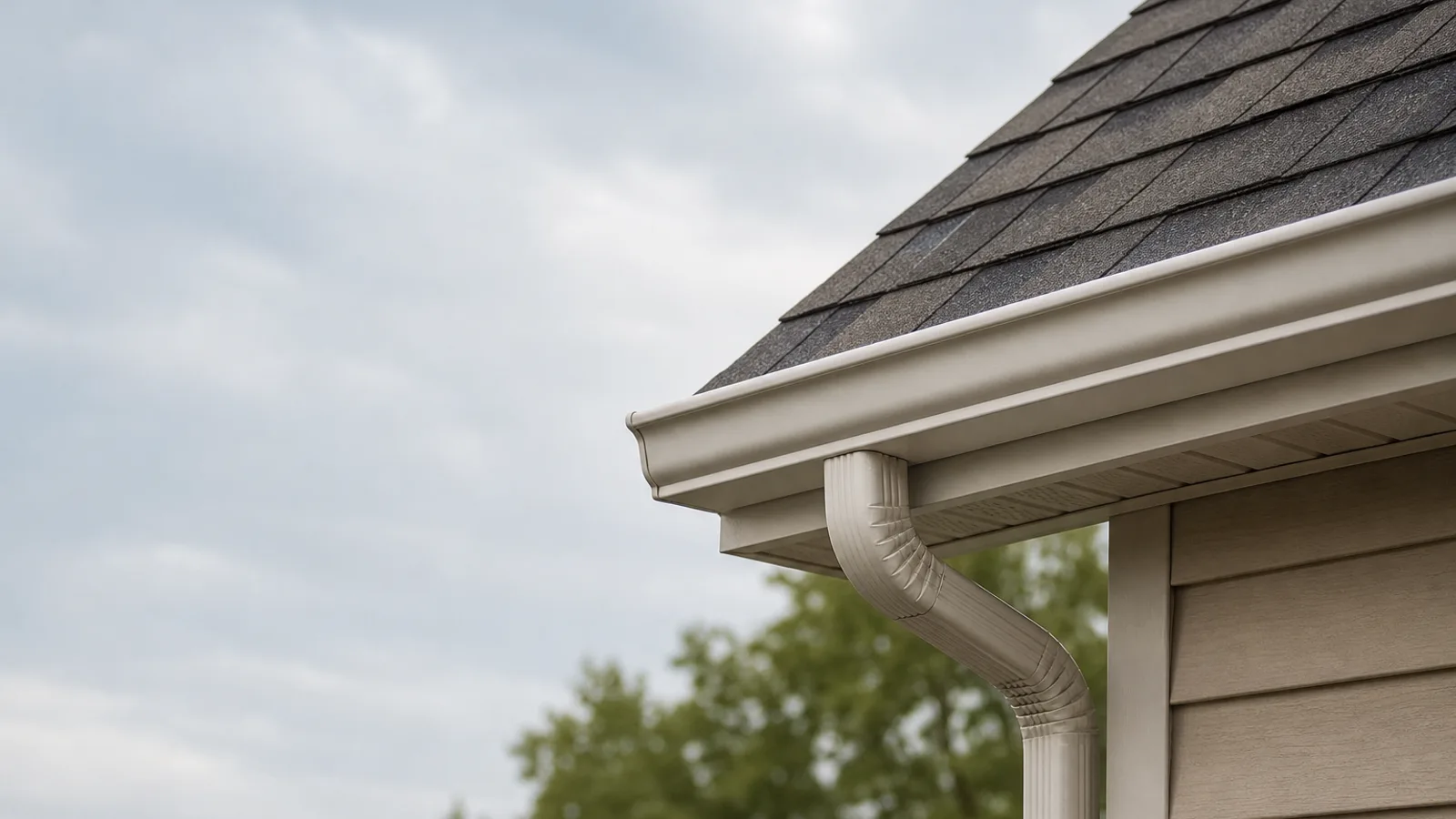
Gutter Helmet is fastened under the bottom course of your roof shingles. All Pro's guards mount to the gutter itself and never touch your roof.
Side by Side
| Gutter Helmet | All Pro Gutter Guards | |
|---|---|---|
| How it works | Solid hood, water wraps the nose by surface tension | Stainless micro-mesh filters water through |
| Attaches to | Under the bottom shingle course | The gutter only — roof untouched |
| Large leaves | Sheds them well | Blocks them |
| Pine needles and grit | Can wedge at the entry slit | Filtered at the mesh |
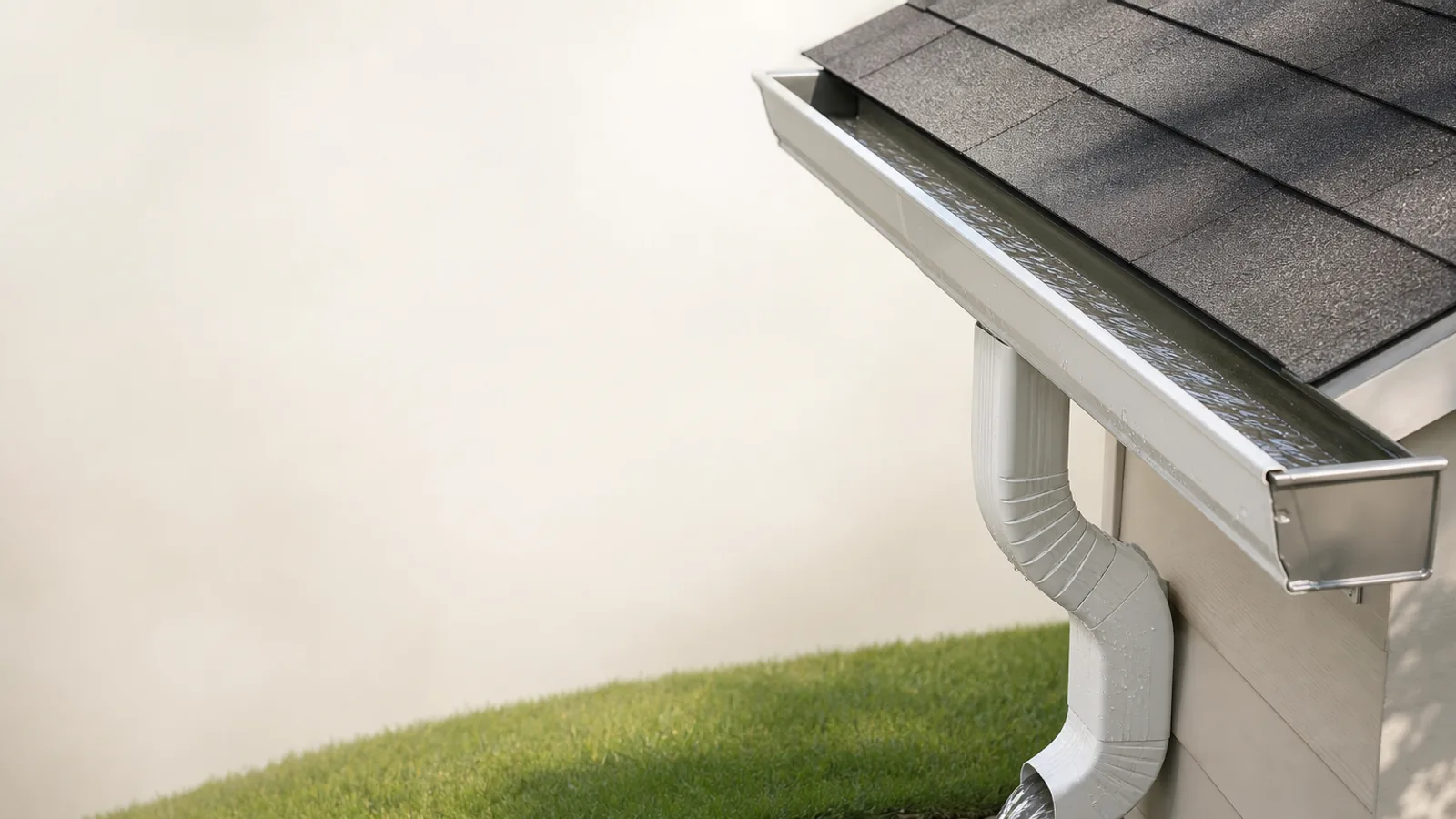
| Heavy downpours | Water can overshoot the curve | Passes through the mesh |
| Winter behavior | Metal hood can promote icicles and ice dams | Mesh does not alter the roof edge |
| Published price | ~$35–65 per linear foot | Free written quote, best-price guarantee |
Why the Under-Shingle Install Matters
To create the reverse curve, the panel has to be anchored above the gutter line, and on most homes that means lifting the bottom row of shingles and fastening beneath them.
There are three consequences worth weighing.
Roof warranty. Many shingle manufacturers and roofers take the position that lifting or penetrating the shingle course can affect coverage. Whether it does in your case depends on your specific warranty and installer — which is exactly why you should ask, in writing, before the install rather than after. Roofing professionals raise this concern about under-shingle systems consistently.
Roof edge condition. Lifting shingles that have been sealed down for years — particularly older or brittle ones — can crack them or break the seal strip that keeps wind from getting underneath.
Future roof work. When you eventually re-roof, an under-shingle guard system is entangled with that job in a way a gutter-mounted system is not.
None of this means Gutter Helmet is badly made. It is a well-built product. It simply carries a category of risk that a system mounting to the gutter does not carry at all.
The Known Limits of Reverse-Curve
Every design has trade-offs, and reverse-curve has three that show up repeatedly in owner reports.
Overshoot in heavy rain. Surface tension has a flow limit. Past it, water continues straight off the nose instead of curving in. In a hard Mid-Atlantic thunderstorm, that is water hitting the ground beside your foundation.
Fine debris gets in. The water entry slit that lets rain in also lets small things in. Pine needles, seed pods, and shingle grit can slip through or wedge at the opening, then decay into sludge inside the trough — where a solid hood makes them considerably harder to reach.
The cavity is attractive to pests. The sheltered space under a solid hood is a well-regarded nesting spot for birds, wasps, and bees.
There is also a winter consideration specific to our region: a solid metal hood conducts cold efficiently, which can encourage the uneven melt-and-refreeze cycle behind ice dams and heavy icicle formation.
Where Gutter Helmet Genuinely Wins
Large leaves. For a property surrounded by mature oaks and maples, the hood sheds heavy leaf fall extremely well — arguably better than a flat mesh, where wet leaves can sit on the surface until wind or rain clears them.
Heated options exist. Gutter Helmet offers integrated heating elements for ice-prone roofs. That is a real solution to a real problem, and if chronic ice damming is your primary concern it deserves a place on your list.
Long track record. It is an established system with decades of installations and a lifetime warranty.
Where We Think We Win
We never touch your roof. Our guards fasten to the gutter. Your shingles, your seal strip, and your roof warranty are left exactly as they are.
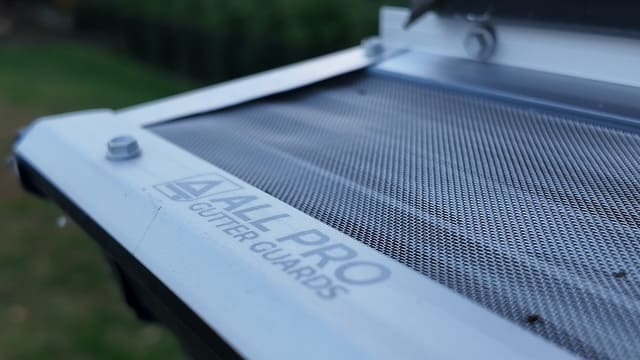
Micro-mesh handles the debris that defeats hoods. Fine stainless mesh stops pine needles, seeds, and shingle grit at the surface rather than letting them into the trough. If you have pines, this is the whole ballgame — see best gutter guards for pine needles.
Aluminum frame. Our mesh is carried on an all-aluminum frame that will not warp through freeze-thaw the way plastic frames can.
We repair the gutter first. We clean, re-secure, re-pitch, and flow-test before anything goes on top. If your fascia is rotted, covering it up is not a fix, and we will show you rather than hide it.
We are the manufacturer. We design, build, and install our own guards, so one accountable team owns the entire job.
The Honest Summary
If your trees are large-leaf and your main goal is to never climb a ladder again, Gutter Helmet will likely satisfy you — provided you are comfortable with an under-shingle install and have confirmed it does not affect your roof warranty.
If you have pine or fine debris, if your roof is newer, or if you would simply rather nobody lifted your shingles, a gutter-mounted micro-mesh system answers the same problem without that trade-off.
Want both options assessed on your actual roofline? Get a free in-home estimate — including an honest look at whether your gutters need work first.
Related on All Pro
Ready to stop cleaning gutters forever?
Free in-home estimate from the team that makes its own guards.
Get My Free Quote