Commercial Gutter Systems: Box Gutters, Sizing and Material Specs
Heavy-duty gutter solutions for commercial and industrial properties across PA, NJ, MD, DE & VA.
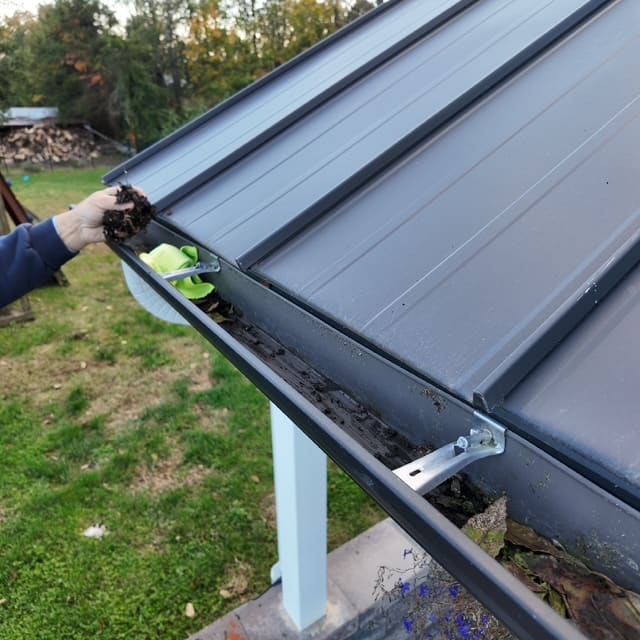
Commercial gutters are heavy-duty rainwater management systems engineered for the larger roof areas, higher water volumes, and code requirements of office buildings, retail centers, warehouses, multi-family housing, and institutional properties. Unlike residential setups, commercial systems often use oversized box gutters, 6-inch or 7-inch K-style profiles, larger downspouts, and reinforced hangers to handle runoff from sprawling flat or low-slope roofs. All Pro Gutter Guards designs, installs, and maintains these systems across PA, NJ, MD, DE, and VA, protecting your foundation, parking surfaces, walkways, and tenants from water damage. The outcome is a durable, properly pitched, fully sealed drainage system that moves large storm volumes away from your structure and keeps your property code-compliant and liability-free.
What's Included: Our Commercial Gutter Process Step by Step
Every commercial project begins with a site assessment where we measure roof square footage, calculate runoff volume, inspect existing drainage, and evaluate the fascia and soffit for hidden rot. From that data we size the system properly, because an undersized gutter is the single most common cause of commercial overflow. We then engineer the gutter pitch, downspout placement, and outlet count to match the actual water load. Installation follows: we fabricate seamless gutter runs on-site to minimize joints, mount reinforced hangers at tighter intervals, set oversized downspouts, and integrate drip-edge flashing where the roof membrane meets the gutter line. Finally, we water-test the system, confirm flow at every outlet, and document the work. For larger properties we schedule around your operating hours to avoid disrupting tenants, customers, or staff.
Profiles and Materials: Choosing the Right Commercial System
Commercial buildings call for stronger profiles than typical homes. Oversized K-style gutters in 6-inch and 7-inch widths handle high volume while bolting cleanly to fascia, making them the default for most low-rise commercial structures. Box gutters and internal gutters suit large flat roofs and parapet walls where the system must carry enormous storm flow. Half-round gutters appear on historic or architectural commercial facades where appearance matters. For material, aluminum offers corrosion resistance and value; galvanized and stainless steel deliver strength for industrial sites and wide spans; copper serves premium architectural projects. Downspout sizing scales with the system, often 3x4 or larger rectangular profiles, sometimes round commercial stock. We match profile and metal to your roof type, climate exposure, and budget, since the right pairing determines how long the system lasts before fasteners loosen or seams fail.
Signs Your Commercial Property Needs Attention
Commercial drainage problems rarely stay small. Watch for water sheeting over gutter edges during storms, which signals undersized capacity or clogged outlets. Pooling near foundations, cracked sidewalks, and eroded landscaping point to failed downspout drainage that creates slip-and-fall liability. Stained or peeling fascia and soffit, interior ceiling leaks at the building perimeter, and rust streaks down exterior walls all indicate the system is overwhelmed or leaking at seams. Sagging gutter sections mean hangers have pulled loose under weight. In colder parts of PA and the mountain regions, recurring ice dams along the eaves warn of poor drainage and heat loss. Debris-packed gutters on properties surrounded by trees breed standing water and pest infestations. Any of these signs means the system needs evaluation, because deferred commercial drainage repairs escalate into structural and tenant-liability costs fast.
Done Right vs. Done Poorly
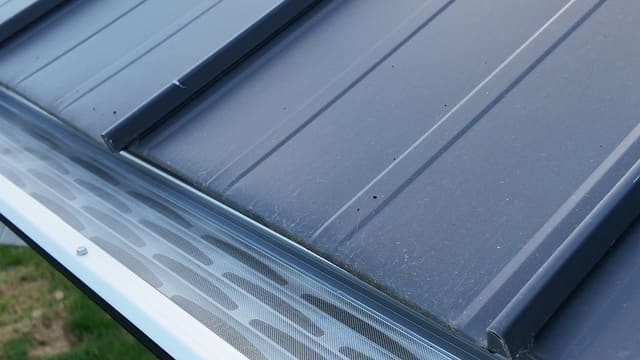
A properly installed commercial system is sized by calculation, not guesswork. Done right means correct gutter pitch toward each outlet (typically a quarter inch per ten feet), seamless runs that eliminate leak-prone joints, hangers spaced tightly to carry water weight, downspouts sized and located to clear peak storm flow, and drip-edge flashing that directs water into the gutter rather than behind it. Done poorly shows up as flat or reverse-pitched runs that hold standing water, too few outlets that back up during downpours, sealant slathered over joints that crack within a season, and hangers spaced like a house when a commercial load demands far more support. We also integrate gutter guards such as micro-mesh leaf guard where debris is heavy, protecting against clogs on hard-to-access roofs. Cutting corners on a commercial system guarantees callbacks, water intrusion, and premature replacement.
What Affects the Cost
Commercial gutter pricing depends on measurable factors rather than a flat rate. Total linear footage and roof square footage drive material and labor volume. Gutter profile and width matter, since 7-inch box and oversized K-style cost more than standard sizes. Material choice has the widest range: aluminum sits at the affordable end, galvanized and stainless steel cost more for the added strength, and copper is the premium tier. Building height and access drive labor, because multi-story facades, parapets, and tight sites may require lifts or scaffolding. The number of downspouts and outlets, the condition of existing fascia (rotted board replacement adds scope), and add-ons like micro-mesh gutter guards all factor in. Tear-off and disposal of a failed system adds cost too. We provide itemized written estimates after measuring your property, so you see exactly where every dollar goes rather than a vague lump sum.
Why Use a Licensed, Insured Local Pro
Commercial drainage carries real liability, so the contractor matters. A licensed, insured company protects you if a worker is injured on a multi-story facade or if faulty work causes tenant water damage, whereas an uninsured crew leaves you exposed. All Pro Gutter Guards has served PA, NJ, MD, DE, and VA since 2001, so we know regional code requirements, storm intensity, and freeze-thaw cycles that produce ice dams in the northern markets. Local presence means we respond fast for emergency overflow during storms and stand behind our workmanship rather than disappearing after the check clears. We coordinate around your business hours, document the work for your records and insurer, and maintain relationships with property managers who need dependable, scheduled service. Open 24/7, we treat your building's drainage as the risk-management priority it actually is.
Commercial gutters protect your building, tenants, and bottom line only when they are sized by calculation, installed seamlessly, and maintained on schedule. All Pro Gutter Guards has engineered durable, code-compliant drainage across PA, NJ, MD, DE, and VA since 2001, working around your business hours and standing behind every installation. Whether you need a new system, an upgrade, or routine service, contact us to keep storm water moving away from your property.
What to Expect
Free On-Site Estimate
We inspect your roofline, measure your gutters, and give you a clear, no-obligation quote.
Custom Recommendation
We match the right gutter or guard system to your home, trees, and local weather.
Professional Installation
Our licensed, insured crews install clean, lasting work — usually in a single day.
Final Walkthrough
We test water flow, clean up the site, and back the work with our warranty.
Why Choose All Pro Gutter Guards?
20+ Years Experience
Trusted by thousands of homeowners since 2001.
Licensed & Insured
Fully licensed in PA, NJ, MD, DE & VA. Bonded & insured.
Free Estimates
No-obligation quotes — transparent pricing, no surprises.
Commercial Gutters — FAQs
How are commercial gutters different from residential gutters?
Commercial gutters are sized and reinforced for far larger roofs and water volumes than homes. They commonly use 6-inch or 7-inch K-style profiles, box or internal gutters, oversized downspouts, and tightly spaced heavy-duty hangers. The system is engineered by calculating actual runoff from the roof area, while residential gutters often rely on standard sizing. Commercial work also accounts for code compliance, tenant liability, and building access.
What size gutters does my commercial building need?
Your gutter size is determined by roof square footage, roof pitch, and your region's peak rainfall intensity, not by a one-size standard. Most commercial low-rise buildings use 6-inch or 7-inch K-style gutters, while large flat-roof structures need box or internal gutters with multiple oversized outlets. We measure your roof and calculate the runoff volume before recommending a profile, so the system never overflows during heavy storms.
Can you install commercial gutters without disrupting my business?
Yes. We schedule commercial installations around your operating hours, including early mornings, evenings, and weekends when needed, to keep your business, tenants, and customers undisturbed. We stage materials efficiently, fabricate seamless runs on-site, and keep work zones contained and safe. For occupied multi-tenant properties we coordinate directly with your property manager so access and timing are arranged in advance.
What gutter material is best for a commercial property?
The best material depends on your building, exposure, and budget. Aluminum offers strong corrosion resistance at a sensible price and fits most commercial projects. Galvanized and stainless steel provide added strength for industrial sites and wide spans. Copper suits premium architectural facades. We match the metal to your roof type, climate, and longevity goals rather than defaulting to one option for every building.
Do commercial gutters need gutter guards?
Commercial gutters benefit greatly from guards when the property is surrounded by trees or has hard-to-access roofs. Micro-mesh leaf guards keep debris out while letting high water volumes through, reducing clog-driven overflow and cutting maintenance trips. On large or multi-story buildings, guards lower the long-term cost and safety risk of repeated manual cleaning, making them a practical investment for many commercial systems.
How often should commercial gutters be inspected?
Commercial gutters should be inspected at least twice a year, typically in spring and fall, with additional checks after major storms. High debris loads, large roof areas, and tenant liability make routine inspection essential. Regular maintenance catches loose hangers, clogged outlets, and seam leaks before they cause foundation damage or interior leaks. Call All Pro Gutter Guards at (833) 487-0469 to set up a maintenance schedule for your property.
What causes commercial gutters to overflow?
Commercial gutters overflow from undersized capacity, too few downspout outlets, clogged debris, or incorrect gutter pitch that holds standing water. Large roofs generate enormous runoff during downpours, so a system designed like a residential one quickly backs up. We diagnose the root cause by measuring your roof load and inspecting outlets, then correct sizing, pitch, and drainage so water clears even in peak storms.
Are you licensed and insured for commercial work?
Yes. All Pro Gutter Guards is fully licensed and insured for commercial gutter work across PA, NJ, MD, DE, and VA, and we have operated since 2001. Our coverage protects your property and our crews during multi-story and high-access installations. We provide documentation for your records and insurer. Reach us anytime at (833) 487-0469, since we are open 24/7 for estimates and emergencies.
Our Locations Near You
Ready to Get Started?
Contact us for a free, no-obligation estimate today.