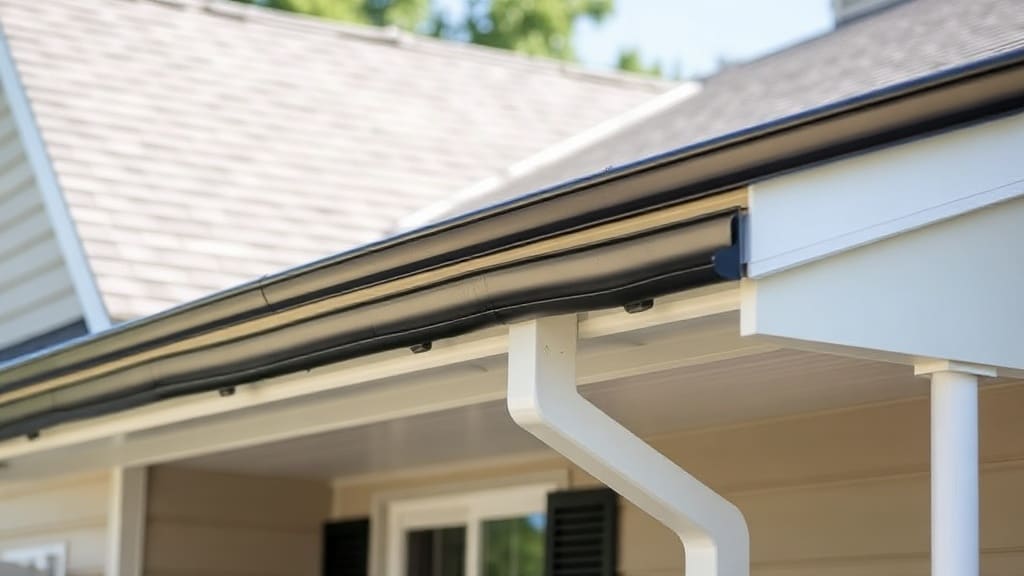
A gutter guard is a cover or screen fitted over an open gutter that lets rainwater in while keeping leaves, pine needles, seed pods, and roof grit out. The goal is simple: keep water flowing freely off your roof, down the downspouts, and away from your foundation without you climbing a ladder twice a year. This buyer's guide explains how guards actually work, the main system types, what separates quality from junk, sizing, professional versus DIY, real cost factors, and how to choose for your home and trees.
In this guide
How Gutter Guards Actually Work
Every gutter guard solves one problem two ways: it has to let water pass through and shed debris off the top. Screen and mesh styles cover the gutter opening so water drains through holes or weave while leaves sit on top and blow or wash away. Reverse-curve designs use surface tension; water clings to a curved nose and wraps into a thin slot, while leaves carry past the edge and drop to the ground. The catch is that no guard is maintenance-free. Fine debris, shingle grit, and pollen still collect, and pine needles can spear into wider openings. A good guard dramatically reduces how often you need gutter cleaning and protects against clogs that cause overflow, rot at the fascia and soffit, and ice dams in winter. Think of a guard as a filter that lengthens the interval between cleanings, not a device that eliminates upkeep forever. Matching the guard to your specific trees, roof pitch, and rainfall intensity is what determines whether it performs for years or fails in the first hard storm.
The Main System Types at a Glance
There are five broad families. Screen guards are perforated metal or plastic panels that snap or screw over the gutter; cheap and easy, but small debris passes and they can pop loose. Micro-mesh guards use a fine stainless steel mesh over a rigid frame; they block almost everything, including shingle grit and pine needles, and are the gold standard for heavy tree cover when properly pitched. Surface-tension reverse-curve gutter guards, sometimes called leaf guard hoods, are solid covers that wrap water around a nose into a slot; they handle leaves well but can overshoot in torrential rain and need correct roofline alignment. Foam inserts are wedge-shaped blocks that sit inside the gutter; inexpensive and DIY-friendly, but they trap seeds and degrade with UV exposure. Brush guards are bottle-brush cylinders laid in the trough; the easiest to install and the least effective, since debris lodges in the bristles. The right family depends on your debris load, budget, and whether the guard will be matched to a k-style or half-round gutter profile.
What to Look For in a Quality Guard
Material and build quality decide everything. Look for surgical-grade or marine-grade stainless steel mesh rather than aluminum or plastic screen, which corrodes, sags, or becomes brittle in UV and freeze-thaw cycles. The support frame should be aluminum or stainless, not vinyl that warps in summer heat. Check how the guard attaches: systems that clip onto the front lip and rest on the gutter, or fasten to the gutter itself, are far better than units screwed under the shingles, which can void roofing warranties and lift drip-edge flashing. Mesh openness matters too; the weave must be fine enough to stop your specific debris but open enough to handle a downpour without water sheeting over the edge. Ask about the pitch and how the guard sits relative to the roof plane, because a flat or back-pitched guard pools water and grows algae. Finally, weigh the warranty realistically. A strong product warranty paired with a workmanship guarantee from the installer signals confidence; a long warranty on a flimsy guard is just marketing.
Sizing and Matching Guards to Your Gutters
Guards are not one-size-fits-all. Most homes run five-inch or six-inch k-style gutters, while older or higher-end homes may have half-round gutters that need a curved or custom-fit guard. Before buying, confirm your gutter width, profile, and the size of the downspouts feeding them, because a guard that filters perfectly but feeds a clogged or undersized downspout still overflows. Roof area and pitch drive water volume; a steep, large roof dumps water fast and demands a higher-flow mesh or a properly tuned reverse-curve. Gutter pitch, the slight slope toward the downspout, must be correct underneath the guard so water keeps moving instead of standing. If your gutters are old, sagging, or pulling from the fascia, address gutter repair or even gutter installation first, since guards are only as good as the trough they sit in. Homeowners adding seamless gutter installation often integrate guards in the same project, which lets the installer match guard, gutter size, and downspout installation as one engineered system rather than mismatched parts.
Professional Installation vs DIY
Foam, brush, and many snap-in screen guards are genuinely DIY-friendly if you are comfortable on a ladder and your gutters are in good shape. They cost less, install in an afternoon, and are easy to remove for cleaning. The tradeoffs are durability and performance; budget guards clog or dislodge sooner, and working at height carries real fall risk. Micro-mesh and reverse-curve systems are a different matter. They reward precise pitch, clean and dry gutters at install, secure attachment that does not disturb the drip-edge or shingles, and proper alignment with the roof plane. A professional crew also inspects the fascia and soffit for hidden rot, confirms the gutter pitch, clears the gutters first, and ties the work to a workmanship warranty. For two-story homes, steep roofs, or heavy tree cover, professional gutter guard installation usually pays for itself by getting the system right the first time and avoiding the overflow, ice dam, and foundation problems a poorly fitted guard can create.
What Gutter Guards Cost and What Drives Price
Price varies widely because the product range is wide. Foam and brush inserts are the cheapest per foot, screen guards sit in the middle, and professionally installed micro-mesh and reverse-curve systems are the most expensive but also the longest-lasting. Rather than chase a single number, understand the factors that move the quote. Linear footage of gutter is the biggest driver, followed by the number of stories and roof pitch, which affect labor, ladders, and safety equipment. The guard material and brand tier matter, as does whether your existing gutters need cleaning, repair, or replacement first. Homes with many inside and outside corners, multiple downspouts, or steep complex rooflines take more labor. Get itemized quotes that separate the guard, the labor, and any gutter cleaning or repair, and ask what warranty covers both product and workmanship. The cheapest guard is rarely the best value; a quality system that prevents one rotted fascia board or one ice dam often saves more than it costs.
How to Decide for Your Home
Start with your trees. If you have pines, oaks, or maples shedding needles, catkins, and seed pods, you need fine micro-mesh; broad-leaf-only cover can tolerate a more open screen. Next, look at your roof: steep and large means high water volume, so prioritize flow capacity and correct pitch over the lowest price. Consider your gutters' condition, because guards belong on sound, properly pitched, seamless gutters, not on sagging sections that need repair. Factor in how comfortable you are on a ladder; if you would rather never climb again, a professionally installed system makes sense. Finally, think about climate. In our PA, NJ, MD, DE, and VA service area, freeze-thaw cycles and the risk of ice dams reward durable stainless guards and good attic ventilation over cheap plastic that cracks in cold. When in doubt, have a contractor inspect your specific roofline, debris load, and downspouts and recommend a matched system rather than guessing from a catalog.
The right gutter guard keeps water flowing, protects your fascia, soffit, and foundation, and turns seasonal cleaning into a quick inspection. Match the guard to your trees, roof pitch, and gutter profile rather than chasing the lowest price, and make sure the gutters underneath are sound and properly pitched first. If you would rather get it engineered right the first time, All Pro Gutter Guards can inspect your home across PA, NJ, MD, DE, and VA. Call (833) 487-0469.
Frequently Asked Questions
Do gutter guards eliminate the need for cleaning?
No. Quality gutter guards greatly reduce how often you need gutter cleaning, but none are fully maintenance-free. Fine grit, pollen, and pine needles still accumulate on or in any guard over time, and the mesh or surface needs occasional rinsing. Expect to inspect once or twice a year instead of climbing up to scoop debris every season. A good guard changes cleaning from a chore into a quick check.
Will gutter guards prevent ice dams?
Not by themselves. Ice dams form when attic heat melts roof snow that refreezes at the cold eaves, so the real fixes are attic insulation and ventilation. Guards help indirectly by keeping gutters clear so meltwater can drain instead of pooling and freezing. Durable stainless guards withstand freeze-thaw cycles better than plastic, but no guard substitutes for proper insulation, ventilation, and a sound drip-edge.
What is the best type of gutter guard for pine needles?
Fine micro-mesh is the most effective option for pine needles. The stainless steel weave is tight enough to keep needles from spearing through, which is exactly what happens with wider screen and reverse-curve openings. Needles then dry on the surface and blow or wash off. For heavy pine cover, prioritize a high-quality micro-mesh on a rigid frame, properly pitched so water keeps moving and debris does not mat down.
Can I install gutter guards over my existing gutters?
Usually yes, if your gutters are sound, clean, and correctly pitched. Many guards are designed to retrofit onto existing k-style or half-round gutters. First confirm the gutters are not sagging, leaking, or pulling from the fascia; if they are, address gutter repair or replacement before adding guards. Installing a guard over failing gutters just hides the problem and can make overflow and rot harder to spot.
Do gutter guards damage the roof or void warranties?
They can if installed incorrectly. Guards that are screwed up under the shingles may lift the drip-edge, disturb flashing, and void some roofing warranties. The safer approach is a system that clips to the gutter's front lip or fastens to the gutter itself without touching the shingles. A professional installer knows how to attach guards without compromising the roof, which is why proper installation matters as much as the product.
Get a free, no-obligation estimate from a local team.
(833) 487-0469