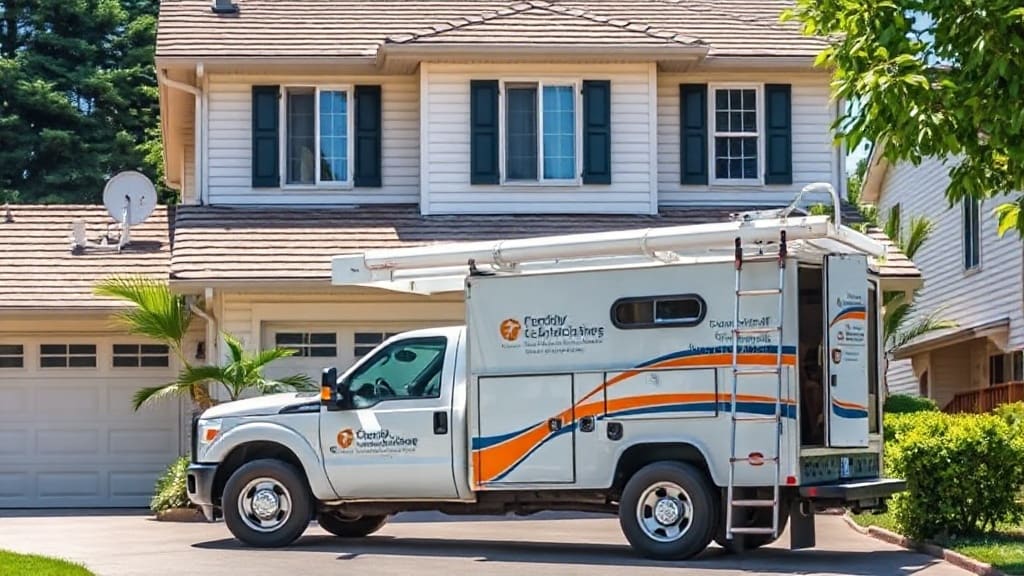
A gutter contractor handles the system that protects your roof, fascia, foundation, and landscaping from water damage, so the wrong hire costs far more than the job itself. Whether you need seamless gutter installation, gutter repair, routine gutter cleaning, or new gutter guards, the contractor's licensing, insurance, and workmanship matter as much as the materials. This guide walks through seven things any homeowner in PA, NJ, MD, DE, or VA can check before signing. Use it as a checklist, and treat any contractor who resists these questions as a warning, not a bargain.
In this guide
- 1. Verify the License and Registration
- 2. Confirm Insurance Before Anyone Climbs a Ladder
- 3. Read Real, Verifiable Reviews
- 4. Get a Detailed, Written Firm Quote
- 5. Make Sure They Are Not Tied to One Product
- 6. Insist on a Workmanship Guarantee and Clear Warranties
- 7. Choose a Local, Established Presence
- Red Flags: Door-Knockers, Vague Pricing, and Pressure
1. Verify the License and Registration
Start with licensing because it is the easiest item to confirm and the one bad actors most often skip. Requirements differ by state: Pennsylvania, New Jersey, Maryland, Delaware, and Virginia each register or license home-improvement contractors, and many municipalities add their own permit rules for exterior work. Ask for the contractor's license or registration number and look it up through your state's consumer-affairs or licensing board rather than taking a photo of a card at face value. A legitimate company will hand over the number without hesitation. While you are checking, confirm the business name on the license matches the name on the quote, the truck, and the website. Mismatches often signal a crew working under someone else's credentials. Licensing does not guarantee craftsmanship, but it confirms the company is accountable to a regulator, carries a verifiable business identity, and can legally pull permits for work that touches your fascia, soffit, or roofline. If a contractor tells you gutters are too minor to require any registration, verify that claim independently before you rely on it.
2. Confirm Insurance Before Anyone Climbs a Ladder
Gutter work happens at height, around your roof edge, and a fall or a dropped ladder can damage property or injure a worker. Two coverages matter. General liability protects your home if the crew damages your siding, windows, drip edge, or landscaping. Workers' compensation protects you from liability if a worker is hurt on your property. Without it, an injured installer's medical costs can land on your homeowner's policy. Ask for a current certificate of insurance, and for larger jobs, request that the insurer send it to you directly so you know it is active and not expired or canceled. Check the coverage dates and that the policy names the actual company doing your work. A contractor who hesitates, offers excuses, or claims their crew is covered without proof is asking you to absorb a risk they should be carrying. This single step separates established companies from uninsured operators who underbid precisely because they skip the cost of real coverage.
3. Read Real, Verifiable Reviews
Reviews tell you how a contractor performs after the deposit clears. Look past the star rating to the substance: Do customers mention seamless gutter installation that still drains correctly years later, prompt gutter repair, clean job sites, and honest communication when something went wrong? A handful of glowing one-line reviews posted the same week is less trustworthy than a steady stream of detailed feedback over several years. Read the company's responses to criticism, since how a business handles a complaint predicts how it will treat you. Check more than one source. Cross-reference the company's own site with independent platforms and, where available, regional review services and the Better Business Bureau. Be wary of a contractor with no online footprint at all, or one whose only references are a short list they hand-pick. Ask for addresses of recent local jobs you can drive past. Functioning gutters with clean miters, proper gutter pitch, and tidy downspouts are easy to spot from the curb and tell you more than any testimonial.
4. Get a Detailed, Written Firm Quote
A trustworthy quote is specific and in writing. It should name the gutter profile, whether a K-style gutter or a half-round gutter, the material and gauge, the linear footage, the number and placement of downspouts, and any gutter guard product by name and type. It should also spell out related work the job actually requires, such as fascia or soffit repair, new drip edge, or correcting gutter pitch so water reaches the downspouts. Vague pricing is a red flag. A quote that reads only 'gutters and guards, $X' gives a contractor room to add charges later or substitute cheaper materials. A firm written quote also defines payment terms. Be cautious of anyone demanding a large cash deposit up front; reasonable progress payments tied to milestones are standard, and full payment before work begins is not. Get at least two or three written estimates so you can compare scope, not just bottom-line price. The cheapest number often hides a thinner gauge, fewer downspouts, or omitted prep work that surfaces as a problem later.
5. Make Sure They Are Not Tied to One Product
Be cautious of any contractor who installs only a single proprietary gutter guard and insists it is the answer for every home. No one product is right for every roof, tree canopy, or rainfall pattern. Micro-mesh guards excel at keeping out fine debris like shingle grit and pine needles, but they need a quality screen and proper pitch to shed water in heavy storms. Reverse-curve gutter guards can shed leaves well but may struggle in driving rain or with small debris. Screen and foam leaf guards each have trade-offs in cost, lifespan, and maintenance. A contractor who carries several options and explains why one fits your situation is giving you advice; one locked into a single high-pressure product line is giving you a sales pitch. The same applies to gutters themselves. A good company will discuss seamless gutters versus sectional, material choices, and whether your existing system needs replacement or just gutter cleaning and repair. Flexibility signals expertise. A one-product script signals a commission structure.
6. Insist on a Workmanship Guarantee and Clear Warranties
There are two warranties to understand, and they are not the same. The manufacturer's warranty covers the gutters or guard material against defects and is only as good as the company that honors it. The workmanship guarantee covers the contractor's installation: leaks at the miters, fasteners pulling loose, incorrect gutter pitch, or downspouts that come apart. Installation errors cause most gutter failures, so the workmanship guarantee is the one that protects you day to day. Get its length and terms in writing, and ask exactly what is covered and what voids it. A contractor confident in their crews will stand behind the labor for a meaningful period. Also ask how warranty service works in practice: who you call, how fast they respond, and whether they are likely to still be in business when you need them. A long product warranty from a company that may not answer the phone in three years is worth little. Tie this back to local presence and verifiable history.
7. Choose a Local, Established Presence
A contractor rooted in your region is easier to hold accountable and more likely to be there when a warranty claim or a follow-up repair arises. Local companies know the conditions that drive gutter problems across PA, NJ, MD, DE, and VA, from heavy spring pollen and dense tree cover to winters that produce ice dams along the roof edge. That regional knowledge shapes practical choices about gutter sizing, downspout placement, drip edge, and which gutter guard actually holds up. Look for a verifiable physical address and local phone number, a track record spanning years rather than a single season, and a crew that has worked nearby homes you can reference. Out-of-area operators and pop-up storm-chasing crews tend to disappear once the check clears, leaving you to chase a warranty across state lines. The combination of longevity, local references, and verifiable contact information tells you a company intends to keep serving the area, which is exactly the partner you want for a system that needs occasional cleaning, repair, and inspection over its lifetime.
Red Flags: Door-Knockers, Vague Pricing, and Pressure
Some warning signs are reliable enough to end a conversation. The unsolicited door-knocker who happens to be in your neighborhood and noticed your gutters is a classic storm-chasing tactic; legitimate contractors rarely build their business cold-canvassing roofs they have not inspected. High-pressure closing is another: today-only discounts, a price that drops sharply the moment you hesitate, or a contract pushed in front of you before you have a written scope all signal a sales operation, not a craft. Vague pricing with no line items, large cash-only deposits, no verifiable license or insurance, and reluctance to provide local references each compound the risk. Pressure to sign immediately exists to stop you from doing exactly what this guide recommends. A reputable gutter contractor expects you to verify their credentials, compare written quotes, and take a few days to decide. If anything about the pitch makes you feel rushed or kept in the dark, slow down. The gutters will still need doing next week, and the right contractor will still be glad to earn the job.
Choosing a gutter contractor comes down to verification, not salesmanship. Confirm the license and insurance, read real reviews, get detailed written quotes, favor a contractor who offers options instead of one product, insist on a workmanship guarantee, and choose an established local presence. Treat door-knockers, vague pricing, and pressure as reasons to pause. Work through these seven checks and you will hire a company that protects your home for years. All Pro Gutter Guards has served PA, NJ, MD, DE, and VA since 2001; call (833) 487-0469.
Frequently Asked Questions
How do I verify a gutter contractor's license and insurance?
Ask for the license or registration number and the certificate of insurance, then verify both independently. Look up the license through your state's contractor or consumer-affairs board, and for larger jobs have the insurer send the certificate of insurance directly to you. Confirm the dates are current and the business name matches the quote. A legitimate contractor provides this readily; resistance is a warning sign.
Why should I avoid a contractor who only sells one gutter guard product?
No single product suits every home. Micro-mesh, reverse-curve, screen, and foam guards each have different strengths depending on your tree cover, roof, and rainfall. A contractor offering several options and explaining the trade-offs is advising you. One locked into a single high-pressure product line is usually following a commission-driven sales script rather than recommending what actually fits your home.
What is the difference between a product warranty and a workmanship guarantee?
A product warranty covers the gutter or guard material against manufacturing defects. A workmanship guarantee covers the contractor's installation, including leaks at the miters, loose fasteners, incorrect gutter pitch, and failing downspouts. Because most gutter failures come from installation errors rather than bad material, the workmanship guarantee is the one that protects you most. Always get both in writing with clear terms.
What does a good written gutter quote include?
A firm written quote names the gutter profile and material, the linear footage, the number and placement of downspouts, and any gutter guard by name and type. It also lists required prep such as fascia repair, drip edge, or pitch correction, plus payment terms tied to milestones. Vague pricing or a single lump sum with no detail leaves room for surprise charges and substituted materials.
Are door-to-door gutter salespeople a red flag?
Often, yes. Unsolicited door-knockers who claim they noticed your gutters while in the neighborhood are using a common storm-chasing tactic. Combined with today-only discounts, large cash deposits, no verifiable license or insurance, and pressure to sign immediately, it points to a sales operation rather than a reputable contractor. A trustworthy company expects you to verify credentials and compare quotes before deciding.
Get a free, no-obligation estimate from a local team.
(833) 487-0469