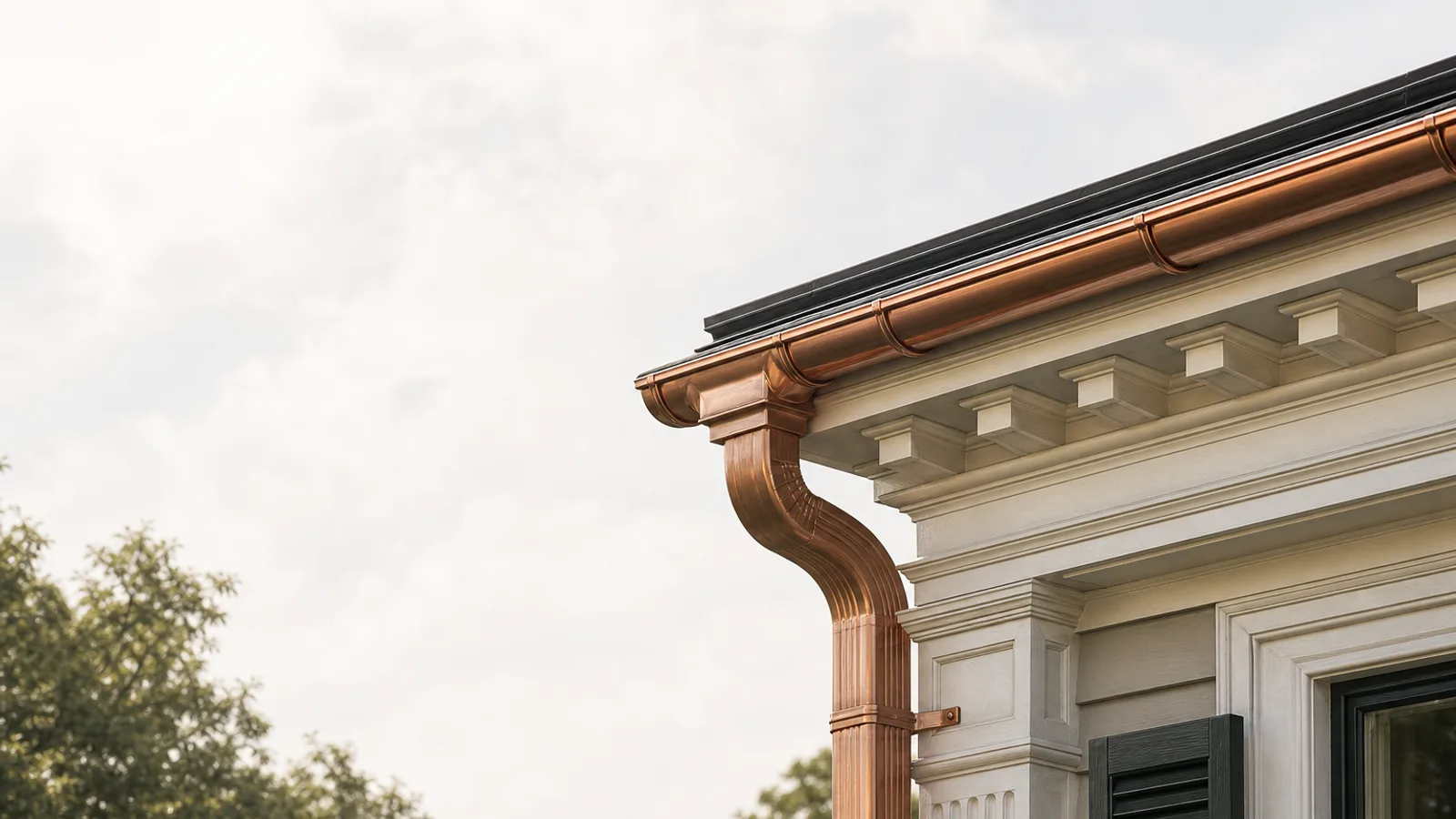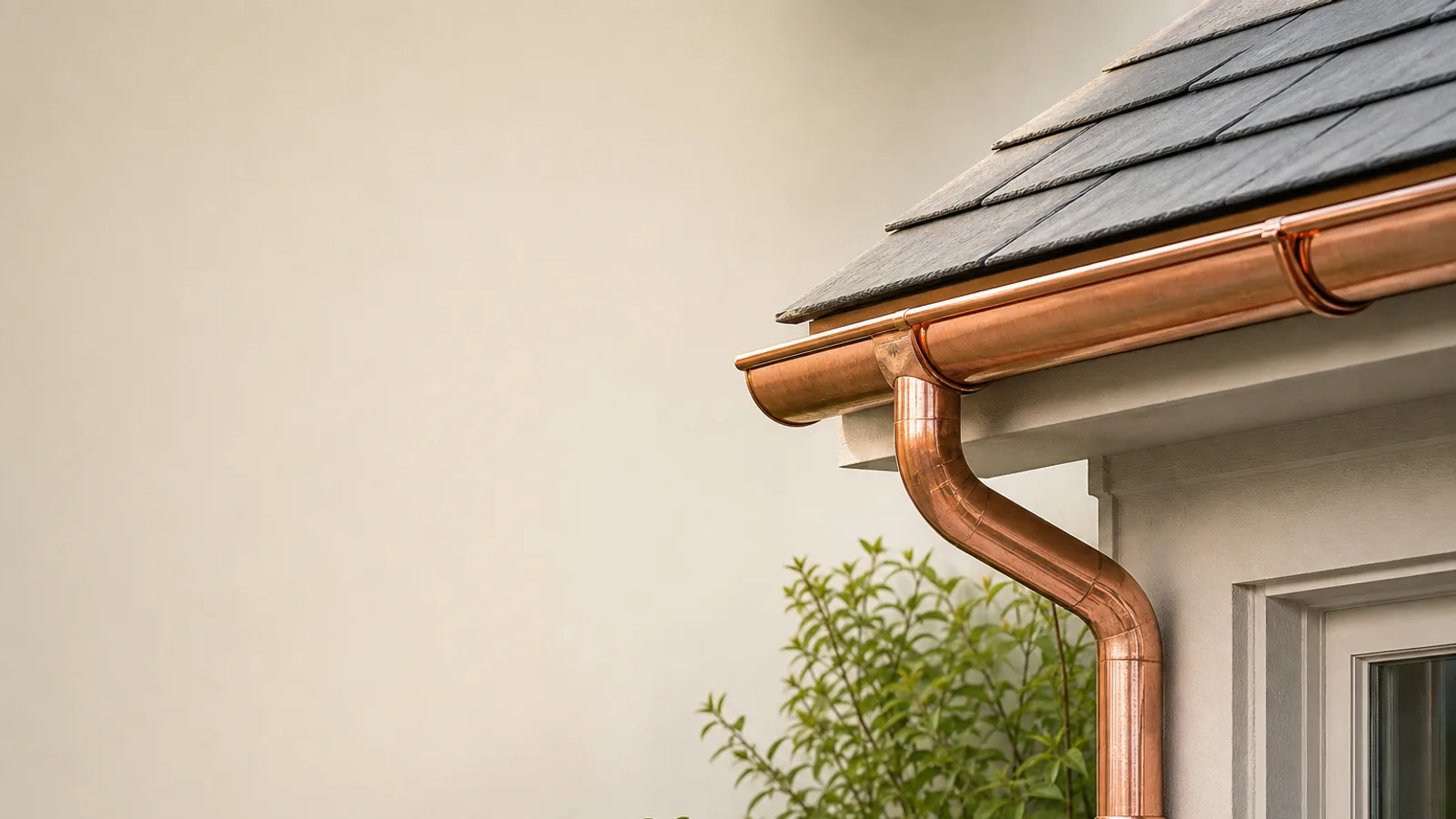
Copper gutters are a long term investment, so the questions you ask up front matter as much as the metal you choose. This guide walks you through what to ask about scope, materials, workmanship, and warranties before you sign anything.
Why do the right questions matter so much with copper gutters?
Copper gutters fall into a different category from basic aluminum or vinyl. You are paying for a premium metal that can last for decades, develop a natural patina, and complement historic or high end homes. That only works in your favor if the contractor treats the job as a specialty installation, not just a color upgrade. The questions you ask before you sign a contract are your main tool for testing that.
Industry guides aimed at homeowners stress that you need clarity on the basics like scope of work, cleanup, and payment timing, but also on more technical points, especially when you step up to copper. Trade handbooks for architects spell out standards for copper thickness, seam construction, and compatible fasteners. Walkthroughs written by experienced remodelers show how cutting corners on joints, soldering, or hardware can shorten the life of an otherwise excellent material. When you combine these perspectives, the pattern is clear: copper itself is rarely the weak link, it is the design, installation, and warranty coverage around it.
If you live in Pennsylvania, New Jersey, Maryland, Delaware, or Virginia, you also have mixed weather to plan for. Heavy rain, occasional snow, and seasonal temperature swings can expose poor hanger spacing, inadequate expansion joints, or marginal fastening. Asking about hanger spacing, downspout sizing, and slope is not nitpicking. It is how you confirm that the installer understands how water will move through your specific roof and gutter system for years to come.
- Copper is a long term investment, not a disposable product
- Most failures trace back to installation details, not the metal
- Regional weather exposes shortcuts in design and fastening
- Smart questions help you screen for real copper experience
What should be included in a copper gutter estimate and scope?
Before you compare prices, you need to be sure you are comparing the same job. Consumer guides on hiring gutter contractors recommend that you pin down exactly what is included in the proposal. That means confirming the linear footage of gutters, how many downspouts are planned, and whether the contractor will remove and dispose of the old gutters. It also means clarifying if fascia repairs, drip edge adjustments, or minor rotted wood replacement are part of the price or billed separately.
You should also ask how the installer measured and sized the system. Better practice is to size gutters and downspouts based on your roof area and how water concentrates into valleys, not just on what was there before. Ask where downspouts will be placed and how the pitch will be set so that water drains without leaving standing water. Finally, check that final cleanup is spelled out, including removal of scrap metal, nails, and old hardware. When the scope is crystal clear, you avoid surprise change orders halfway through your copper gutter installation.
For many homeowners, it helps to see a written line item for each major piece: gutters, downspouts, elbows, outlets, hangers, and any decorative components like conductor heads. If the contractor offers gutter guards along with the copper system, ask whether those guards are compatible with copper and how they are attached. You might decide to pair your copper gutters with guards later, but it is smart to make sure the basic design will work with a guard system when you are ready.
- Confirm measured linear feet of gutters in the quote
- Verify how many downspouts and where they will go
- Ask if removal and disposal of old gutters is included
- Clarify whether fascia or wood repair is part of the job
How can you tell if the copper materials and hardware are up to standard?
Copper is not all the same. An architecture handbook from the copper industry lays out minimum thicknesses for gutters and downspouts, such as 16 ounce copper for common hang on gutters and thicker copper for built in designs. Ask your installer what weight or thickness of copper they will use and where it comes from. If the answer is vague or they cannot provide a specification sheet, that is a warning sign that they treat copper like any other metal coil.
You should also ask about how seams and joints are built. Technical walkthroughs of quality copper installs emphasize that joints should be mechanically fastened and soldered, not simply glued or sealed with caulk. Ask whether every joint is soldered, including corners, end caps, and outlets, and what soldering method is used. Good installers can explain their process, mention the importance of cleaning and fluxing before soldering, and talk about inspection for pinholes or leaks.
Fasteners and hangers deserve just as much attention. Trade resources warn against mixing copper with incompatible metals because of galvanic corrosion. Ask whether the hangers, screws, and straps are copper or at least copper compatible, and how often they are spaced along the run. You can also ask about thermal expansion and how the system allows the copper to move with temperature without distorting or pulling apart at seams. These questions help you confirm that the system is designed around copper’s specific behavior instead of borrowed from another material.
- Ask what copper weight or thickness is being used
- Confirm that joints are soldered, not just sealed
- Verify that hangers and fasteners are copper compatible
- Discuss how the design handles thermal expansion
What workmanship and warranty questions should you ask up front?
When you buy copper gutters, the metal itself often carries a long expected life, but the actual protection you receive depends on the warranties behind it. Industry articles recommend that you separate two things: the manufacturer or material warranty and the installer’s workmanship warranty. Ask how long each one lasts, what problems they cover, and whether there are any maintenance requirements that could void coverage. If you hear undefined terms like “lifetime” without written definitions, press for specifics or treat that as a red flag.
A detailed roofing and exterior guide notes that certain issues, like standing water caused by poor pitch, are treated as installation faults, not material defects. That means they fall under the workmanship warranty, not the copper manufacturer. Ask explicitly whether problems such as leaks at soldered joints, sagging runs, or improper slope are covered, and for how long. You should also ask what documentation you will receive at the end of the job, such as invoices, photos, and diagrams, since these can be helpful if you ever need a warranty inspection.
Response time is another key point. Some experts suggest that you should expect an inspection within a window like 7 to 14 business days after you report a problem. Ask your installer how quickly they typically respond to warranty calls and what their process looks like. Do they send someone to inspect, check hanger spacing and slope, and document findings before making repairs? Getting this information in writing, along with clear contact details for warranty service, gives you a realistic picture of what support will look like after installation.
- Ask for separate material and workmanship warranty terms
- Get all warranty details in writing, not just verbally
- Confirm which issues are considered installation defects
- Find out typical inspection and response times for claims
How do you check a copper installer’s experience and references?
Copper work requires a steadier hand and more training than basic sectional aluminum. Homeowner guides on hiring contractors recommend that you ask directly how many copper gutter jobs the installer has completed in the past few years and to see photos of recent projects. When you look at photos, pay special attention to tight inside and outside corners, miters, and transitions around roof features. Clean, straight lines and consistent soldered joints tell you a lot about the crew’s skill level.
You should also talk to references, but make the questions specific. Ask past customers whether the gutters drain correctly in heavy rain, whether there have been issues with leaks at joints or end caps, and how the installer responded to any problems. Ask if the crew protected landscaping and cleaned up metal scraps and solder drips around the home. For older or historic properties in the Mid Atlantic, you can also ask whether the installer coordinated with other trades, like roofers, to maintain the look of the house.
Finally, use technical questions as an informal skills test. Ask your potential installer how they handle seams: do they use preformed miters, custom hand cut corners, or a combination, and why. Ask what they check during a final walk through before calling a job complete. Contractors who work with copper regularly can usually walk you through hanger placement, solder checks, and water tests without hesitation. Those who speak only in generalities may not have the depth of experience you want for a long term copper investment.
What payment terms, scheduling, and cleanup details should you clarify?
Even with the technical details settled, a smooth copper gutter project also depends on clear expectations about money and timing. Consumer oriented guides suggest asking about deposit amounts, when progress payments are due, and what forms of payment are accepted. Clarify whether the deposit is refundable if material availability or other issues delay your job. You should also ask how long the actual installation will take once the crew starts and how they handle weather delays in regions like Pennsylvania and New Jersey where storms are common.
Cleanup is more than just picking up long strips of old gutter. Copper work can involve metal shavings, solder splatter, and removed fasteners that you do not want left in planting beds or driveways. Ask whether daily cleanup is included, if they use magnets for stray screws, and how they protect landscaping, siding, and walkways while working. Also clarify where materials and equipment will be staged and whether any vehicles will need driveway access. These questions protect your property and set expectations so you are not negotiating mid project.
Scheduling also ties into how the work coordinates with other improvements. If you are planning roof work, fascia repairs, or adding gutter guards, discuss the sequence so that each step supports the next. For example, you might decide to plan copper gutter installation and future guard installation together so that the gutter profile, hanger style, and guard attachment method are compatible. It is worth asking if the crew can share photos or a brief summary after the job that you can keep for your records and for any later upgrades.
How do these questions come together in a simple copper gutter checklist?
By this point the list of considerations may feel long, but in practice you can cover most of them in a focused conversation and a careful review of the written estimate. Start with scope and design so you understand exactly where gutters and downspouts will go, how they will be attached, and how the installer sized them for your roof. Move next into material details: copper weight, how seams are joined, hanger spacing, and hardware compatibility. These questions help you confirm that your system is designed for durability and safe water management.
Once the design is clear, shift to warranties and workmanship. Ask for written terms that explain who stands behind the material and the labor, how to request service, and how quickly you can expect a response. From there, check on experience and references, focusing specifically on past copper projects, not just general gutter work. Finally, nail down the practical items: payment schedule, expected start and finish dates, daily cleanup, and any special considerations for your property in the Mid Atlantic climate.
If you decide that copper is the right fit for your home and you want to move forward, this is also the time to ask how your new system will work with future accessories. For example, you might want to know how easy it will be to add gutter guards later and what options are compatible with your chosen profile and hanger style. When you are ready to look deeper, you can explore how copper gutter installation fits with the rest of your home’s drainage plan so that your investment in copper supports a low maintenance exterior for many years.
- undefined
- undefined
- undefined
- undefined
- undefined
- undefined
- undefined
- undefined
- undefined
- undefined
Frequently asked questions
- What should I ask a contractor before installing copper gutters?
- Start by asking what is included in the estimate, including footage, downspouts, removal, and cleanup, and then move to technical questions. Ask about copper thickness, how seams are joined, hanger spacing, and what type of fasteners they use. You should also ask about licensing, insurance, and how many copper jobs they have completed. Finish with questions about written warranties and how warranty service works if you have a problem later.
- How can I tell if a copper gutter installer really knows what they are doing?
- Experienced copper installers can quickly explain how they size gutters, how often they place hangers, and exactly how they solder joints. They should be able to show you photos of past copper projects, especially close ups of corners and joints, and provide references specific to copper work. If they hesitate when you ask about copper thickness, thermal expansion, or compatible hardware, that is a sign they may treat copper like any other metal.
- What warranty should come with copper gutter installation?
- You should expect two layers of protection: a material warranty from the copper supplier and a workmanship warranty from the installer. Trade documents recommend at least a couple of years of coverage against defects in materials and installation, including leaks and finish issues. Ask for the full terms in writing, including what is covered, what is excluded, and how to request service. Also find out how quickly they commit to inspecting any reported problems.
- Why does copper thickness matter for my gutters?
- Copper thickness affects how well your gutters resist denting, bending, and fatigue over time. Industry handbooks list common minimum weights, such as 16 ounce copper for many hang on applications, with heavier metal recommended in some designs. If a contractor uses thinner copper to cut costs, the gutters may deform more easily under snow, ladders, or long spans. Asking for the specific weight and comparing it to published standards helps you avoid underbuilt systems.
- Is it a red flag if copper gutter joints are only caulked and not soldered?
- Yes, relying only on caulk or sealant at copper joints is a warning sign for a long term installation. Remodeler guides emphasize that quality copper gutters use mechanically fastened and soldered joints, because soldered seams resist movement, temperature swings, and long term water exposure much better than sealant alone. Sealant can still be used as a backup in some situations, but it should not be the primary method holding a joint together.
- What should I know about downspout placement for copper gutters?
- Downspout placement is just as important as the gutters themselves, because it controls how quickly water leaves the system. Ask your installer how they decided where to put downspouts, how many are needed, and whether they are sized correctly for your roof and local rainfall patterns. They should be able to explain how the slope of the gutters directs water toward each outlet and where the water will discharge on your property. If they simply copy the old layout without explanation, press for more detail.
- Do I need special fasteners or hangers with copper gutters?
- You do need hardware that plays well with copper to avoid corrosion over time. Technical resources warn against mixing copper with incompatible metals, because dissimilar metals can react when water is present. Ask whether your hangers, straps, and screws are copper or specifically rated as compatible. The installer should also tell you how often they place hangers along the gutter run to prevent sagging and maintain the correct slope.
- Can I add gutter guards to copper gutters later, or do I need to decide now?
- You can often add gutter guards to copper gutters later, but it helps to plan ahead so everything is compatible. Ask your installer which guard styles work best with the gutter profile and hangers they are proposing and how those guards would attach. Some guards clamp to the front lip, some screw into the fascia, and some integrate with the gutter, so the design matters. If you know you are tired of cleaning gutters, it is worth including guard compatibility in your early questions.
Talk to All Pro Gutter Guards about copper gutter installation →