Virginia’s updated rainwater harvesting rules now require debris screens on gutters feeding storage tanks, while Pennsylvania and New Jersey have broader code and stormwater changes. Here is how these shifts affect gutter guard choices and permitting for homeowners in Pennsylvania, New Jersey, Maryland, Delaware, and Virginia.
How Virginia’s new rainwater harvesting rule makes gutter screens non negotiable
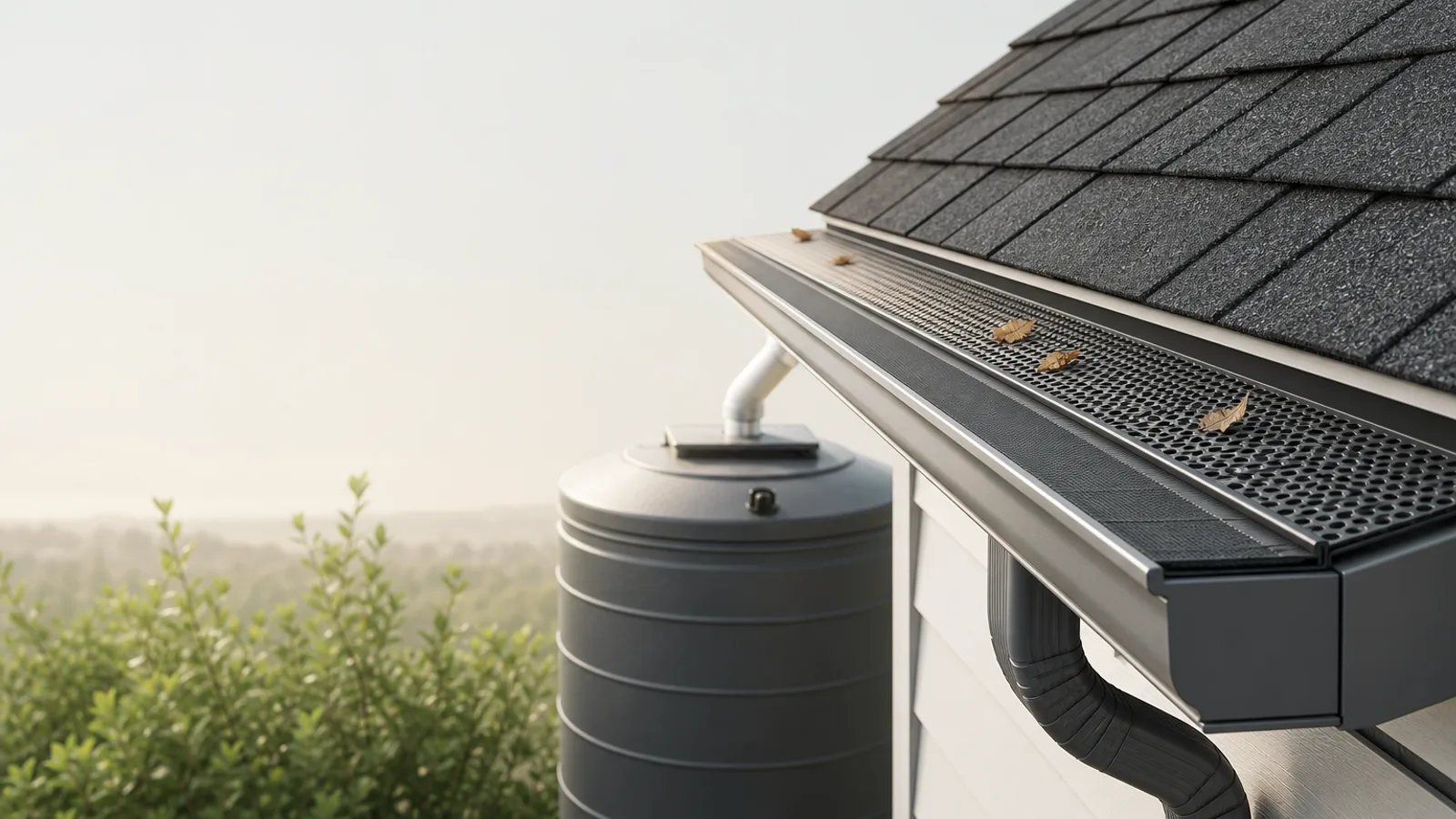
Virginia has quietly become the only state in this group that explicitly mentions screens on gutters in its health regulations for rainwater harvesting systems. The updated text in the Virginia Administrative Code section 12VAC5-635-240, effective October 3, 2026, requires that gutters, downspouts, and related piping that feed a rainwater storage tank must have a screen or debris excluder. In practical terms, if you are capturing roof runoff into a cistern or barrel that is covered by these rules, you cannot leave your gutters open to catch leaves and pine needles.
For you as a homeowner, this matters less as a permit hurdle and more as a performance standard that must be built into the design. Any contractor who installs rainwater harvesting for domestic uses in Virginia now needs to think about the mesh size, location, and cleanability of gutter screens so they keep bulk debris out without creating overflow problems at the eaves. A loosely fitted, easily clogged surface cover is no longer just an annoyance; it can make the system noncompliant and interfere with water quality protections the health regulations are trying to secure.
If you already have a tank system that pulls water from your roof, this rule gives you a clear direction for any upgrades. You will want a debris excluder that is sturdy enough to stay in place during heavy storms, simple to rinse off, and compatible with any first-flush or filter devices downstream. If you are planning a new system, it is smarter to choose a guard product and installation approach that is designed for these Virginia requirements from the outset so you are not paying twice to retrofit a better screen later.
- Check whether your Virginia home has a cistern or tank tied to roof gutters.
- Confirm that every gutter feeding a tank has a debris screen or excluder installed.
- Ask your installer what mesh size they use and how it affects cleaning frequency.
- Plan access points so you can safely rinse or brush off the screen when needed.
Why Pennsylvania’s 2021 code adoption still matters for gutter guard installation
In Pennsylvania, there has not been a headline change that names gutter guards directly, but there has been a major update to the underlying construction rules. As of January 1, 2026, the state’s Uniform Construction Code is based on the 2021 International Codes, with amendments that the state’s Review and Advisory Council adopted. This shift affects how new roofs, soffits, fascia boards, and water management details are designed and inspected, even though a snap-on guard or micro-mesh cover is not mentioned by name.
What this means for you is that gutter guard installation now lives in a slightly tighter framework of roof edge details, ventilation gaps, and flashing requirements. A guard that slides under shingles or blocks the bottom edge of roofing could conflict with the way some 2021 code provisions expect water and air to move at the eave. A contractor who knows the new UCC environment will look at the entire roof edge and make sure that the guard system does not pinch off ventilation slots, redirect water behind drip edge, or trap moisture against wood components.
If you are renovating in Pennsylvania and pulling permits for roofing or additions, inspectors will be looking primarily at structural and weather protection details, not at the guard product line. The practical risk is not a failed inspection for having gutter guards, but a hidden moisture problem if they are installed without respect for the more current code details. It is worth asking your installer how they fasten guards, how they interact with drip edge and underlayment, and how they avoid driving screws or clips into areas that the 2021 codes expect to remain sealed and continuous.
- Ask whether your contractor is familiar with Pennsylvania’s 2021 UCC based on ICC codes.
- Avoid guard systems that require lifting or prying existing shingles in Pennsylvania.
- Make sure drip edge and flashing remain visible and functional after guards go on.
- Confirm that attic or eave ventilation openings are not blocked by the guard profile.
How New Jersey’s stormwater rules shape smarter gutter guard choices
New Jersey’s most recent move in this area is not a guard specific law but a major climate and stormwater package known as NJPACT. The updated stormwater management rules, effective January 20, 2026, change how engineers and planners have to think about runoff from sites, including roofs. The state is asking builders to better account for increased rainfall intensity and to treat or infiltrate more of the water that leaves a property, rather than simply sending it down pipes as quickly as possible.
For you, the homeowner, these rules show up indirectly anytime you are involved in new construction, a major addition, or a site plan that triggers stormwater review. Gutter guards are part of this picture because they can influence where water lands and how evenly it flows into leaders, underground piping, or surface swales. A poorly chosen guard that causes water to overshoot the gutter in a heavy downpour can undermine the whole point of a carefully designed stormwater system that your builder had to provide under NJPACT.
On the other hand, a well matched gutter guard prevents leaf clogs from sending water over the front lip and dumping it next to your foundation. That supports infiltration basins, rain gardens, or dry wells that were designed with a certain inflow rate in mind. When you talk with your installer in New Jersey, it helps to describe any stormwater features on your lot so they can consider flow rates and downspout placement alongside the usual questions of guard material, profile, and maintenance.
- Identify whether your New Jersey property had stormwater features added with recent work.
- Tell your gutter contractor about any dry wells, rain gardens, or underground piping.
- Choose guard designs that handle high flow without letting water sheet over the edge.
- Have downspout outlets checked so they still feed the right stormwater structures.
Why Maryland and Delaware homeowners still need to think beyond permits
Recent updates to Maryland’s regulatory code and Delaware’s administrative rules have not singled out gutter guards or created new permit categories for them. The Maryland COMAR updates are on a steady schedule but have stayed focused on broader building, health, and environmental topics, and Delaware’s statutes continue to delegate much of the building code implementation to local jurisdictions. For routine guard installation on an existing home, you are usually operating in a space that is governed by general building and property maintenance rules instead of niche product regulations.
This absence of guard specific rules does not mean anything goes, however. Local codes in Maryland and Delaware still care about where water is directed, whether drainage interferes with neighboring properties, and how roof edges are protected. A guard installation that causes chronic overflow along a shared property line can still lead to disputes, and downspout changes that send more water toward a driveway, sidewalk, or basement walkout can create safety and moisture issues even if no inspector ever visits your home.
For you as a homeowner in these states, the practical focus remains on how the guard system changes water behavior and what that does to your foundation, landscaping, and hardscapes over time. A responsible installer will walk the property, look at slopes and existing drainage, and talk through how different guard designs interact with your specific mix of trees and roof pitches. Permits might not enter the conversation at all, but performance and risk should.
- Check how close your downspouts discharge to property lines in Maryland and Delaware.
- Watch where overflow currently shows up during heavy rain before adding guards.
- Avoid relocating downspouts so they discharge toward basement entries or low spots.
- Ask your installer how they will test water flow patterns after guard installation.
How to navigate gutter guard installation across five states without surprises
When you look across Pennsylvania, New Jersey, Maryland, Delaware, and Virginia, the picture that emerges is a patchwork of broader codes that shape the context for gutter guard installation, with only Virginia writing a direct requirement for screens in a specific rainwater harvesting setting. For most homes, the rules you feel day to day are not product bans but the quiet influence of building codes, stormwater designs, and health regulations that assume water will move in certain ways. The risk for you is less about a fine and more about paying for a system that does not work well with these ground rules.
The safer approach is to treat guard installation as part of a water management plan rather than as a stand alone accessory. That means discussing your roof construction, soffit and fascia condition, stormwater features, and any rainwater capture with your installer before materials are chosen. It also means being clear on how they attach the guards, whether they alter shingles or flashing, and how they keep access open for cleaning and inspection under the various state and local expectations.
If you are weighing do it yourself work against hiring an installer, remember that codes and regulations are written with the whole building system in mind, not just the visible edge. A pro who works regularly in your state should be able to explain how they avoid damaging roofing warranties, respect ventilation gaps, and stay on the right side of emerging rules like Virginia’s rainwater screens and New Jersey’s stormwater performance standards. That context is as important as the choice between a micro mesh guard and a more open design when you want long term protection.
- undefined
- undefined
- undefined
- undefined
- undefined
- undefined
- undefined
- undefined
- undefined
- undefined
Frequently asked questions
- Do I need a permit to install gutter guards on my home in Pennsylvania, New Jersey, Maryland, Delaware, or Virginia?
- For a typical single family home, gutter guard installation by itself usually does not trigger a building permit in these states, because it is treated as an exterior maintenance or accessory task. Permits are more likely when work is tied to a new roof, an addition, or structural changes. Local rules can vary, so it is still smart to ask your township or city if you are planning larger related changes.
- What did Virginia change about gutter screens in 2026 and how does it affect me?
- Virginia updated its rainwater harvesting regulations, and section 12VAC5-635-240 now requires gutters and downspouts that feed a storage tank to be fitted with a screen or debris excluder. If you have or plan to add a cistern that is covered by these rules, you will need a guard or screen that keeps leaves and needles out of the water. This affects design and maintenance more than permitting for most homeowners.
- How does the Pennsylvania Uniform Construction Code update impact gutter guard installation?
- Pennsylvania’s Uniform Construction Code now references the 2021 International Codes for projects starting in 2026, which tightens expectations for roof edges, flashing, and ventilation. While gutter guards are not named, any system that tucks under shingles or alters drip edge has to be installed with these details in mind. The main impact on you is choosing a method that protects the roof assembly rather than interfering with it.
- Do New Jersey’s NJPACT stormwater rules change which gutter guards I should choose?
- The NJPACT rules focus on how sites manage runoff rather than on specific gutter products, but your guard choice can still help or hurt stormwater performance. A guard that handles high flow without causing water to overshoot will support rain gardens, dry wells, and infiltration areas designed under the new standards. When planning a project, it is worth coordinating gutter decisions with any stormwater features on your property.
- Are there any new gutter guard specific regulations in Maryland or Delaware?
- Recent regulatory updates in Maryland and Delaware have not introduced gutter guard specific requirements at the state level. Instead, general building, drainage, and property maintenance provisions continue to apply, and local codes or neighborhood rules may influence where water is discharged. Your biggest risks remain water damage and neighbor disputes from poor drainage rather than a citation for the guard product itself.
- How can I make sure my gutter guard installation will work with future code or stormwater changes?
- You cannot predict every future rule, but you can choose an installation that respects basic principles regulators care about: keeping water away from foundations, avoiding damage to roof components, and not creating nuisance runoff. That means matching guard style to your roof and tree cover, keeping flow into downspouts consistent, and avoiding shortcuts that pry up shingles or block ventilation. A contractor who understands your state’s current codes and stormwater expectations can help you build in that resilience.
Talk to All Pro Gutter Guards about gutter guard installation →