If you keep sealing the same gutter seams every year, the real problem is the system itself, not just the caulk. Here is why seams fail, what the leaks do to your home, and how seamless gutter installation changes the equation.
Why are your gutter seams suddenly leaking everywhere?
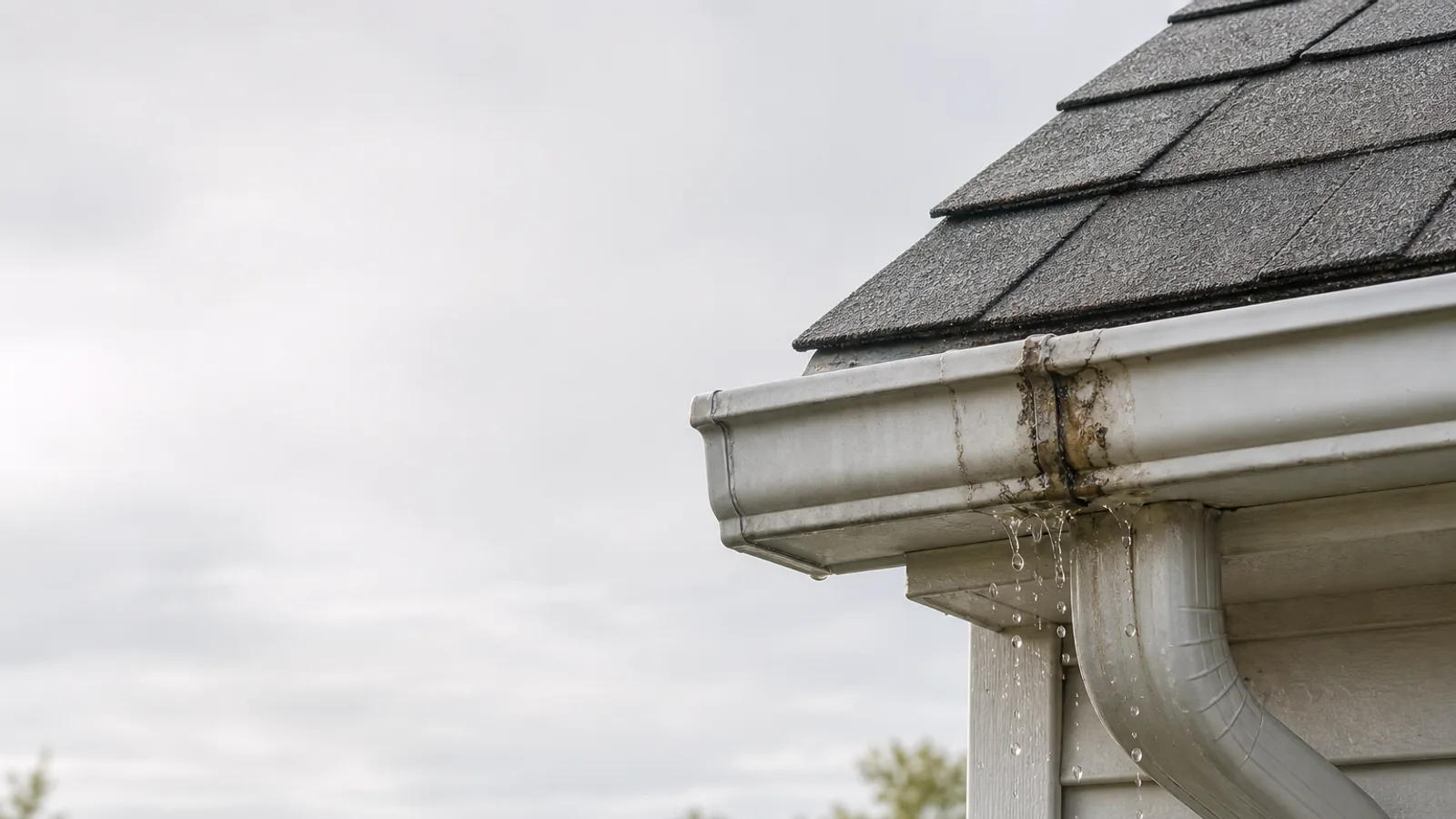
If you are noticing drips or streams from multiple gutter seams, it is rarely a one-off fluke. Industry guides point out that the majority of leaks occur at joints, miters, and end caps rather than through random holes in the middle of the trough. Every seam is a small weak spot where two pieces of metal and a bead of sealant are expected to move together as temperatures swing from winter to summer.
Over time, that movement works against you. Building enclosure experts explain that long runs of metal gutter expand and contract, and if there are not enough expansion joints or slip connectors, the metal will tug on the seams until fatigue cracks or separations appear. Seams that once sat tight and straight can start to gap or twist as hangers loosen, fascia softens, or heavy debris weighs them down. By the time you are seeing leaks in multiple spots, the whole system is usually under stress rather than just one bad joint.
- Most leaks form at joints, corners, and end caps instead of flat gutter runs.
- Thermal expansion and contraction slowly pull seams apart over the years.
- Loose or widely spaced hangers allow gutters to sag and open at seams.
- Heavy debris, snow, and ice put extra pressure on miters and connectors.
Common causes of seam leaks that sealant alone will not fix
It is tempting to treat a leaking seam as a simple caulk problem, but the underlying causes are often more complicated. Government maintenance guidance lists several design and installation issues that show up later as leaks at seams. Gutters that are too small for the roof area can overflow frequently, which keeps sealant submerged and speeds up deterioration. If the slope is too flat, water lingers over the joint instead of draining quickly, which is hard on sealant and metal alike.
Support spacing matters too. Manufacturer instructions recommend close hanger spacing along gutter runs so the gutter does not bow under load. When supports are spread too far apart, the metal flexes with every heavy rain or snow event, turning seams into hinges that eventually crack open. On older systems, it is common to see multiple layers of different sealants smeared over each other. Industry repair guides warn that standard household caulks and silicones do not bond well in this setting, so those patches peel or split and the leak returns the next season.
- Aging or incompatible sealant that has dried out, cracked, or peeled away.
- Improper slope that leaves standing water sitting directly over seams.
- Undersized gutters that overflow and keep joints constantly wet.
- Loose or inadequate hangers that let gutters flex and stress the joints.
What leaking gutter seams quietly do to your home over time
The water dripping from a seam may look minor compared to a basement flood, but the placement of that leak matters. When a seam at the front edge of the roof lets water through, it often runs down the fascia board and behind the gutter. Over time, that can cause wood rot in fascia and soffits and may create hidden moisture problems in the eaves. You might only spot the damage years later when paint peels, gutters pull away, or a soft spot appears during a repair.
Seam leaks are also notorious for dumping water in the wrong spot at ground level. Instead of traveling through the downspout and away from the foundation, the water can pour straight down next to your basement wall. Even if you do not see standing water, the repeated wetting and drying can erode soil, encourage settling, and add moisture against masonry. Multiply that by every leaking seam along a side of the house and you end up with a concentrated wet zone exactly where you do not want one. Addressing seam leaks is not just about cosmetic streaks on the siding; it is about protecting the structure around the edge of the roof and the soil around the foundation.
- Rotting fascia and soffits as water runs behind the gutter face.
- Stained or warped siding below chronic leak locations.
- Soil erosion and potential settlement near the foundation line.
- Higher basement or crawlspace moisture from misdirected runoff.
When seam repairs make sense and when it is time for new seamless gutters
Short-term seam repair has its place, especially if only one or two isolated joints are leaking and the rest of the gutter system is sound. Professional repair methods start with fully cleaning and drying the joint, removing all failed sealant, and then applying a gutter-rated sealant instead of hardware store caulk. In some metal systems, patch plates or soldering can be used on accessible areas if the metal is still in good condition. These targeted fixes can buy time if the slope, hanger spacing, and fascia are all still in good shape.
However, multiple sources in the trade point out that recurring seam leaks are a strong sign the system is reaching the end of its life. If you have repeated leaks at different joints, frequent re-caulking that only lasts a season, or visible sagging near several seams, patching becomes less cost-effective. In those situations, replacing seams and short sections piece by piece can end up costing nearly as much as a new installation while still leaving you with many joints that can fail later. That is usually where homeowners start comparing more traditional sectional setups to continuous, on-site formed seamless gutters that drastically cut down the number of seams in the first place.
- Spot repairs are reasonable when only one or two seams are leaking.
- Proper repair requires cleaning, drying, and removing all old sealant first.
- Repeated leaks in many locations often signal an aging, stressed system.
- At that point, installing new seamless gutters can be more practical than more patches.
How seamless gutter installation reduces seam leaks and ongoing maintenance
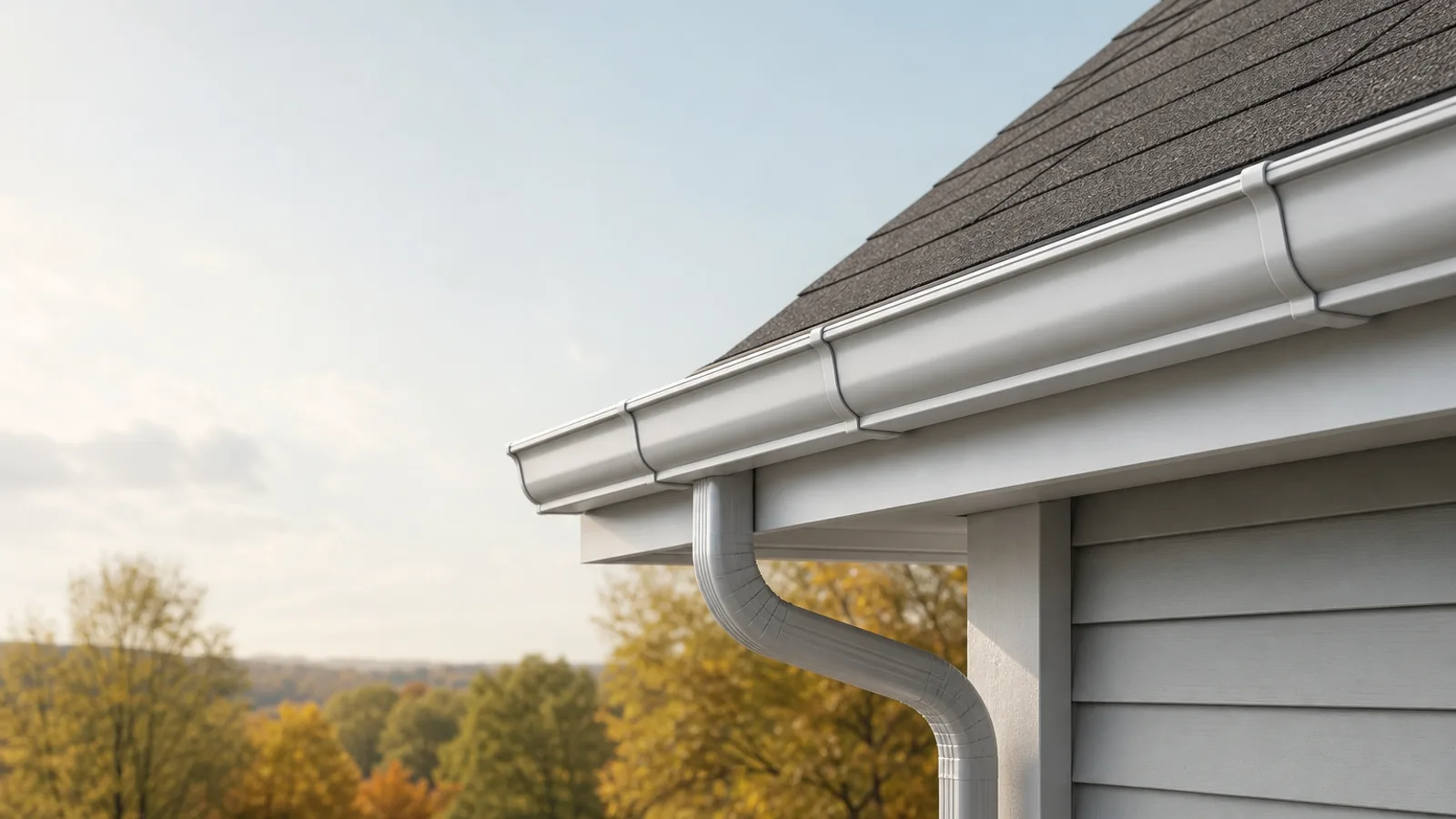
Seamless gutters are not magic, but they do directly address the weakest part of most older systems: the frequent joints along each run. Instead of many short pieces snapped together, a seamless system is formed in long continuous sections that match each side of your home. The only seams left are typically at corners, end caps, and downspout outlets. Fewer seams mean fewer beads of sealant to dry out, separate, or fail under thermal movement. This is especially helpful on longer roof lines where expansion and contraction can pull at every joint in a sectional setup.
The installation details still matter. Guides on metal gutter design stress the importance of correct slope, adequate hangers, and proper allowance for movement even with long continuous pieces. In practice, that means setting a consistent pitch toward each downspout, spacing hangers closely enough to support the gutter during heavy storms, and handling long runs so they do not bind against the structure. When you combine those best practices with a seamless layout and add well-fitted guards, you get a system that sheds water, resists clogging, and dramatically cuts down on seam-related leaks. If you are tired of sealing the same joints over and over, this is often the point where it makes sense to look at a full seamless gutter installation instead of another tube of sealant.
- Seamless gutters eliminate most mid-run joints where leaks commonly start.
- The remaining seams are limited to corners, end caps, and outlets.
- Proper slope and hanger spacing keep long seamless runs supported and draining.
- Pairing seamless gutters with guards further reduces clogs that stress seams.
- undefined
- undefined
- undefined
- undefined
- undefined
- undefined
- undefined
- undefined
Frequently asked questions
- Why do my gutter seams keep leaking even after I seal them?
- If seams reopen after every repair, the problem is usually more than just the sealant. Thermal expansion, improper slope, loose hangers, and aging metal can keep moving that joint, which breaks the bond of fresh caulk. Incompatible or low-grade sealants also fail quickly in wet, exposed conditions. At some point, the system design and age make recurring leaks likely until the gutters are replaced.
- Can I fix a leaking gutter seam myself or do I need a professional?
- Many homeowners can handle a basic seam repair if they are comfortable on a ladder and willing to do careful prep. The key is to work only in safe conditions, clean the area thoroughly, remove old sealant, and use a sealant formulated for gutters. If you see multiple leaks, sagging gutters, or rotted fascia, those are warning signs that a professional evaluation and possibly new gutters would be a better investment.
- What happens if I ignore leaking seams in my gutters?
- Ignoring seam leaks lets water run in places the system was meant to protect. Over time that can rot fascia boards and soffits, stain or warp siding, and deposit extra moisture right at your foundation. Even if you do not see an immediate problem indoors, that hidden damage tends to show up later as costly repairs around the roof edge or at the base of the house.
- Are seamless gutters really less likely to leak than sectional gutters?
- Seamless gutters reduce the number of joints along each run, which cuts down the main points where leaks tend to form. You still have seams at corners, end caps, and outlets, and those must be sealed and supported correctly. When installed with proper slope, hanger spacing, and outlets sized for the roof, a seamless system usually has fewer opportunities for water to escape compared with a similar sectional setup.
- How can I tell if my gutters need resizing instead of more sealant?
- If your gutters overflow in normal rain, stay full long after a storm, or regularly dump water over the front even when they are clean, they may be undersized for the roof area. Persistent standing water near outlets and seams can also point to size or slope problems instead of just bad caulk. In that case, looking at a new layout with properly sized seamless gutters and downspouts is more effective than resealing the same stressed joints.
- Will adding gutter guards help with leaking seams?
- Gutter guards will not fix an already open seam, but they can reduce the conditions that make seams fail in the first place. By keeping leaves and debris out, guards limit clogs and standing water that sit over joints for long periods. When paired with properly sloped seamless gutters, guards help the whole system run cleaner and drier, which is easier on the remaining seams over time.
Talk to All Pro Gutter Guards about seamless gutter installation →