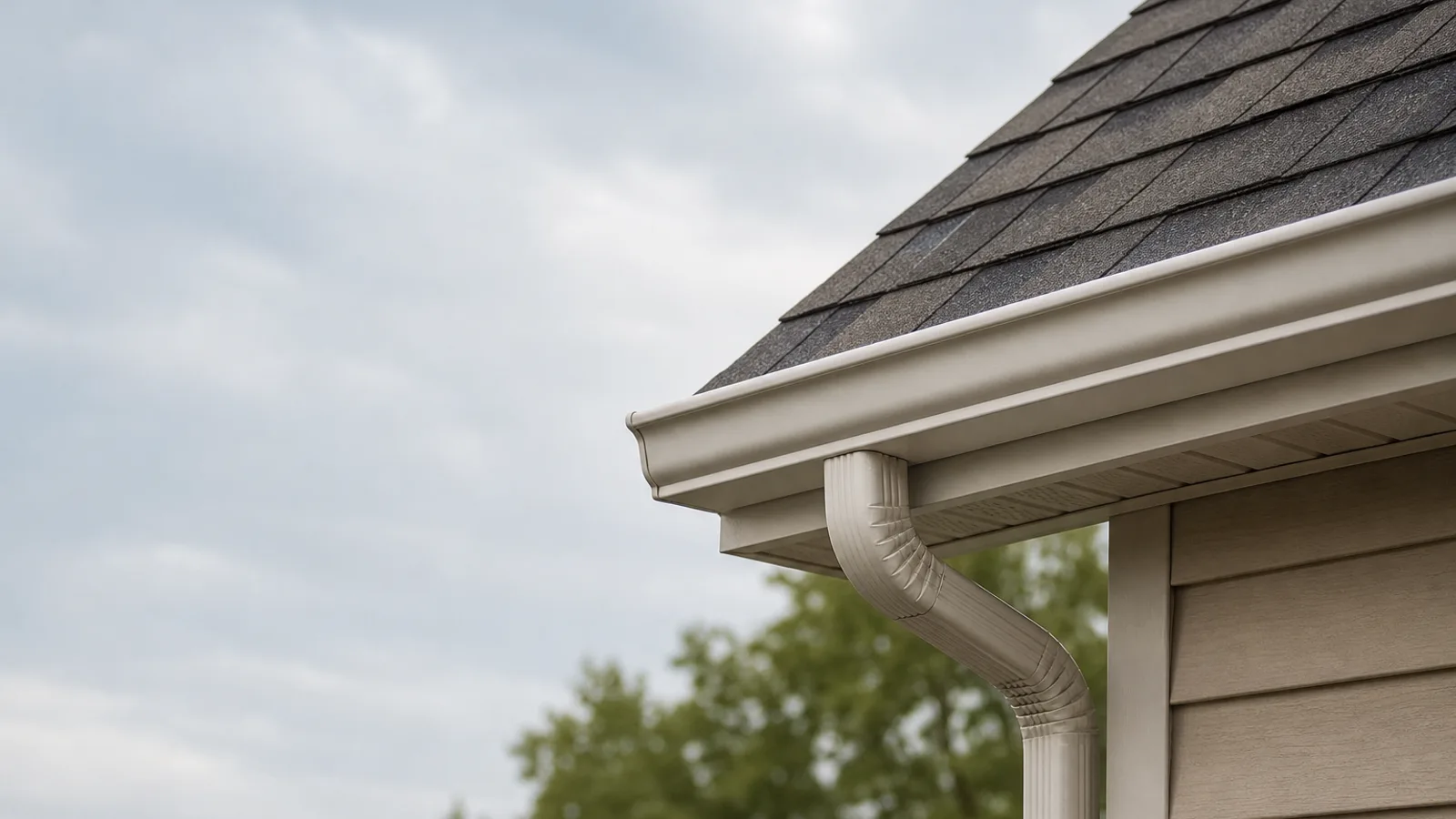
Gutter guards usually pay you back slowly in saved cleanings, not big jumps in resale value. This guide walks through a simple, numbers-first way to check if they pencil out for your roof, trees, and budget.
What does “return on gutter guard installation” really mean?
When you talk about return on investment for gutter guards, you are really talking about two separate buckets of value. The first is straightforward: how much you currently spend on cleaning and minor gutter upkeep, compared with what you would spend after the guards are installed. The second is softer but still important: avoided water damage, reduced hassle, and how the home looks and feels to you and to future buyers.
Recent national cost guides put the average professional gutter guard installation around $1,515, with a typical range of about $600 to $2,400 for a whole home. At the same time, multiple 2026 analyses agree that you should not expect a dramatic jump in appraised home value when you add guards. They generally describe resale value improvements in the 0 to 10 percent range of the project cost, which might be helpful but usually will not cover the full install on its own. That is why the smartest way to think about gutter guard ROI is as a maintenance and risk-reduction question first, and a resale bonus second.
Because All Pro Gutter Guards designs and installs its own guard system across Pennsylvania, New Jersey, Maryland, Delaware, and Virginia, we tend to frame ROI in terms of your actual conditions. A heavily wooded lot at the end of a cul-de-sac in Bucks County or Harford County is going to see very different payback timing than a townhome with one maple tree and clean, straight rooflines. In the rest of this guide, you will learn how to take the broad national figures and narrow them down to a much more personal, realistic calculation.
How much do gutter guards cost and how long do they last?
You cannot talk about return until you have a handle on your total investment. Several 2026 home-improvement references line up on a similar midrange price: about $1,515 for a complete professional gutter guard installation, with smaller jobs starting around $600 and larger or more complex homes reaching roughly $2,400. That number reflects materials plus labor for a typical single-family house and assumes existing gutters are usable.
Another key piece of the ROI puzzle is lifespan. A cost guide that looked at guard systems across several material types notes that many premium systems are designed to last roughly 10 to 20 years. Since payback periods often run from around 2 up to 10 years based on how often your gutters clog, a guard that holds up for a decade or more can realistically reach payback as long as it is installed correctly and matched to your debris conditions. On the flip side, a cheaper, less durable guard that fails in a few years might never get to that breakeven point at all.
Labor and installation details affect cost, too. Multi-story homes, steep roofs, complex rooflines with lots of inside corners, and existing gutter repairs all add to your up-front bill. Location within the Mid-Atlantic matters because labor markets differ from county to county. When you weigh quotes, the goal is not to chase the lowest price but to match the guard type and workmanship quality to how long you want the system to last. You can only claim those long payback periods if the guards stay intact, seated, and effective while your roof ages around them.
- Confirm whether your existing gutters need repair or replacement.
- Ask what material the guards use and the expected lifespan range.
- Clarify how complex rooflines or extra stories affect labor cost.
- Check whether downspout screens or outlets are included in the price.
What payback period can you realistically expect from gutter guards?
Several independent 2026 guides now provide rough timelines for when gutter guards can pay for themselves. One in-depth breakdown suggests that in homes where gutters are cleaned three or more times per year, the payback period can be in the range of about 2 to 3 years. That is because maintenance costs are high and frequent, so any reduction in cleanings quickly offsets the original investment.
For households that schedule gutter cleaning twice per year, multiple sources converge on payback windows around 4 to 6 years. One analysis that focused on shaded homes with more debris gave a similar 2 to 4.5 year payback estimate in that scenario, while also noting a slower 8 to 10 year payback where cleanings are only needed once annually. Another 2026 review gives a wider but consistent range of roughly 4 to 8 years for many typical homes, again tied mostly to how often the gutters would be cleaned without guards.
What this means in practice is that if you are currently paying for two or three cleanings every year and your trees show no sign of getting smaller, gutter guards are likely to reach breakeven during their service life, provided they are durable. If you are in an open area with little debris and only need a professional cleaning once in a while, you should expect a slow payback or even view guards more as insurance against surprise clogs rather than a clear money saver. The next section walks through simple math you can use on your own numbers.
- 3 or more cleanings per year can lead to a 2 to 3 year payback.
- 2 cleanings per year often translate to about 4 to 6 years to break even.
- 1 cleaning per year may stretch payback to roughly 8 to 10 years.
- Longer lasting guard systems are more likely to reach these payback windows.
How to plug in your own numbers for gutter guard ROI
To calculate your personal ROI, start with what you spend today. Add up the last few invoices for gutter cleaning and divide by the number of years they cover to find an average yearly cost. If you clean your own gutters, place a realistic value on your time and any equipment you have purchased. The key input is a yearly number that represents what clean gutters cost you when you do not have guards.
Next, estimate how much that cost would drop with guards. Many homeowners go from several professional cleanings a year down to occasional checks and minor touch-ups. Some 2026 commentary notes that guards do not eliminate all maintenance, especially in areas with small debris like pine needles, but they usually cut the frequency significantly. Take your yearly cost without guards and subtract your expected yearly cost with guards to get an annual savings figure. Divide your total installed guard cost by that annual savings and you have a rough payback period in years.
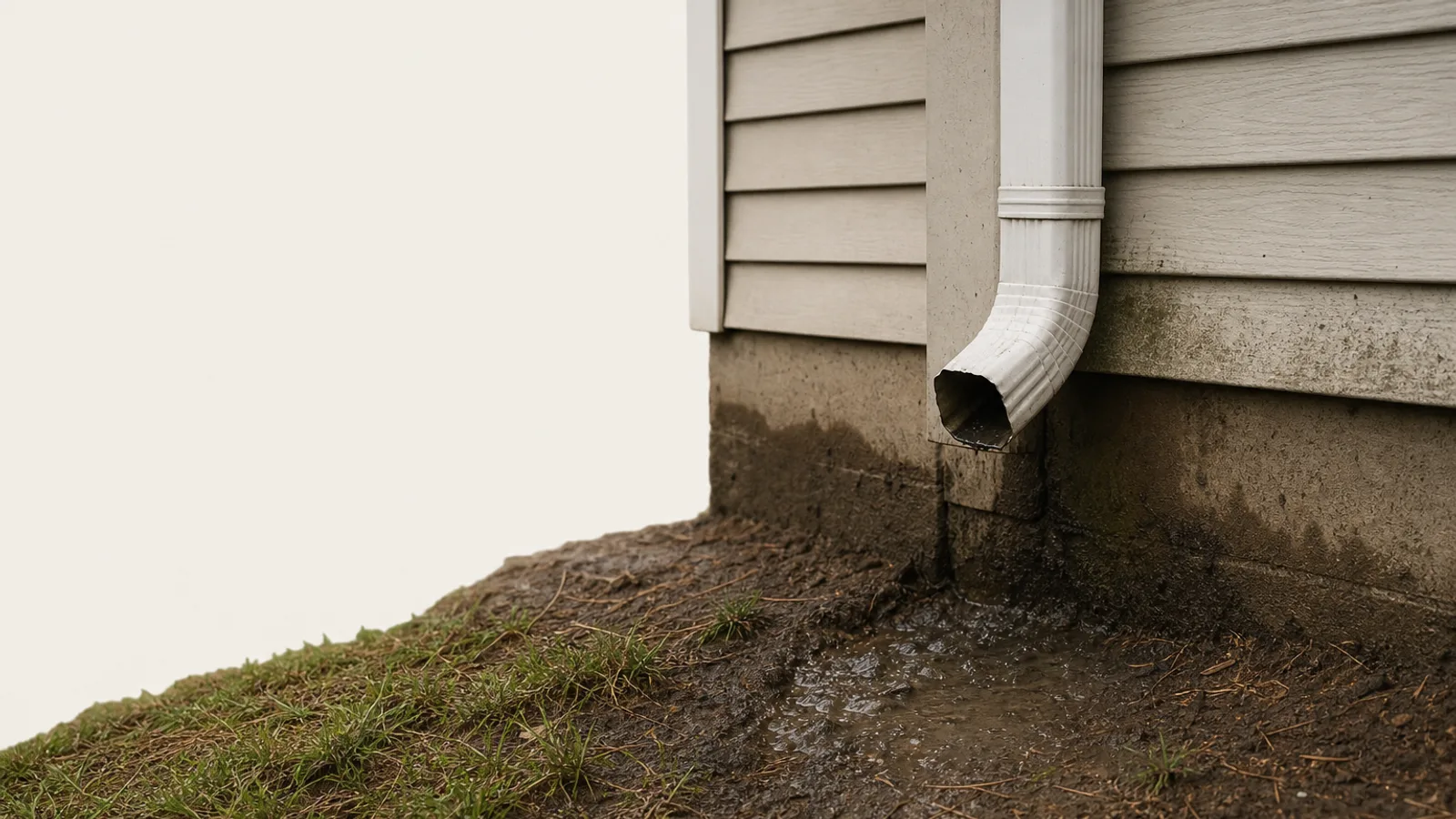
You can refine the calculation further by including risk reduction. None of the research puts a hard dollar number on avoided fascia repairs, foundation issues, or landscaping damage that can result from overflowing gutters. Instead of forcing a guess, treat potential water damage as a separate benefit column. If you have already seen peeling paint, ice problems, or water pooling around your foundation, even a long payback period might be acceptable because you are buying protection rather than just a lower cleaning bill. If you are somewhere in Pennsylvania, New Jersey, Maryland, Delaware, or Virginia and want professional help with that math, a site visit tied to a gutter guard installation quote can put real numbers to those scenarios.
Do gutter guards really add value when you sell your home?
Many homeowners hope that upgrades like gutter guards will show up strongly in a future appraisal. The current batch of 2026 guides paints a more modest picture. Several of them explain that home buyers and appraisers tend to treat gutter guards as part of the basic exterior system, similar to gutters themselves, not as a separate high-end feature. As a result, they consistently describe resale value increases as limited, often within a 0 to 10 percent range of the project cost.
One national home services reference points out that the more meaningful resale benefit lies in what buyers see and feel during a showing. Clean, uniform gutters, fewer streaks on siding, and the absence of overflowing debris help the property look well cared for. Another long-running home improvement authority agrees, emphasizing that guards help preserve curb appeal over time by preventing visible debris and staining, but they do not usually move the needle dramatically on a formal valuation.
In the Mid-Atlantic region, where heavy fall leaf drops and periodic storms are common, subtle visual signals matter to buyers. When a property shows tidy gutters and no signs of water mismanagement, buyers may view the whole envelope as better maintained. That perception can make your home a bit more competitive without necessarily being called out as a separate line item. When you run your ROI calculation, it is safest to treat resale value as a small bonus and base your decision on maintenance savings and risk reduction instead.
Which local factors in PA, NJ, MD, DE, and VA change your gutter guard ROI?
The research behind national averages does not always capture the quirks of Mid-Atlantic weather and vegetation. In southeastern Pennsylvania or central New Jersey, for instance, large deciduous trees can drop heavy leaf loads in a short window every fall, so your gutters may clog quickly even if the rest of the year is mild. Parts of Maryland and Virginia see more year-round pine needles and small debris, which can sit on top of guards and call for occasional brushing even when the system works properly.
Rainfall patterns also matter. A home in Delaware that sees frequent heavy rains has less margin for partially clogged downspouts before water starts to spill over. That increases the value of keeping gutters open and moving water away from the foundation reliably. In contrast, a wind-exposed home on a hill with just a few smaller trees may not need as many cleanings, which stretches the timeline to reach payback. Regional labor costs and accessibility of the home influence installation prices as well, so your local quote might be above or below the national $1,515 average.
Finally, your tolerance for ladder work is a real factor in the equation. Even if a careful, handy homeowner can clean gutters at a low direct cost, the combination of fall risk and time lost can tip the scales toward guards. The ROI in that case is measured not only in dollars saved, but in fewer days spent on the roof and less worry about surprise clogs when a storm hits right after the leaves fall.
- undefined
- undefined
- undefined
- undefined
- undefined
- undefined
- undefined
- undefined
- undefined
Frequently asked questions
- How do I know if gutter guards will actually save me money?
- Compare your annual gutter cleaning costs to what they are likely to be with guards installed. If you currently pay for two or more professional cleanings each year, several 2026 cost analyses suggest that a guard system often pays for itself within about 2 to 6 years. If you only need a cleaning once in a while, the savings may be smaller and slower.
- What is the average cost of professional gutter guard installation?
- Recent nationwide data from multiple home service guides puts the typical professional installation around $1,515 for a whole house, with many jobs falling between about $600 and $2,400. Your price in Pennsylvania, New Jersey, Maryland, Delaware, or Virginia will depend on gutter length, height, roof complexity, and whether any repairs are needed before the guards go on.
- Do gutter guards increase my home’s resale value?
- Most current sources agree that gutter guards provide only a modest bump in resale value, often estimated in the 0 to 10 percent range of the project cost. Their bigger contribution is indirect: they help keep gutters clear, reduce staining, and present a better maintained exterior, which can make your home more appealing to buyers even if the appraisal does not jump dramatically.
- How long does it usually take to recoup the cost of gutter guards?
- Payback periods depend mainly on how often you would otherwise pay for gutter cleaning. Several 2026 guides estimate that homes needing three or more cleanings a year can see payback in roughly 2 to 3 years, while homes with twice-annual cleanings may break even in about 4 to 6 years. If your gutters only need cleaning once per year, the payback period can stretch toward 8 to 10 years.
- Will I still need to clean my gutters after installing gutter guards?
- You will likely still need occasional maintenance, but far less than before. Guards are designed to keep most debris out so water can flow, yet small particles, shingle grit, or pine needles can still collect, especially in wooded Mid-Atlantic neighborhoods. Plan on periodic inspections and light cleanups rather than full, frequent cleanings.
- Are gutter guards worth it if I plan to move in a few years?
- If you expect to move within a short time, focus on how often you clean now and whether clogged gutters have already caused problems. With high cleaning frequency, you might still reach payback within your ownership period, and you may enjoy cleaner curb appeal when you list the home. If your gutters rarely clog, guards might be more of a convenience and curb appeal upgrade than a strict financial win before you sell.
Talk to All Pro Gutter Guards about gutter guard installation →