If you are tired of cleaning clogged gutters, the hard part is not the ladder work, it is choosing the right kind of gutter guard and installation approach. This guide breaks down the trade-offs so you can decide what to install, who should do it, and how to avoid water problems around your home.
What should you fix before any gutter guard installation goes on?
Before you think about which guard to buy, your first decision is what to do with the gutters you already have. Every credible installation guide starts with the same step: gutters and downspouts must be cleaned out and working correctly before anything is covered. That means removing packed leaves and grit, flushing with water, and making sure the channels actually carry runoff to each downspout instead of holding standing water. If you skip this, you can lock existing problems inside where you cannot see them.
Look closely at seams, hangers, and miters for leaks or sagging. National housing resources stress the importance of correct gutter slope toward downspouts, not the other way around, so water does not creep back toward your fascia or roof edge. While you are up there, check that downspouts discharge far enough away from the foundation and that the soil or extensions route water away from your house, not into low spots. Guard manufacturers also advise addressing sharp edges, loose spikes, and damaged sections now, because these will interfere with the fit of guard panels and can create points where debris catches later.
- Clear all visible debris from gutters and downspout inlets before measuring for guards
- Run water from a hose to confirm that each downspout flows freely
- Check that gutter runs tilt slightly toward the downspout and are not back pitched
- Repair leaks, loose fasteners, and bent sections before you cover anything
How do tree cover, roof style, and climate shape your guard choice?
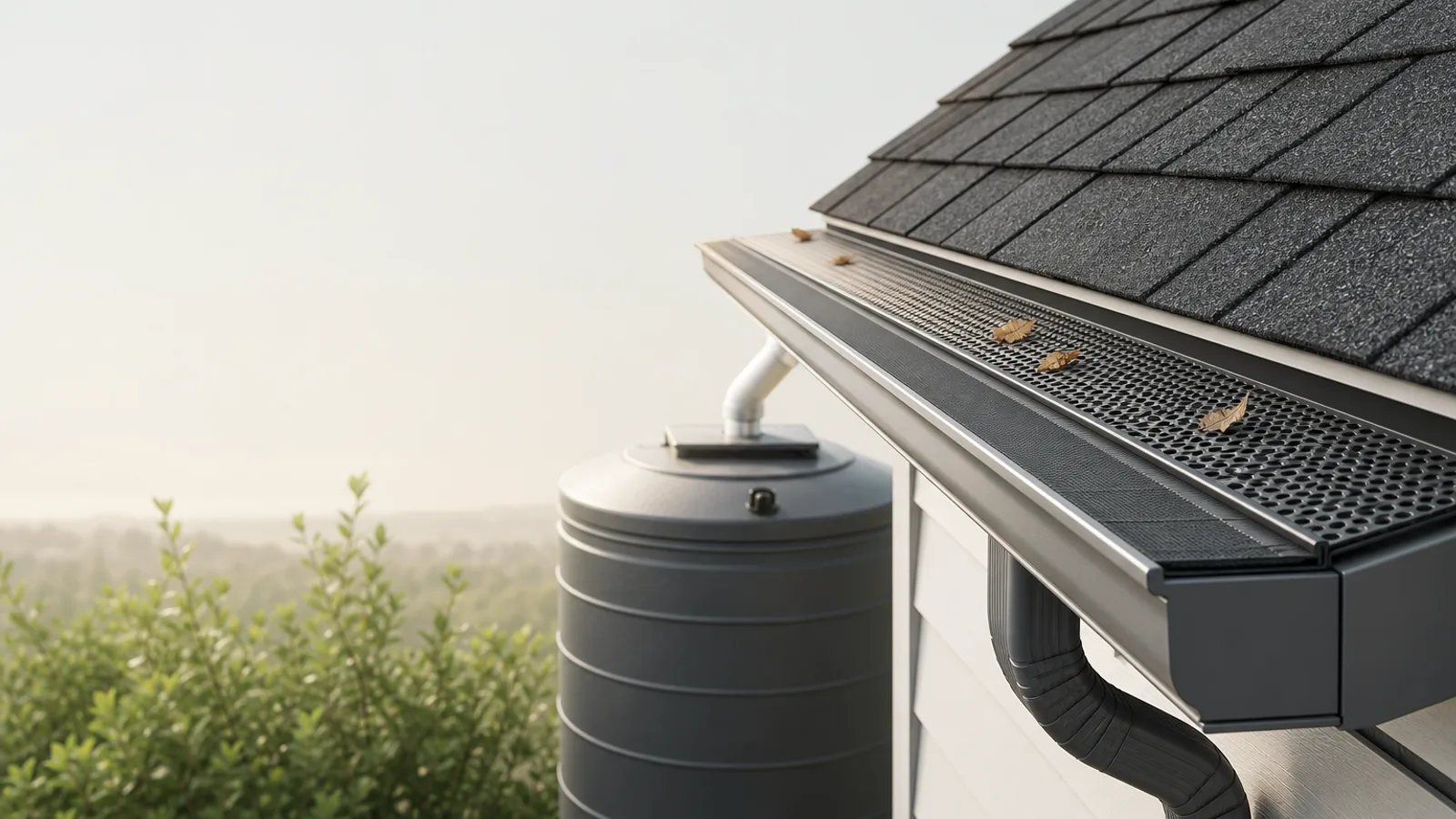
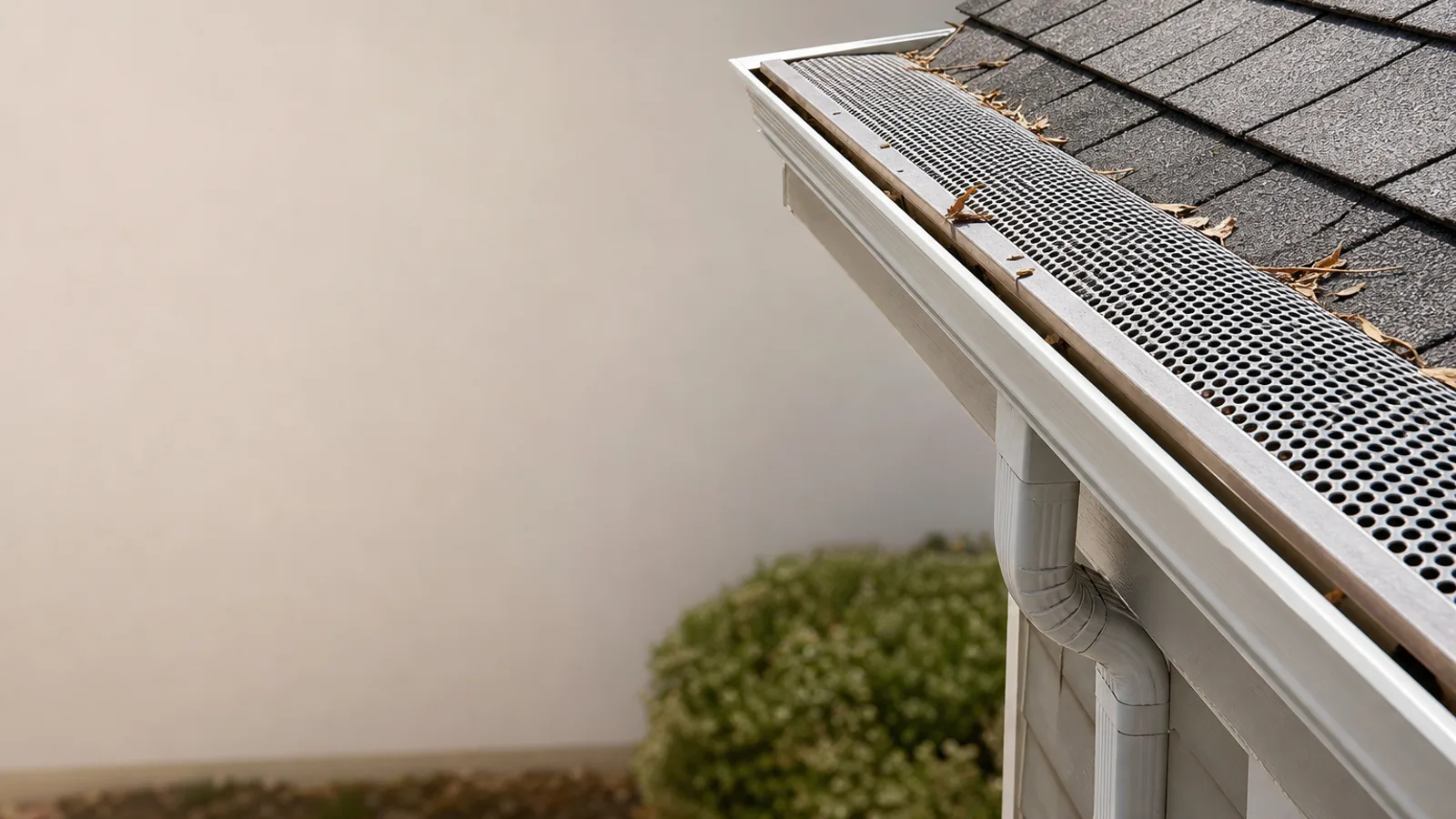
A guard that works well under one roof can fail badly under another, so you should match the design to your specific conditions instead of picking whatever is popular. If you live under oaks or maples with large leaves, many basic screens and perforated covers will do a reasonable job of keeping whole leaves out, but they may still let small debris settle inside. If you are surrounded by pines or have a lot of shingle grit washing off, finer meshes or systems that integrate a tight screen are usually more effective at stopping the smaller particles from entering the gutter channel.
Climate also matters. In cold regions that see snow and freeze thaw cycles, installation guides warn that guards can influence how ice and snow sit along the roof edge. Some styles may contribute to icicle formation because meltwater refreezes at the lip, while others that tuck under shingles or sit flush with the roof can change how snow slides off. National building resources also highlight that in wildfire prone areas, screens and covers are useful not just for clog prevention, but to stop dry debris from collecting in gutters where embers could ignite them. Your roof type and pitch also play a role. Systems that require slipping panels under shingles must be compatible with your roofing material, and you should consider manufacturer guidance regarding disturbing the roof covering.
- Map the trees directly overhanging your roof and note whether they drop big leaves, needles, or seeds
- Consider whether your area sees ice, snow, or extended freezing periods each winter
- Note your roof material and pitch so you can avoid systems that might disturb its warranty
- Think about wildfire or high wind exposure that makes trapped debris a safety concern
What installation details actually keep water where it belongs?
Even a high quality guard can fail if it is installed without attention to slope, alignment, and fastening. Most panel based systems are designed to sit with a particular edge at the front of the gutter and another along the back or under the roof covering. Manufacturer instructions repeatedly stress correct orientation, because putting the front edge on the wrong side or reversing the panel can cause water to jump over the gutter or pool behind the guard. You also need consistent overlap between sections so there are no gaps that invite overflow or leaf piles.
Connection points are another big decision point. Installers must decide how often to fasten the front edge, what type of screws to use, and whether to attach the back edge to the fascia, the gutter, or under shingles. Guides describe using self tapping screws placed at regular intervals to keep guards from flexing up under load or in wind. Corners, end caps, and transitions around roof features are especially important because these are natural collection points for debris. Finally, you need to keep the water path in mind after installation. Gutter and downspout design resources emphasize that water needs a clear, sloped path to the ground and away from the footing. Guards should support that path, not interrupt it with high spots or hidden dams.
- Follow the panel orientation called out in the installation instructions for your guard type
- Fasten the front edge of guards at consistent intervals to reduce flexing and uplift
- Overlap panels enough to avoid gaps where water or debris can sneak through
- Pay extra attention to corners and end caps so they do not become collection pockets
Should you install gutter guards yourself or hire a professional crew?
Once you understand what a correct installation involves, the next decision is whether to take it on yourself or pay for labor. Many homeowner focused guides present guard installation as a doable project for someone comfortable on a ladder with basic tools like a drill, snips, and safety gear. If your home is a single story with straightforward rooflines, that is often realistic. You gain control over the process and can pace the work, but you also take on the safety risk of working at height and the responsibility for following detailed instructions.
Hiring a professional crew shifts those burdens, but you still need to ask good questions. For example, will the crew fully clean and flush your gutters and downspouts before installing guards, or is that a separate task. Do they plan to adjust slopes or rehang sections that are out of level. Are they familiar with local building guidance on managing roof runoff and downspout discharge away from foundations. A service that focuses on gutter systems and guard installation is more likely to treat the work as a whole water management job, not just a quick cover up. If you prefer to avoid repeated ladder climbs, using a service that fabricates and mounts guards as part of a complete system can be a practical way to trade money for time and lower risk.
- Compare the height and complexity of your roof to your comfort level on ladders
- Ask any installer if cleaning and flushing gutters is included before guards go on
- Confirm how they will handle sections that are sagging or sloped the wrong way
- Consider whether you want ongoing access for your own inspections after install
How do gutter guards fit into the bigger picture of protecting your home?
It helps to see gutter guards as one piece of a larger moisture control plan rather than a simple convenience item. National home performance guidance describes gutters and downspouts as your first line of defense in keeping roof runoff away from the foundation and siding. Guards are mainly there to keep that system working between cleanings by reducing the amount of material that can clog inlets and form dams. They do not change the fundamentals. You still need adequate gutter sizing, enough downspouts for your roof area, and discharge points that carry water several feet from your house.
Good maintenance habits are the final decision that keeps everything working. Even the more advanced micro mesh systems need periodic visual checks to make sure fine debris is not forming a mat on top. After large storms or leaf drops, it is wise to walk the perimeter of your home and look for signs of overflow or staining on the siding. Reputable guides on gutters emphasize routine inspection twice a year, even when you have protection in place. In practice, the right guard system should turn a dirty, risky half day project into a quick walk around and possibly a light brush off from the ground or a short ladder reach. When you evaluate your options, think about how they will change that recurring chore over the long term.
- Confirm that your gutters are sized and sloped correctly before you rely on guards
- Make sure downspouts discharge far enough from the foundation to stay dry
- Plan on inspecting the system at least twice a year even with guards installed
- Watch for staining, erosion, or damp spots that may signal overflow or leaks
- undefined
- undefined
- undefined
- undefined
- undefined
- undefined
- undefined
- undefined
- undefined
- undefined
Frequently asked questions
- Are gutter guards worth installing if I still have to clean gutters twice a year?
- Most homeowner guides suggest that even with guards, you should inspect gutters at least twice a year and after major storms. The value of guards is that they usually reduce how much debris reaches the gutter channel and how dirty the work is when you do inspect. Instead of scooping out packed leaves from every section, you are often brushing or rinsing off the top of the guard and checking a few key points.
- Do gutter guards cause ice dams or icicles in winter?
- Any change at the roof edge can influence how snow and ice behave, and cold climate notes in installation manuals acknowledge that guards can contribute to icicles in some conditions. If meltwater refreezes at the lip where the guard meets the gutter, icicles can form even when gutters are clear. The underlying causes are roof insulation, ventilation, and weather patterns, so guards are one factor, not the only one. Discuss your typical winter conditions with an installer so they can recommend a style that suits your roof.
- Can I install gutter guards on my existing gutters, or do I need new gutters first?
- Most guard systems are designed to retrofit onto existing gutters as long as the gutters themselves are structurally sound and properly pitched. The key is to repair damage, resecure loose sections, and correct obvious slope problems before installation. If your gutters are badly rusted, pulling away, or undersized for your roof area, it may be wiser to address those issues first so you are not protecting a system that will need replacement soon.
- How do gutter guards affect where my downspouts should discharge?
- Gutter guards do not change the basic requirement that roof runoff should be carried away from your foundation. National building resources advise that downspouts that empty onto the surface should be extended at least about 5 feet from the foundation, and subsurface outlets should reach roughly 10 feet or more. Guards simply help make sure the water can reach those downspouts without being blocked by debris. If you are rearranging or adding guards, it is a good time to review where downspouts actually release water.
- Will installing gutter guards void my roof warranty?
- Whether guards affect a roof warranty depends on how they attach and what your roof manufacturer allows, so there is no single answer. Some systems rest on the gutter without touching the shingles, while others slip under the roofing material, which may raise questions for certain shingle or roof brands. Before installation, it is wise to read your roof warranty or call the manufacturer so you can choose a guard style and attachment method that stays within their guidelines.
- How long does professional gutter guard installation usually take on a typical home?
- The research available focuses more on how to install guards than on precise timelines, and actual duration depends on your home size, roof height, and how much repair work is needed. A simple one story home with clear access and sound gutters may be completed in a day, while a larger or more complex roof, or one with many corners and needed adjustments, can take longer. When you get quotes, ask installers how they sequence cleaning, repairs, and guard placement so you understand the schedule.
- Can gutter guards help with basement moisture problems in older homes?
- Gutter guards themselves do not directly solve basement moisture issues, but they play a supporting role by helping gutters and downspouts stay clear so water is consistently moved away from the foundation. National building guides emphasize that roof runoff should be directed several feet away from the footing to reduce the risk of water entering basements or crawlspaces. If your gutters currently overflow or spill near the house because of clogs, installing guards as part of a broader drainage plan can help the whole system work more reliably.
Talk to All Pro Gutter Guards about gutter guard installation →