Federal and private forecasters say this El Niño winter will be warmer and wetter than normal in Pennsylvania, New Jersey, Maryland, Delaware, and Virginia. That means more roof runoff and fewer deep-freeze stretches, a mix that changes how urgently you should handle gutter repairs before ice shows up.
How this El Niño winter changes the risk from ice and bad gutters
National forecasters are lining up around the same message for this winter in the Mid-Atlantic: expect it to be warmer than normal but also wetter. NOAA’s seasonal outlook, backed up by recent reporting, points to a strong El Niño pattern that usually raises temperatures while feeding more moisture into storms along the East Coast. A separate winter preview focused on our region adds that snowfall totals may actually come in below average for parts of Pennsylvania and Maryland. That can sound like a break if you are tired of shoveling, but for your gutters, it creates a different type of stress.
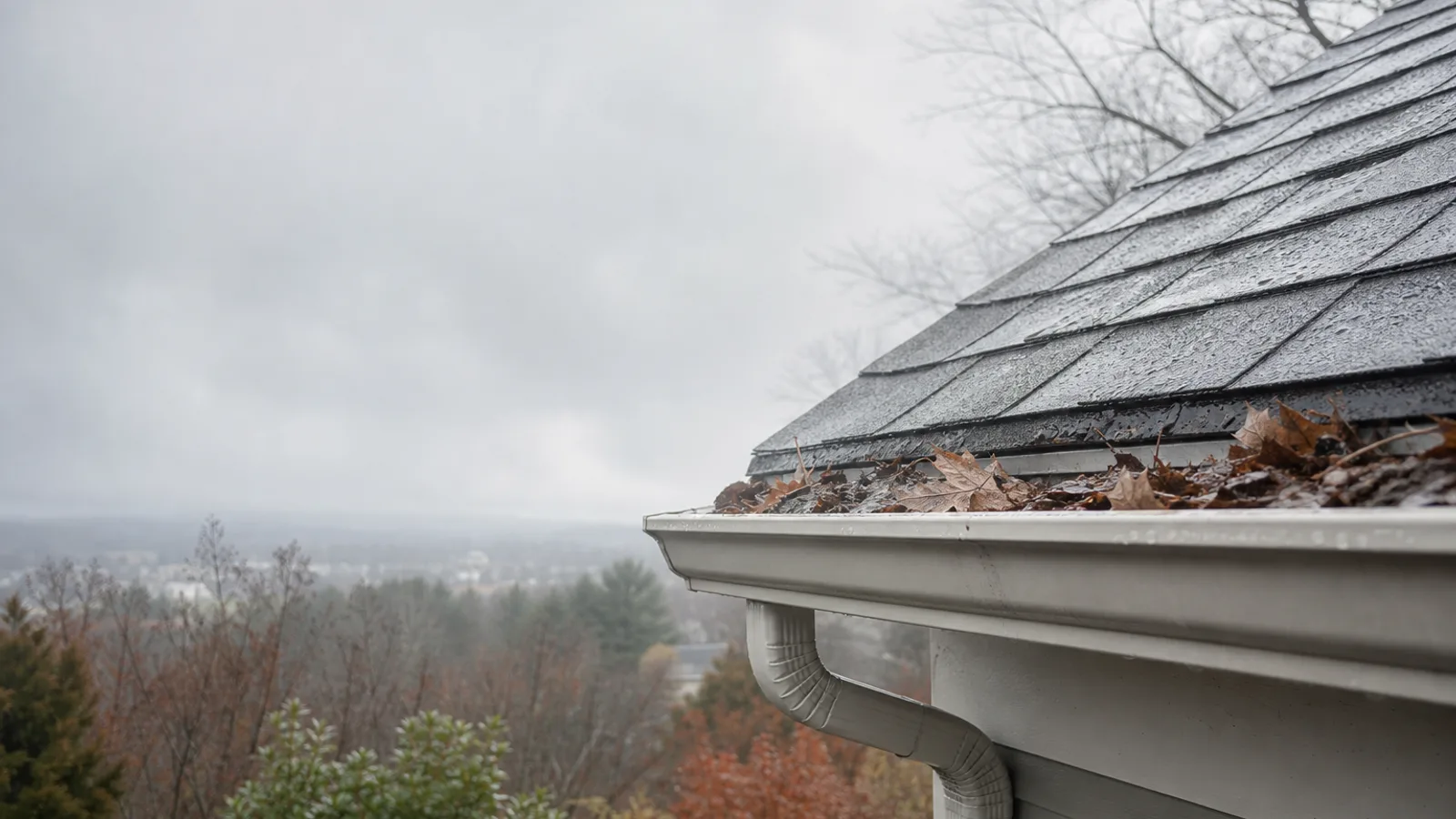
Instead of months of deep snowpack, you are more likely to see repeated rain, mixed precipitation, and quick thaws after brief cold snaps. Every one of those events pushes water across your roof and into the gutter system. If your gutters are clogged or poorly pitched, that water has nowhere good to go and ends up behind the fascia, into the soffit, or over the lip and down your siding. Ice is still a risk, just in shorter, sharper bursts when temperatures dip below freezing overnight. Those short freezes can lock in slush and standing water in a sagging section, turning a small repair into a cracked gutter or an ice dam at the eave by midwinter.
- Warmer air means more storms falling as rain instead of snow on your roof
- More moisture overall means more total roof runoff through your gutters
- Short freeze-thaw cycles increase the risk of ice forming in clogged spots
- Less deep snow does not remove the risk of ice dams at the eaves
- Damaged or loose gutters are more likely to fail under repeated wet loads
What local fall checklists are warning about before freezing weather
Regional maintenance guides this October are repeating a common theme: your window to get ahead of winter water problems is late October to mid-November. A detailed checklist from Berks County walks through why this timing matters. Once daytime highs stay near freezing, sealants cure more slowly, metal contracts, and safely working at the roofline gets harder. They recommend clearing gutters and downspouts, inspecting roof valleys and flashing, checking for daylight in the attic, and fixing sagging gutters long before the first real cold snap sets in. The idea is simple: handle the easy fixes while it is dry and above freezing instead of during a storm.
Elsewhere in Pennsylvania, building pros are drawing a line between what you see now and the ice that shows up later. Issues like rotten fascia boards, soffit vents packed with debris, or gutters pulling away from the house do not appear overnight. They often start with small leaks, backed-up autumn leaves, and hangers that have slowly loosened over past winters. By the time icicles appear, water has already been working into wood and insulation for weeks or months. Repairing fascia, reinforcing hangers, and making sure the overhang can breathe properly are all fall tasks that set you up to avoid ice dam headaches even in a warmer, wetter winter.
- Clean out gutters and downspouts before overnight freezes become common
- Check roof valleys and flashing where runoff concentrates in storms
- Look for daylight or staining in the attic that signals active leaks
- Repair visible gutter sag before snow or ice adds extra weight
- Confirm soffit vents and eaves are not blocked by insulation or debris
How to decide if you can wait on gutter repair in a warmer winter forecast
With so much coverage focused on a milder winter, it is natural to ask whether you can safely delay gutter repairs. The forecasts for the Mid-Atlantic do suggest fewer large snow events and more rain, especially at lower elevations and along the coast. That can reduce the odds of roof-high snow piles feeding major ice dams. But a warmer, wetter pattern actually means more total water cycling through your system. Instead of worrying about one or two big blizzards, you need to think about how your gutters will handle many medium storms between December and February.
The decision comes down to what you are seeing right now. If your gutters are flowing freely in fall rain, hangers are tight, and fascia looks sound with no soft spots, you may have some flexibility. You still want to monitor things through the season, but you are not in emergency territory. On the other hand, if water is spilling over the edge in normal rain, if downspouts are clogged, or if sections are visibly pulling away, delaying repair into winter trades a manageable project for one that may involve rotten wood, damaged siding, or interior leaks by spring. Warmer storms do not ease those risks. They just deliver them as liquid water instead of snow.
The specific gutter and fascia problems that turn into ice trouble
Most winter ice issues start long before temperatures hit freezing. Contractors who work on eaves and overhangs point out a familiar pattern: small gaps behind gutters, staining on fascia boards, and blocked soffit vents are early warning signs. When gutters pull away even slightly, water can run behind the trough instead of into it. In a heavy, cold rain, that thin sheet of water soaks the fascia and often finds its way into the soffit space. If temperatures drop overnight, that trapped water can freeze along the edge of the roof, grabbing leaves and debris with it. Over a few events, you end up with a ridge of ice where your roof, gutter, and fascia meet.
Rotten or softened fascia is another quiet problem. Wood that has been wet through past seasons loses strength, so gutter screws and spikes no longer bite firmly. The gutter then sags, holding more standing water after every storm. In a warmer El Niño winter, those sags are exposed to frequent refills of rain, then occasional freeze-thaw cycles that can split seams or crack fasteners. Blocked soffit vents make the temperature imbalance even worse, because a cold, poorly ventilated roof edge sits under a warmer attic, encouraging uneven melting and refreezing at the eaves. None of these conditions require deep snow. They only need repeated wet weather and a few cold nights.
Practical next steps if you need gutter repair before the first ice
The calendar and the forecast together say the same thing: if your gutters are not working right, fall is still your best shot to fix them under decent conditions. In Pennsylvania, New Jersey, Maryland, Delaware, and Virginia, late October through early December usually offers enough mild days to work safely at the roofline, check hidden areas, and complete repairs. Start by walking your property during or right after a rain event. Look for water sheets pouring over the front edge, streams shooting between the gutter and fascia, or puddles collecting near your foundation. These visible signs tell you which sections demand attention first.
If you are comfortable with heights and basic tools, you can clear debris, flush downspouts, and tighten easily accessible fasteners on your own. Anything involving rotten wood, loose sections at second-story height, or persistent leaks at corners deserves more caution. Those jobs often involve working near power lines, on steep roof pitches, or around compromised materials that do not hold weight well. At that point, it is reasonable to look into professional gutter repair so the work is planned, staged, and carried out with the right safety steps. Whether you do it yourself or bring in help, the goal is the same: get the system sound before the first few freeze-thaw cycles test every weak spot.
- undefined
- undefined
- undefined
- undefined
- undefined
- undefined
- undefined
- undefined
- undefined
Frequently asked questions
- Does a warmer El Niño winter mean I can skip gutter repair this year?
- A warmer El Niño winter typically reduces the number of major snowstorms, but forecasts also call for more moisture along the East Coast. That means more rain and mixed events putting repeated stress on your gutters. If you already have sagging sections, leaks, or clogs, those conditions can still cause water damage and ice in short cold snaps. Repair decisions should follow the condition of your system, not just air temperature outlooks.
- If snow totals are expected to be lower, can ice dams still form on my roof?
- Yes, ice dams can still form even in winters with less overall snowfall. All you need is roof snow or slush near the eaves, heat loss from the house, and gutters or downspouts that do not drain well. Short periods of freezing weather after a wet storm are enough to create a ridge of ice at the roof edge. Clogged or poorly pitched gutters and blocked soffit vents increase that risk regardless of seasonal snowfall totals.
- When is the latest I should schedule gutter repair before winter in Pennsylvania or New Jersey?
- Regional maintenance guides suggest that late October through mid-November is the most reliable window for exterior repairs before consistent freezing weather sets in. After that, you may still find individual mild days, but scheduling and working safely around cold, wet conditions gets more difficult. If you already see water pouring over the gutters or signs of fascia damage, it is better to move sooner within that fall window.
- What signs on my fascia and soffit mean my gutters are already causing damage?
- Look for peeling paint, dark streaks, or soft, spongy spots on the fascia boards where the gutters attach. Under the eaves, stained soffit panels, swollen wood, or vents clogged with debris are also warning signs. Inside the attic, water stains or moldy insulation along the outer edges of the roof deck point to ongoing leaks near the gutters. These conditions rarely improve on their own and often worsen through the winter.
- Is it safe to repair my own gutters in late fall, or should I hire someone?
- Basic tasks like cleaning debris, flushing downspouts, and tightening a few low hangers are often manageable for a homeowner who is comfortable on a ladder and follows safety precautions. Once repairs involve replacing rotten fascia, re-hanging long runs, or working above a first story, the risks from height, weather, and hidden damage increase. In those cases, many people choose professional help to manage the work while temperatures and surfaces are still reasonably safe.
- How does a wetter winter forecast change where I should focus my gutter repairs?
- A wetter forecast means you need to prioritize anything that affects how water moves off your roof and away from your foundation. That includes clearing clogs, fixing sagging sections that hold standing water, repairing leaks at corners, and making sure downspouts discharge several feet from the house. You should also pay attention to fascia integrity and soffit ventilation, because those areas take the brunt of repeated storms and short freeze-thaw cycles.