Owners of historic homes often find that painted steel gutters rust, peel, and clash with historic guidelines. Here are longer-lasting, historically appropriate alternatives and how to choose among them without putting your foundation or budget at risk.
Why look beyond painted steel gutters on a historic home?
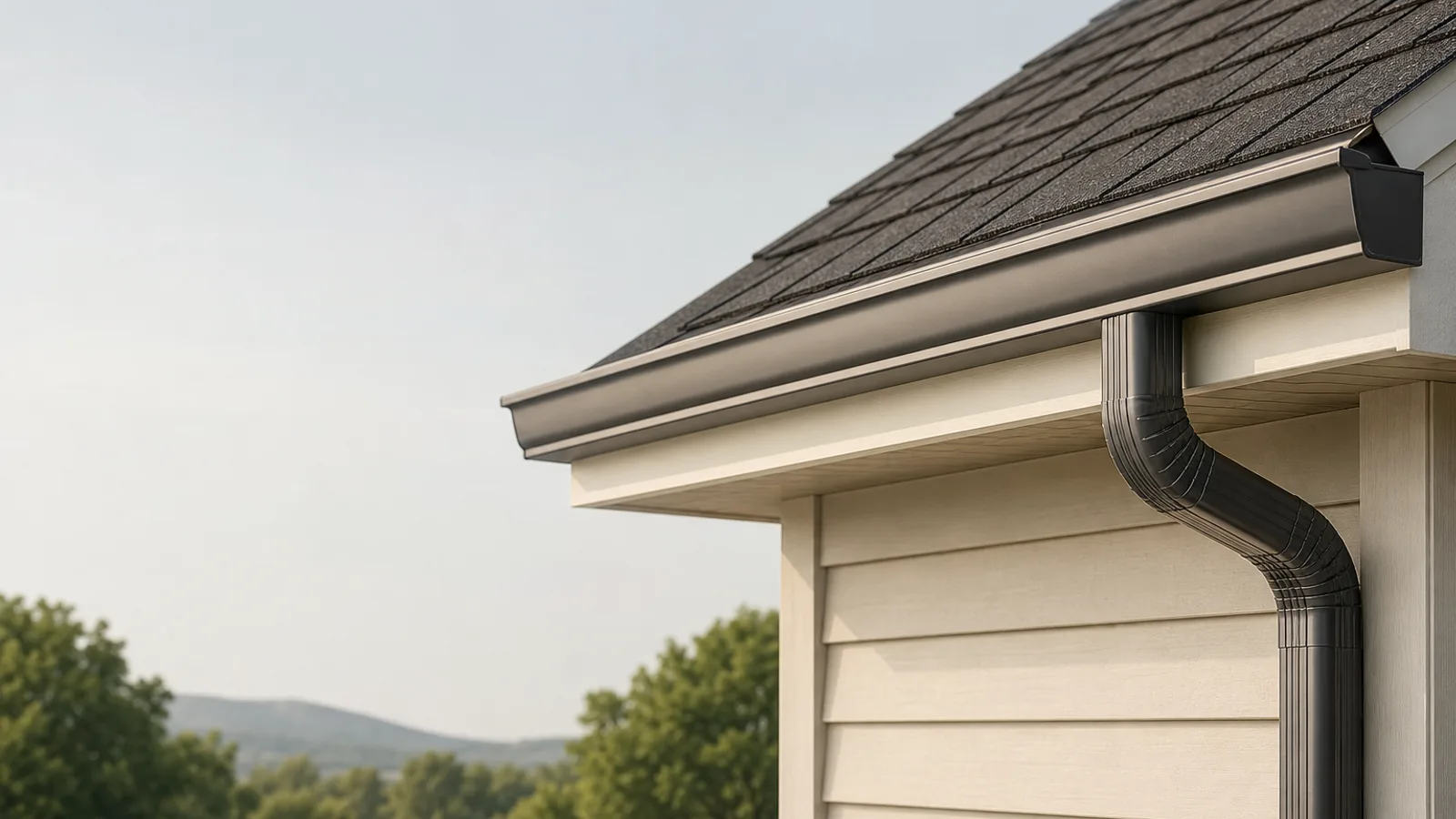
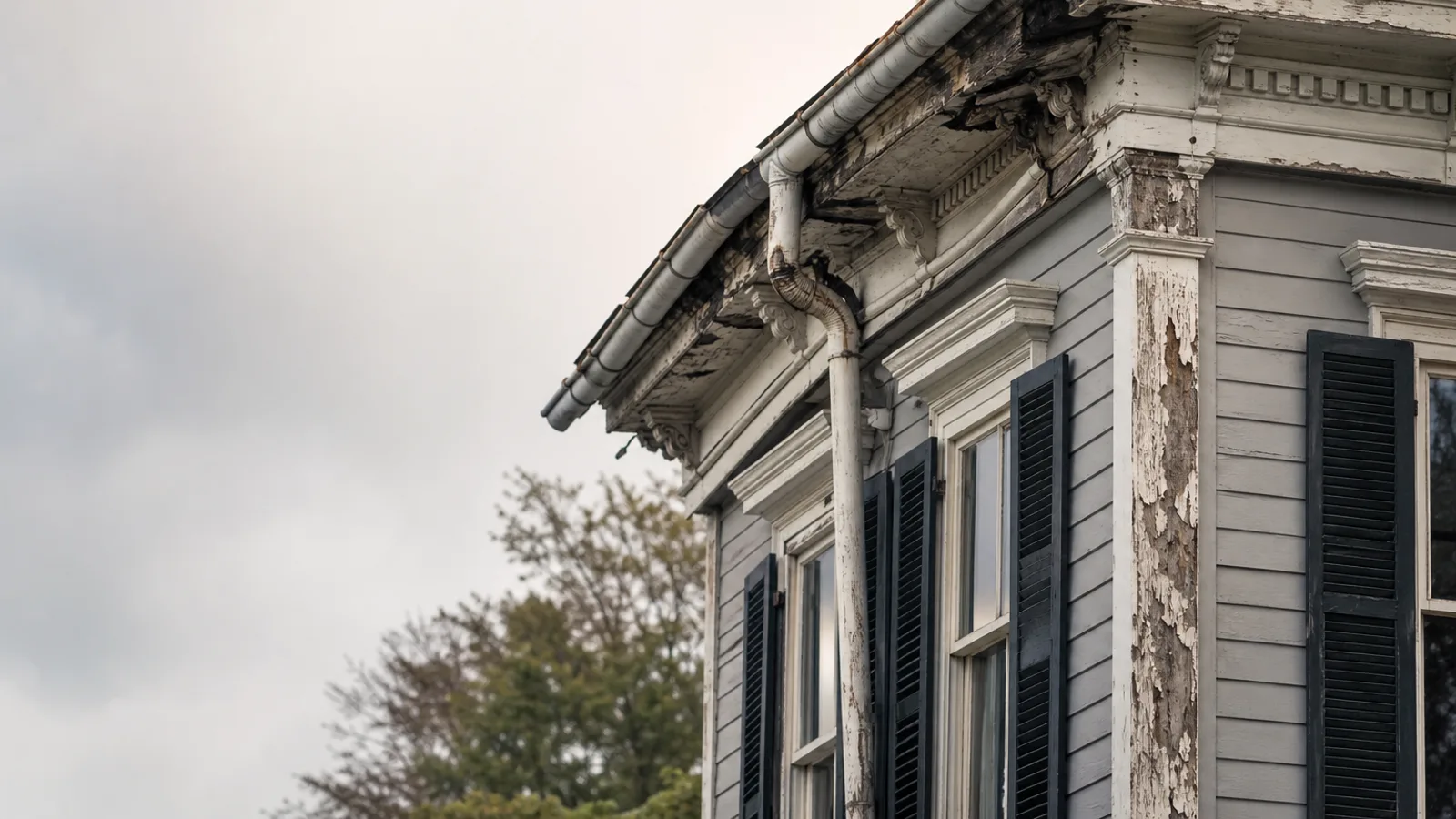
If your painted steel gutters are rusting, flaking, or pulling away from your historic home, you are not alone. Steel is strong and familiar, but the painted finish can break down as the metal expands and contracts, especially along long runs and at seams. Once that coating fails, water reaches bare metal, rust starts, and you get the orange streaks and pinholes that so many older gutters show. That is a problem on any house, but on a historic property it also distracts from the architecture you are trying to preserve.
Guidance for historic properties repeatedly stresses two themes: protect the building from water and respect its original character. Historic commissions and heritage organizations encourage owners to retain or reinstate gutter materials that match what the house had, or to choose materials that read as traditional when originals are gone. They call out issues with some modern products, including steel that can rust and plastics that can sag or look out of place. So when your painted steel gutters are at the end of their life, it is worth stepping back and asking if repainting or like-for-like replacement is really your best long-term move.
How do copper gutters compare to painted steel on historic facades?
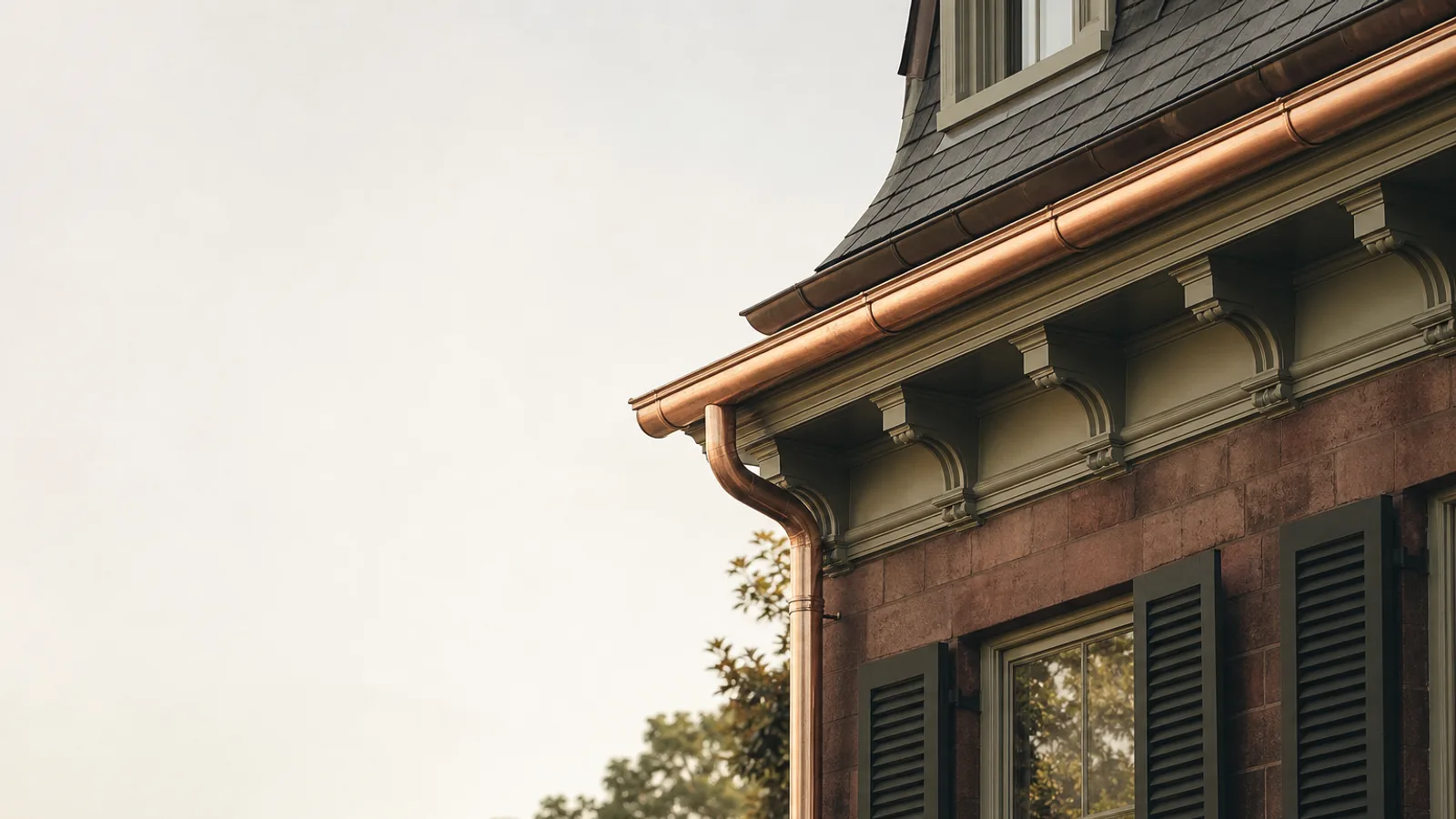
Copper is one of the most frequently recommended alternatives to painted steel for historic roofs and cornices. Technical specifications for copper gutters highlight that the metal itself is corrosion resistant and does not rely on a painted film to survive. Over time it weathers from bright metallic to a brown tone and eventually to a green patina in many climates, which historic guidelines often describe as visually compatible with older masonry and slate. That gradual color shift tends to read as intentional aging rather than neglect, which is the opposite of peeling paint and rust on steel.
Historic design documents also point out that while copper typically costs more at installation than painted steel, it has a very long service life when properly detailed and installed. You avoid regular scraping and repainting, which is a recurring expense with painted metals. That is why some commissions describe copper as the least expensive option over its life, even though the upfront investment is higher. For homeowners who are tired of patching seams or dealing with flaking paint near ornate trim, copper can be a way to do the work once, integrate with half round or built in gutter profiles, and then focus maintenance time on cleaning and protecting the rest of the exterior.
- Resists rust without relying on a painted coating.
- Develops a patina that often suits historic brick and stone.
- Can be formed into half round and built in profiles common on older homes.
- Requires less repainting and surface maintenance than painted steel.
What other traditional gutter materials can replace painted steel?
Copper may not be the only historically appropriate move for your house. Historic England advises that where possible you should reinstate the same material and profile that the building originally carried. On many older houses that could mean cast iron gutters and downspouts that were integral to the original elevation. Cast iron has real advantages: it is robust, holds shape, and when maintained with suitable coatings can last for decades while looking authentic. Its weight does require solid brackets and careful installation, and like steel it depends on paint, but it is often viewed as visually correct for period architecture.
Some historic guidelines also discuss wood gutters, either painted or lined with metal. These are more specialized but can closely match original cornice details on certain styles of homes. Wood needs careful detailing and regular upkeep to prevent rot, and lining materials have to be chosen so they do not react badly with surrounding metals. Galvanized steel and Galvalume are referenced as acceptable in some settings when detailed to resemble traditional forms, although there is recurring caution that bare or chipped spots can corrode. Vinyl and basic plastic gutters are typically discouraged for historic buildings because they can warp, crack, or simply look out of place compared with heavier traditional systems.
- Cast iron can match original Victorian and early 20th century trim.
- Wood gutters suit houses with built in cornices and deep eaves.
- Galvanized steel works when profiles mimic historic shapes.
- Vinyl is usually avoided on historic facades for performance and appearance.
Where does aluminum fit as an alternative to painted steel gutters?
Aluminum occupies a middle ground for owners weighing appearance, performance, and cost. Federal building guidance notes that aluminum gutters are common and relatively light, but they are more vulnerable to denting than copper or steel. On a historic house with tall trees nearby or frequent ladder use, that means the runs can become wavy or creased over time. The metal does not rust the way ferrous metals do, which is a plus, but thin sections can deform under impact or ice loads. For some homeowners that trade off is acceptable, especially when they are trying to manage budgets.
Historic design resources are more divided on aluminum. Some acknowledge that in simple half round profiles it can be an acceptable stand in when original materials are gone, provided the finish and color are carefully chosen. Others note that thin, sharply formed K style aluminum can clash with deep cornices, built in gutters, or decorative rafter tails that call for rounder or boxier shapes. If you are in a historic district, your commission or review board may already have guidance on preferred materials. That is why it is a good idea to check before replacing painted steel with aluminum, especially along street facing elevations.
How should owners of historic homes choose among these gutter options?
Choosing between copper, cast iron, galvanized steel, wood, and aluminum is not just about what the installer has on the truck. Historic England stresses that any upgrade of rainwater goods should be compatible with the building fabric, both in material and in how fixtures are anchored to masonry or timber. That includes avoiding combinations of metals that can trigger galvanic corrosion when in contact, especially in damp conditions. Copper, for example, must be paired with appropriate fasteners and should not drain onto certain bare metals below. Likewise, heavy cast iron needs brackets that will not tear out of old brickwork.
You also need to consider roof design, capacity, and how water moves around your house. Federal building guidance on gutters covers sizing, slope, and downspout placement so that walls and foundations are well protected. That technical side matters as much as the metal itself. On a historic home, you are often dealing with long eave runs, complex roof valleys, and possibly built in box gutters. A material like copper that can be soldered with continuous joints may give you more reliable water control compared with sectional painted steel that relies on caulk. When you are planning a project such as copper gutter installation, it is worth discussing profile, thickness, fastening, and historic approvals at the same time so you are not back up on a ladder in a few years dealing with preventable problems.
- undefined
- undefined
- undefined
- undefined
- undefined
- undefined
- undefined
- undefined
- undefined
Frequently asked questions
- Are copper gutters really better than painted steel on a historic house?
- Copper is more resistant to corrosion than painted steel because it does not rely on a surface coating to protect bare metal. Historic design guidelines often favor it on older homes both for its durability and for the way its patina blends with traditional masonry and slate roofs. Painted steel can perform well, but once the paint film breaks down, rust usually follows and maintenance becomes more frequent.
- Will my historic commission approve replacing painted steel gutters with copper?
- Every commission is different, but many historic guidelines explicitly mention copper as a preferred or acceptable material. They tend to focus on whether the new gutters follow original profiles and do not detract from the building's character. It is smart to bring product samples and profile drawings to your review board so they can see how the new system will look on your facade.
- Is aluminum a bad choice for a historic home’s gutters?
- Aluminum is not automatically a bad choice, but it is more easily dented than copper or heavier metals and may look out of place in very modern profiles. Some historic guidance documents accept simple half round aluminum when original materials are gone, especially on secondary elevations. If you are in a regulated district, check those rules first and focus on profiles and finishes that match the house.
- What traditional gutter materials can replace my rusted painted steel system?
- Common traditional options include copper, cast iron, and in some cases wood gutters that are painted or lined. Each has different maintenance needs and installation requirements, but they generally align better with the look of older architecture. Heritage organizations caution that vinyl and basic plastic gutters rarely suit historic facades because of their appearance and tendency to warp or crack.
- How do I choose the right gutter profile for my historic house?
- Start by looking closely at old photos, neighboring houses of the same era, or surviving sections of your own system. Many historic homes used half round or box gutters that tie into the roof edge or cornice. Historic guidance stresses matching those original shapes as closely as possible, even when you change metals, so your gutter system reads as part of the architecture rather than an add on.
- Can I mix metals, like using copper gutters with existing steel downspouts?
- Mixing metals can cause galvanic corrosion if water carries ions from one metal to another that is less noble. Historic and technical guidance both emphasize using compatible metals throughout the system or separating them so they do not stay wet in contact. If you are upgrading to copper, it is generally safer to update connected components and fasteners to materials that work well with it.
Talk to All Pro Gutter Guards about copper gutter installation →